To cut a 150 mm thick concrete slab through, you need a blade roughly 400-500 mm in diameter, because a saw blade only cuts to about one-third of its diameter. For slabs over 250 mm, cut from both sides or use a diamond wire saw. Use a laser-welded segmented blade, cut wet, and make passes of increasing depth rather than forcing full depth at once.
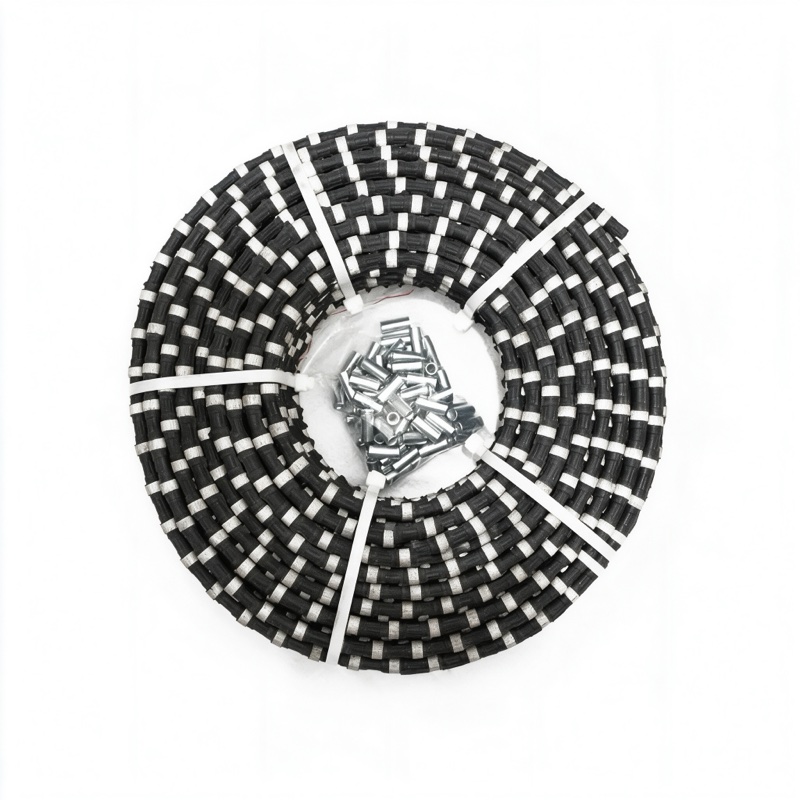
The maximum cutting depth is roughly one-third of blade diameter, accounting for the saw guard and arbor. For a 150 mm slab, a 450 mm blade is typical. Our high-horsepower laser-welded blade is built for walk-behind saws tackling thick reinforced slabs. Beyond practical blade sizes, diamond wire saw for concrete cuts almost any depth with controlled precision.
| Slab thickness | Blade diameter | Method |
|---|---|---|
| 100 mm | 350 mm | Single-pass walk-behind saw |
| 150-200 mm | 450-500 mm | Two to three depth passes |
| 250-400 mm | 600-700 mm | Cut both sides or step passes |
| 400 mm+ | Wire saw | Diamond wire sawing |
Thick slabs almost always contain mesh or dowels. A laser-welded blade absorbs rebar crossings; a high-frequency blade will lose segments. Slow the feed when the tone drops (steel contact) and keep water on the cut.
Beyond 400 mm, even large blades become unwieldy. A diamond wire saw loops a diamond-beaded cable around the concrete and pulls it through, cutting almost any depth with controlled precision. It is the standard for bridge and building demolition where blade access is impossible. Planning a thick-slab job means deciding early whether blade cutting or wire sawing fits the access and reinforcement density.
Deep cuts demand more than a big blade; they need horsepower to keep the rim cutting through dense reinforcement. Underpowered saws bog down, operators force feed, and segments overheat. Step passes not only protect the blade but also keep the saw within its torque curve so the cut is steady rather than stuttering.
Before deep cutting, make a shallow full-depth score along the line with the saw at low depth. This guides subsequent passes and keeps the blade from wandering. After the cut, flush water through the kerf to remove loose concrete that could bind the next pass.
Size the blade to one-third of slab depth, step the passes, go laser welded, and move to wire sawing beyond 400 mm. Deep cuts are planned, not forced.
A 200 mm slab needs a 500 mm blade. Set first pass to 40 mm and run the full length, then raise to 90 mm, then 140 mm, then full 200 mm. Each pass cools the rim and clears the kerf. On reinforced slabs, slow down on the final passes when rebar density is highest. Expect about four passes per cut and do not skip steps to save time; a stalled saw costs more than the extra passes.
Beyond 400 mm, or where the saw cannot straddle the slab, wire sawing is safer. It also produces less vibration, which matters near finished structures where vibration damage is a concern. Plan the method at the estimate stage, not on site.
Walk-behind saws are heavy; clamp them, never lean on them, and keep feet clear of the blade plane. Deep cuts throw bigger chips. Wear a face shield, not just glasses. When stepping depth, let the blade reach full speed before feeding, and never force the saw through a stall.
Early-entry saws for fresh concrete are shallow and different from deep structural cutting. Do not confuse the two. Deep slab work needs a walk-behind or wire saw, not an early-entry blade.
A: It overloads the saw and blade. Step passes extend blade life and prevent stalling.
A: Beyond 400 mm depth, or where no equipment can straddle the cut, wire sawing is safer and more precise.
A: Early-entry saws are for shallow control joints in fresh concrete, not for deep structural cuts.
Thick slab cutting is a sizing and feeding problem: pick a blade one-third larger than your target depth, step the passes, run wet, and go laser-welded where rebar is present. For extreme depths, move to wire sawing. Contact JOY TECH for walk-behind blades and diamond wire systems.
