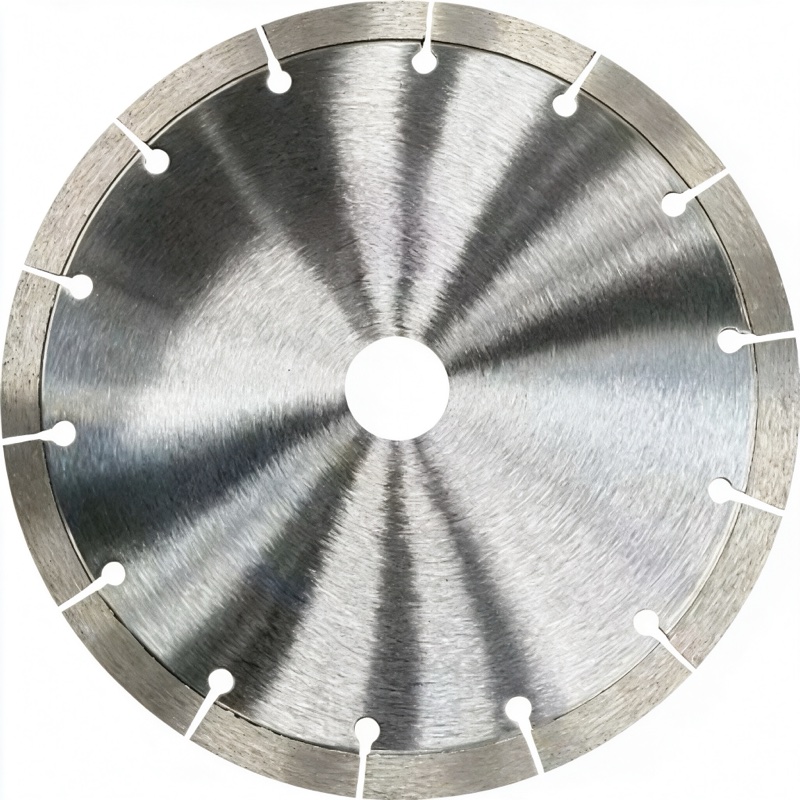
The arbor (center hole) of a diamond blade must match your saw flange within tolerance. Common sizes are 20 mm, 22.23 mm (7/8 in), and 25.4 mm (1 in). Never use a blade whose arbor is larger than the flange, and avoid loose-phenolic or stacked washers to take up play. If you must adapt, use a precision machined reducer ring that fills the entire hole, not random washers.
Arbor sizes vary by region and tool type. When ordering a diamond saw blade, confirm the exact bore your tool expects. Our universal stone blade ships with standard bores and can be bored to order.
| Arbor size | Typical machines |
|---|---|
| 20 mm | Small Chinese/European angle grinders, tile saws |
| 22.23 mm (7/8 in) | Most 115-230 mm angle grinders worldwide |
| 25.4 mm (1 in) | Walk-behind floor saws, large circular saws |
| 30/60 mm | Table saws and bridge saws for stone |
If the blade wobbles on the arbor, it runs out of true, causing vibration, wavy cuts, uneven segment wear, and possible blade shattering. The flange must clamp the blade flat and concentric. Spacer washers do not correct a too-large hole; they leave the blade off-center and invite cracking at the bore.
A one-piece, full-contact reducer ring (bushing) pressed into a larger arbor is acceptable for light-duty use. The ring must cover the full blade thickness and be concentric. Never stack multiple washers, and never machine a blade bore larger yourself; you may cut into the segment core or ruin tensioning.
Mount the blade, snug the flange nut, and spin it by hand. It should rotate without lateral wobble. Run it free for 30 seconds before cutting; any unusual vibration means stop and re-check. Verify the blade maximum RPM exceeds your tool's no-load speed.
Before ordering blades, measure the existing blade's center hole with calipers rather than guessing. Regional standards differ: many European and Asian tools use 20 mm, while North American grinders standardize on 7/8 inch (22.23 mm). If you run a mixed fleet, note the bore per machine on a tag so reorders match. A wrong bore discovered on site costs more downtime than the blade itself.
Even a correct arbor wobbles if the flanges are grooved or dirty. Inspect both flanges for flat contact surfaces, clean slurry from the hub, and replace flanges that show ring grooves. The blade must clamp flat and concentric for safe, straight cutting.
If you must run a larger- arbor blade on a smaller spindle, use a precision machined steel reducer ring made for that exact size. Flimsy stamped shims will not center the blade. Replace the ring if it is bent or corroded; a failed reducer lets the blade run out of true.
Measure the hole, match the bore, use full-contact reducers only. A correct arbor fit prevents wobble and keeps every cut straight and safe.
If you only occasionally need a 25.4 mm bore on a 22.23 mm grinder, a machined reducer ring is acceptable for light cuts. Never stack washers, and never use the ring for heavy demolition where torque is high. For a fleet of saws, it is cheaper to keep the correct bores in stock than to rely on adapters that can loosen.
Before cutting, spin the blade by hand and watch the rim against a fixed point. Any side-to-side movement over about 1 mm means the bore or flanges are off. Tighten the arbor nut firmly; a loose nut is the most common cause of a wobbling blade on a correctly sized arbor.
A blade that tilts on a sloppy arbor cuts wavy walls and wears segments unevenly. The flange must clamp the blade flat; if you can rock the blade side to side after tightening, the bore is too large or flanges are worn. This is a safety issue, not just quality. Take thirty seconds to check the seat before every shift.
A: Yes, 7/8 inch equals 22.225 mm, so 22.23 mm blades fit standard 7/8-inch grinders.
A: No. Drilling or enlarging the bore destroys the core's tension and balance and is a major safety hazard.
A: You cannot safely enlarge it. Order the correct bore for your saw; reducer rings only solve a too-large hole.
Match the arbor to your flange precisely, use full-contact reducers only when needed, and never improvise with washers. When sourcing blades for a mixed fleet, specify the exact bore per machine. Contact JOY TECH to order blades with the arbor sizes your saws actually use.
