

Diamond Blade Arbor Size vs Saw Spindle: Avoiding Wobble
Diamond Blade Arbor Size vs Saw Spindle: Avoiding Wobble
Quick Answer
The blade bore must match the saw spindle or be reduced with a tight bushing. A 22.23 mm bore on a 25.4 mm spindle will wobble even if the nut feels tight. Wobble opens the segment joint, increases noise and heat, and can crack the core. Use the correct bushing, clean the flanges and check runout before cutting.
What the Arbor Does
The arbor centers the blade. The flanges clamp it. The nut applies axial force. If the bore is larger than the spindle, the blade can shift off center; the flanges then clamp it in a tilted position. The result is a blade that runs out of plane at every revolution.
A small amount of runout is normal. Visible wobble, a ringing sound or a blade that cuts a wide kerf are signs that the blade is not centered.
Common Size Combinations
- 22.23 mm (7/8 in) bore: common on small hand-held saws and 4 in to 7 in blades.
- 25.4 mm (1 in) bore: common on larger concrete saws and 12 in to 16 in blades.
- 20 mm bore: common on some tile and stone saws.
- Bushings: a 25.4 to 22.23 mm reducer is common; it must be a press fit, not a loose slip fit.
Checking the Fit
Clean the spindle and flanges with a wire brush and solvent. Mount the blade dry, tighten the nut by hand, and rotate the blade. It should turn without side-to-side movement at the rim. If it moves, remove the blade and inspect the bushing for wear or burrs.
Check the flange faces for grooves. A scored flange cannot clamp evenly, and no bushing will correct it. Replace the flange pair if the contact face is worn.
Cutting Symptoms of a Loose Arbor
A loose blade usually cuts a kerf that is wider than the segment, overheats on one side, and loses segments at the weld. The operator may also hear a rhythmic knock. Stop cutting; continuing will damage the blade and the saw.
Frequently Asked Questions
Q: Can I use a 25.4 mm blade on a 22.23 mm saw?
A: Only with a proper reducing bushing. A loose bushing will not center the blade.
Q: How much runout is acceptable?
A: A few tenths of a millimeter at the rim is normal. Visible wobble or a rhythmic knock is not.
Q: Why does the blade cut a wide kerf?
A: The blade is likely off center or the segments are worn unevenly. Check the arbor fit and flange condition first.
Conclusion
Match the bore, use a tight bushing and keep the flanges flat. For concrete and asphalt, start with a laser-welded concrete blade; for general dry cutting, a turbo dry blade is the flexible choice.
Products used in this guide
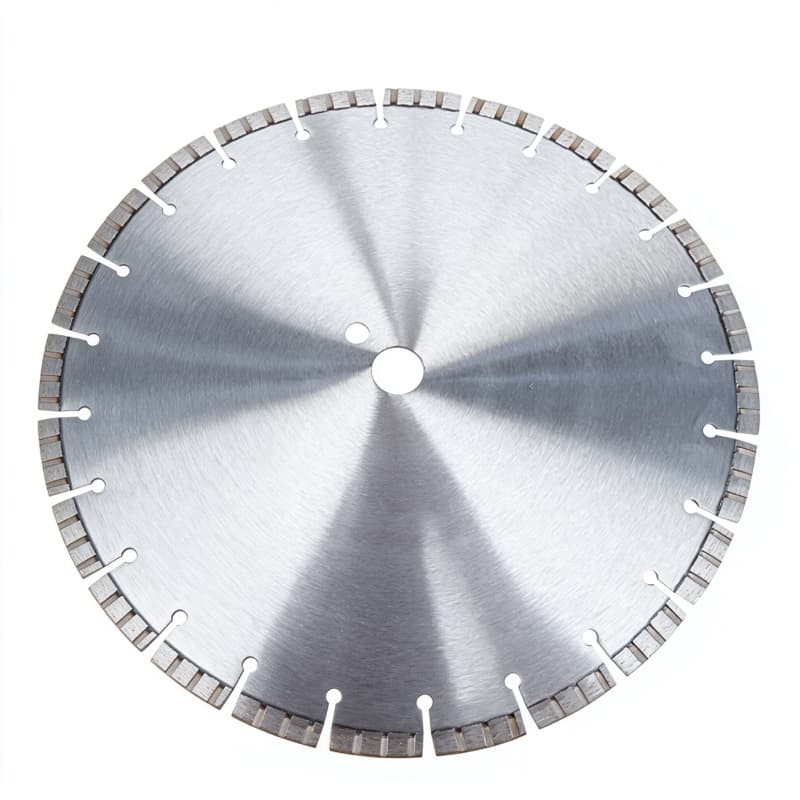
Concrete and Asphalt Saw Blade (Laser Welded) — JOY-CA-LW
View specs →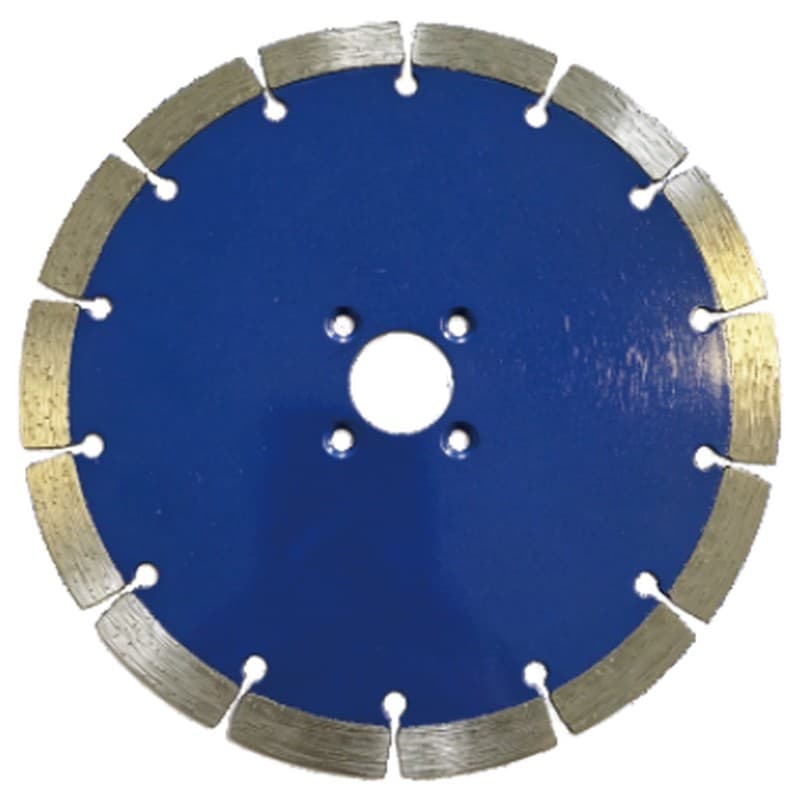
General Purpose Turbo Dry Blade — Blue Standard — JOY-GP-01
View specs →Need this tool for your job?
MOQ 1 · 7–30 days by order quantity · FOB & CIF · free sample on request
Author & Manufacturer
Written and reviewed by JOY TECH — an SGS & BV audited, CE/RoHS certified diamond tools manufacturer founded in 2004, exporting to 50+ countries.
Quality & Compliance
Our factory and QMS are audited by SGS and Bureau Veritas. Products meet CE/RoHS requirements and every piece is 100% inspected before packing.
Verified Certificates
- SGS Audited Supplier — Report No. QIP-ASI227442 & QIP-ASR247051 (Audit Jan 29, 2024)
- Bureau Veritas Verified — Report No. MIC-ASR257059 (Audit Feb 20, 2025)
- CE & RoHS Certificate of Conformity — No. CS240925001HRZ (Issue Sep 25, 2024)