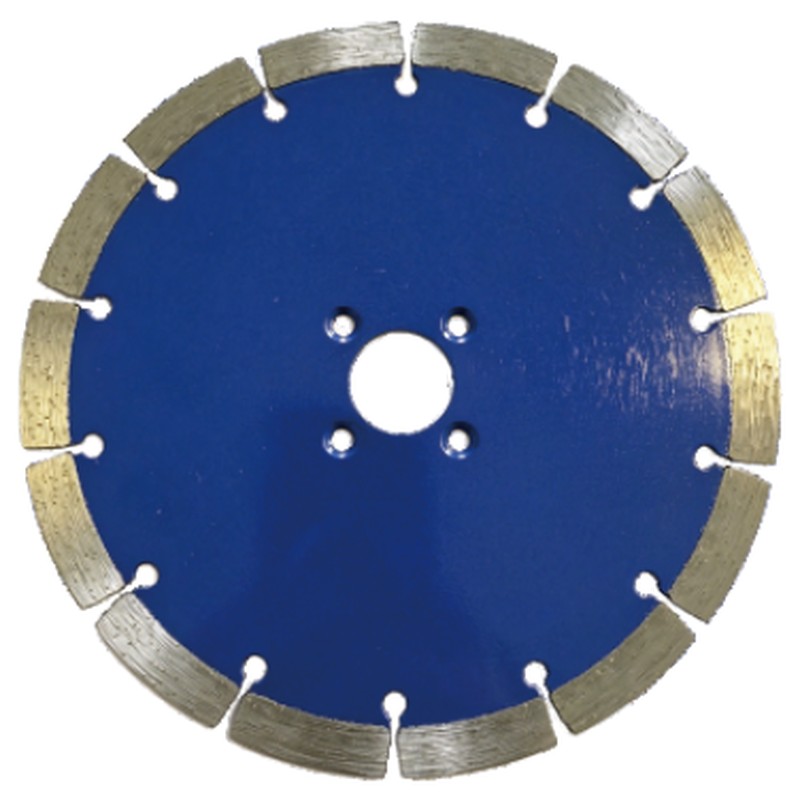
Cut fiber cement board (HardieBacker, cement board) with a diamond turbo rim blade or an abrasive fiber-cement blade — never a wood saw blade, which will fray the edges and dull quickly. A 105-125 mm turbo diamond blade on an angle grinder or circular saw gives clean, dust-controlled cuts. Cut dry with a dust extractor, or wet for a cleaner finish. Avoid standard segmented blades — they chip the cement matrix and pull out fibers.
Fiber cement is a compressed mix of cement, sand and cellulose fibers. A wood saw blade catches on the fibers and tears them out, leaving a fuzzy edge. A standard segmented diamond blade hammers the brittle cement and chips the edges. A turbo diamond blade shears through both cement and fiber in one clean motion.
| Blade Type | Cut Quality | Speed | Notes |
|---|---|---|---|
| Turbo diamond rim | Clean | Fast | Best for angle grinder / circular saw |
| Diamond Continuous rim | Very clean | Medium | Wet cuts, minimal dust |
| Abrasive fiber cement blade | Clean | Medium | Disposable, no teeth to catch fibers |
| Wood / plywood blade | Frayed | Slow | Not recommended |
A general-purpose turbo dry blade works well for fiber cement alongside tile and masonry, while a dedicated turbo mesh blade gives the cleanest edge.
A: With a diamond-grit jigsaw blade, yes. A standard wood jigsaw blade will wear out in one sheet.
A: Taping the line reduces chipping on the finished face, especially with a turbo blade.
A: Dry with HEPA extraction is most common on job sites. Wet cutting produces cleaner edges but makes slurry.
A: Standard backer board is 6-12 mm. A 125 mm diamond turbo blade cuts through in one pass.
Use a turbo diamond blade, support the board, and control silica dust. Our turbo cutting range handles fiber cement, tile and light masonry in one blade.
