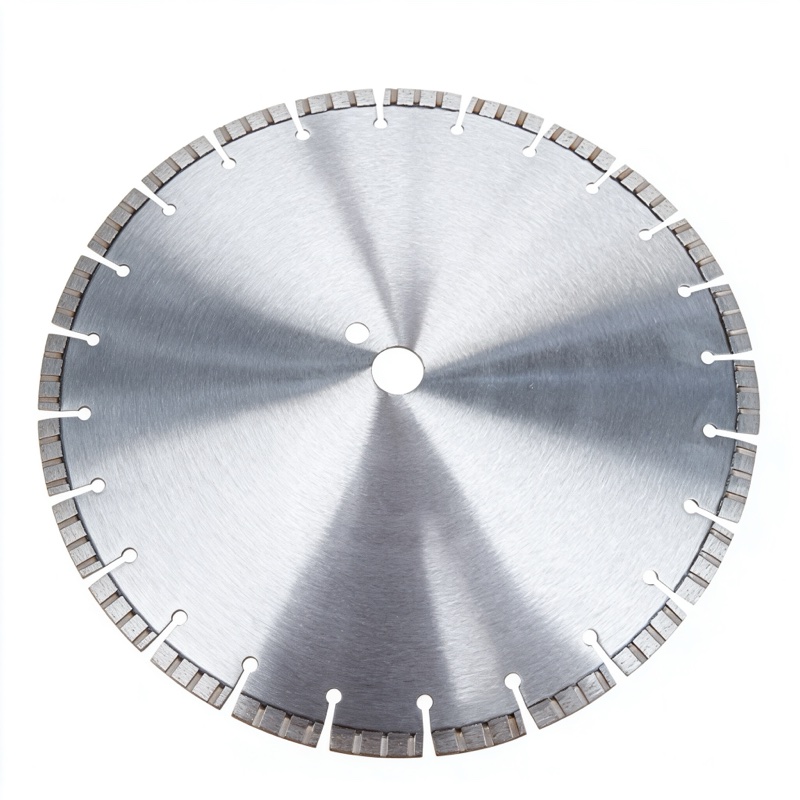
Yes, you can saw green concrete the same day it's placed using an early-entry saw with a small-diameter diamond blade (125-250 mm) designed for fresh concrete. The key is timing: cut as soon as the concrete can support the saw without ravelling — usually 4-12 hours after placement, depending on temperature and mix. Early-entry sawing controls random cracking by cutting joints before shrinkage stress builds up. Use a blade with a soft bond that won't glaze on fresh, abrasive concrete.
| Timing | Method | Why |
|---|---|---|
| 4-12 hours (early) | Early-entry saw, small blade | Controls shrinkage cracking |
| 1-2 days (conventional) | Walk-behind saw, 300-450 mm blade | Standard control joints |
| 7-14 days (late) | Full-depth saw | If early cutting was missed |
For early-entry work, our high-frequency welded blade in small diameters suits the high-RPM early-entry saws.
A>If the saw tears the surface (ravelling) instead of cutting cleanly, it's too early. Test on a scrap area first.
A>One-third to one-quarter of slab thickness — for a 150 mm slab, 25-40 mm is typical.
A>Yes, if it's small-diameter and soft-bond. A standard hard-bond blade glazes on fresh concrete.
A>It's an addition — early joints control early shrinkage, and you still cut full-depth joints later if required by spec.
Early-entry sawing with the right small soft-bond blade controls cracking and saves money. Browse our concrete blade range for early-entry and walk-behind saws.
