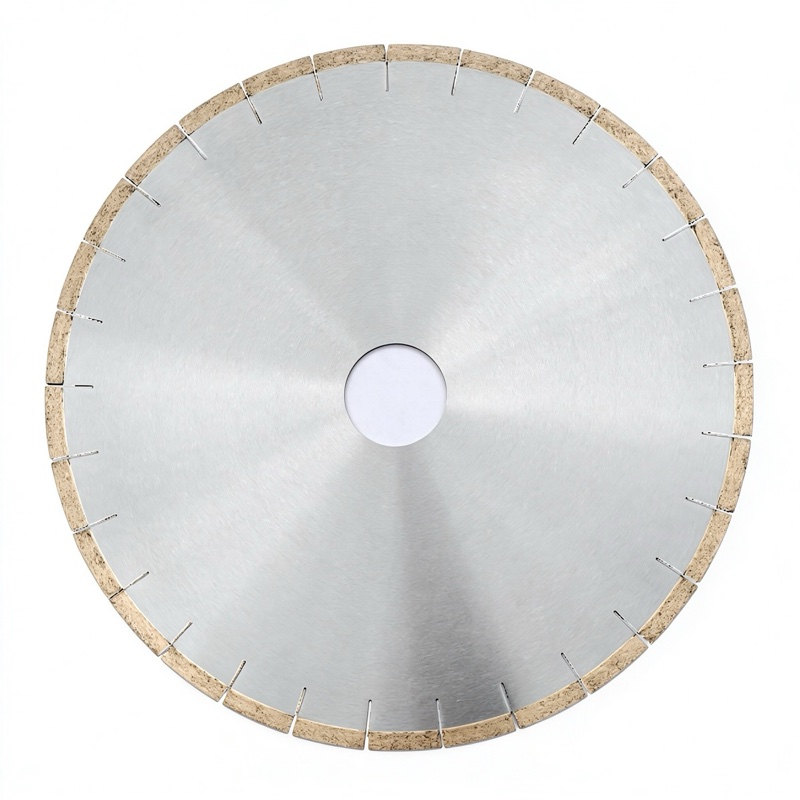
For chip-free cuts on natural stone countertops, use a thin-rim turbo or continuous-rim diamond blade 105-125 mm in diameter, run wet on a rail saw or bridge saw at the recommended RPM. Marble needs a soft bond, granite a medium-hard bond, and quartzite a hard bond. Never cut marble dry with a segmented blade — it will chip and fray the polished edge.
| Stone Type | Rim Type | Bond | Notes |
|---|---|---|---|
| Marble | Continuous / super-thin turbo | Soft | Polished edges chip easily — wet cut only |
| Granite | Turbo mesh or thin segmented | Medium-hard | Aggressive but still chip-sensitive |
| Quartzite | Turbo / small-segment | Hard | Extremely abrasive — premium diamond |
| Soapstone / Limestone | Continuous rim | Soft | Often cut wet with polish pad after |
We supply dedicated blades for marble straight-slot cutting, granite long-segment sawing, and natural quartzite in 105-350 mm diameters.
A: Possible for small trim cuts, but a rail saw produces a straight chip-free edge. Angle grinder cuts almost always need grinding and polishing afterward.
A: Likely a too-hard bond or a segmented rim. Switch to a soft-bond continuous or super-thin turbo rim, cut wet, and score first.
A: 1.2-1.4 mm rim for 105-125 mm blades. Thinner rims = narrower kerf = less chipping but also faster wear.
A: Score the polished top first, then feed from the bottom. This keeps chips on the underside where they don't show.
Chip-free countertop cuts come from matching the rim type and bond to the stone, always cutting wet, and using a supported saw. Browse our natural stone cutting range to find the blade for marble, granite, quartzite or engineered stone.
