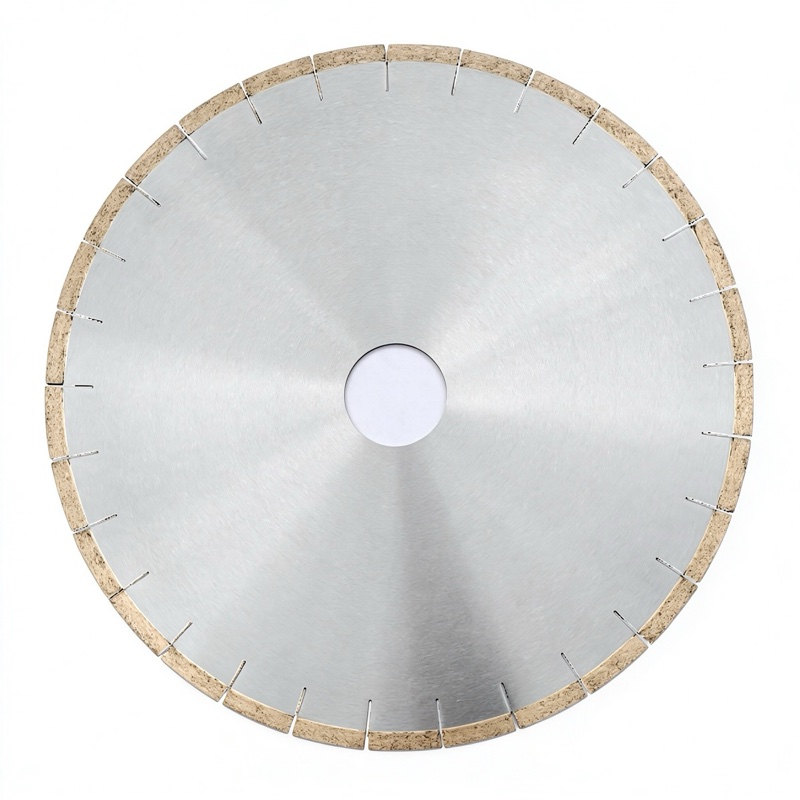
Cut terrazzo and resin stone with a turbo or continuous-rim diamond blade in a medium-hard bond, run wet at moderate RPM. Terrazzo is marble or granite chips bonded in a resin or cement matrix, so it cuts like a mix of stone and composite: a blade that's too hard glazes on the chips, and a blade that's too soft burns the resin. Wet cutting keeps the resin cool and gives a clean, chip-free edge.
Terrazzo has two very different components: hard marble/granite chips and a softer resin or cement matrix. A standard stone blade may glaze on the resin and burn it, while a soft composite blade wears out on the chips. A medium-hard bond turbo rim finds the middle — it stays sharp on the chips and clears the resin cleanly.
| Factor | Recommendation |
|---|---|
| Rim type | Turbo or continuous rim |
| Bond | Medium-hard (balanced for stone + resin) |
| Wet/Dry | Wet only — resin is heat sensitive |
| Feed rate | Slow and steady — never force |
| Saw | Bridge saw, rail saw or tile saw with water |
| Segment height | 10-12 mm for a clean finish |
Our marble straight-slot blade handles terrazzo tiles with a clean finish, while the granite long-segment blade is the choice for chip-heavy production cuts.
A: Yes, if it's a turbo or continuous rim in the right bond. A hard porcelain blade may glaze on the resin.
A: Usually a segmented blade, dry cutting, or too-fast feed. Switch to turbo/continuous rim and cut wet.
A: Cement terrazzo is more like concrete — a standard segmented blade works. Resin terrazzo needs the balanced blade above.
A: Match the blade to your saw: a 350 mm blade cuts about 100-120 mm deep, enough for most terrazzo panels.
Terrazzo and resin stone cut best with a balanced turbo or continuous rim blade run wet. Browse our stone cutting range for terrazzo, marble and resin composites.
