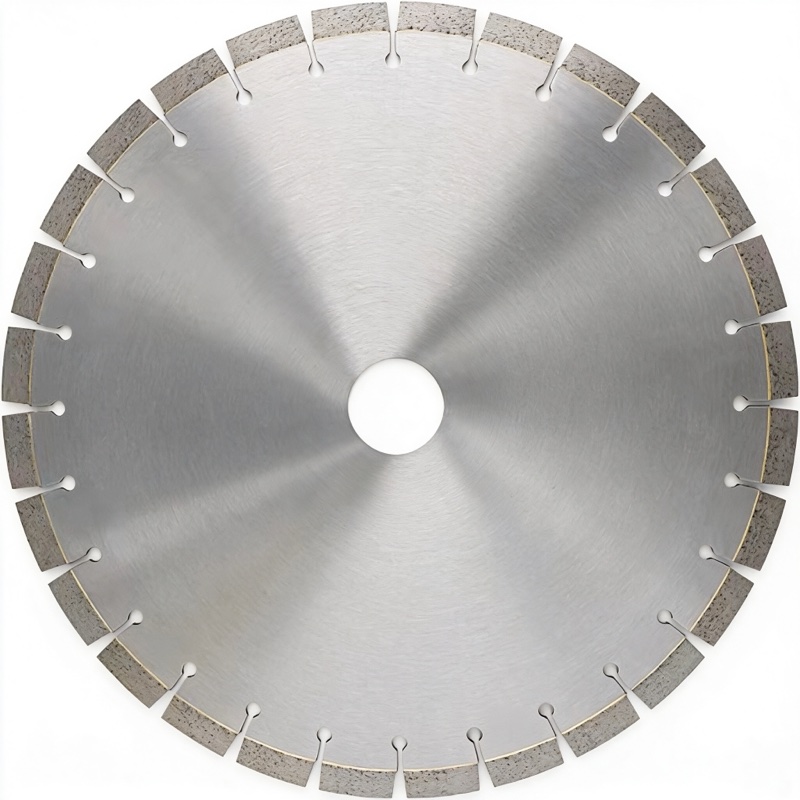
The maximum RPM printed on every diamond blade is a safety limit, not a target. Your saw's no-load speed must be at or below the blade's rated maximum. Overspeed causes expansion, segment loss, and catastrophic shattering. Always run the manufacturer guard in place, clamp the blade with correct flanges, and wear eye, face, hearing, and respiratory protection.
A diamond saw blade spins at rim speeds of 60-80 m per second. The printed MAX RPM is the speed at which centrifugal force becomes dangerous. A 115 mm blade rated 13,300 RPM must never go on a saw that idles above that. Our high-horsepower blades carry clearly marked RPM for the walk-behind saws they fit.
| Blade diameter | Typical max RPM |
|---|---|
| 115 mm (4.5 in) | 13,300 |
| 125 mm (5 in) | 12,200 |
| 230 mm (9 in) | 6,600 |
| 350 mm (14 in) | 4,400 |
| 450 mm (18 in) | 3,400 |
Let the blade reach full speed before contacting the material. Do not grind sideways with the edge of a cut-off blade. Never cut materials the blade is not rated for. Keep bystanders out of the spark/debris zone, and disconnect power when changing blades.
Before every shift, run through a quick check: the blade is rated above the tool's no-load RPM, the core has no cracks, segments are firmly attached, the guard is in place and undamaged, and flanges are clean. A blade with a hairline core crack can shatter at speed; discard it rather than pushing luck.
Grip the grinder with both hands, brace your feet, and never stand in the plane of the blade. If a wheel fails, debris travels along the blade plane; standing offset puts you out of the danger zone. Let the saw do the cutting instead of leaning your body weight into it.
Wet cutting throws slurry; dry cutting throws sparks. Set up barriers so bystanders and electrical cords stay clear. Never lay a running grinder on its side on wood or carpet; let it spin down on a metal surface.
Respect max RPM, keep the guard, inspect the core. A diamond blade is safe within its rating and dangerous when abused.
Run the blade free for 30 seconds before the first cut; any unusual vibration means stop. Never stand in the blade plane, and keep bystanders behind you.
Do not cut wood, metal studs, or plastic with a concrete blade. Side grinding with the blade edge is forbidden; it cracks the rim. Use the right tool for each material.
Safety glasses or face shield, hearing protection, a dust mask rated for silica, steel-toe boots, and gloves. Do not rely on a surgical mask; silica requires a proper respirator. Tie back hair and remove loose jewelry near rotating blades.
The guard should cover the top half of the blade, leaving only the cutting zone exposed. Never run without it. On angle grinders, adjust the guard so debris throws away from the operator.
Stand offset from the blade plane, feet braced. Do not lean into the saw; let the blade cut. A running grinder laid on its side on combustible material is a fire hazard; set it on a metal surface until it stops.
After mounting a blade, run it free for 30 seconds. Any vibration or wobble means stop and re-check. Never start a cut on a blade that does not run true.
A: The rim expands, diamonds loosen, and the core can crack and shatter at operating speed.
A: No. The rating is a hard safety limit; exceeding it voids the blade and endangers the operator.
A: Yes, every time. Most angle-grinder accidents involve a removed guard.
Respect the max RPM, keep the guard on, inspect the core, and clamp flanges correctly. A diamond blade is safe when used within its rating; it is a dangerous projectile when abused. Contact JOY TECH for blades with clearly marked RPM and full safety documentation.
