

Diamond Blade Segment Width vs Kerf Loss on Stone Slabs
Diamond Blade Segment Width vs Kerf Loss on Stone Slabs
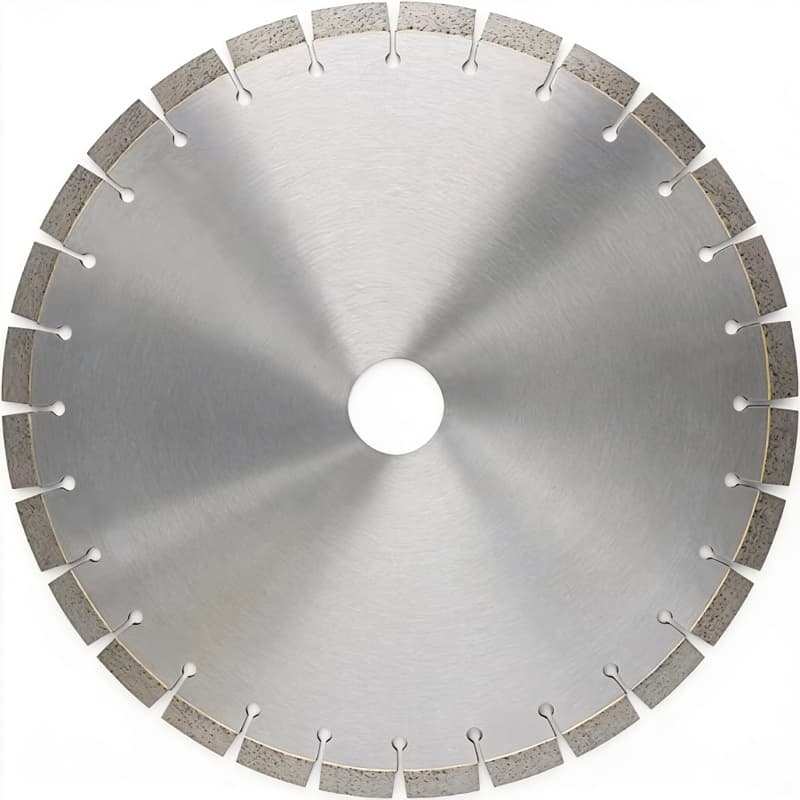
Quick Answer
Segment width sets the kerf: a wider segment removes more stone, wastes more slab and cuts slower; a narrower segment saves material and cuts faster but wears faster and can deflect on deep cuts. For granite slab production, 2.6-3.2 mm is the common range; for marble and limestone, 2.2-2.8 mm. Choose the narrowest kerf that still holds a straight cut and delivers the target segment life.
Why Kerf Is a Real Cost Line
On a 3 m slab, a 0.4 mm wider kerf removes about 1.2 kg of granite per cut. Across a production shift, that becomes metres of lost slab and extra slurry. Narrow-kerf blades are sold as “saving” blades, but the saving only holds if the blade stays straight and does not need early replacement.
Kerf loss also affects the finished dimension. If the blade wanders or the segment wears unevenly, the slab edge needs re-dressing, which adds labour and can push the piece below the order size.
Segment Width and Cutting Speed
A narrow segment has fewer diamonds in contact and a smaller contact area. It cuts faster at the same feed force, but the diamond load per unit area is higher, so the bond wears faster. A wider segment distributes the load and holds a straighter line in deep cuts, but needs more power and produces more sludge.
| Segment width | Best for | Trade-off |
|---|---|---|
| 2.2-2.6 mm | Marble, limestone, thin slab | Fast, but short life in hard stone |
| 2.8-3.2 mm | Granite production, deep cuts | Stable, but more kerf loss |
| 3.4-4.0 mm | Roughing, thick block, recycled stone | Durable, but slow and wasteful |
When a Narrow Kerf Fails
Narrow kerf is not always a saving. It fails when the blade lacks tension, the flange is worn, the feed is too high, or the stone is heavily fractured. A thin blade in a deep cut can deflect, rub the sidewall and produce a tapered slab. The operator then slows the feed, which increases heat and segment wear.
Check three things before switching to a narrow blade: blade tension and flatness, flange runout under 0.05 mm, and water flow at the cut. If any of these is marginal, a narrow kerf will not pay back.
Segment Width and Slab Yield
For a 20 mm thick finished slab, a 0.3 mm kerf difference is 1.5% of the block yield. On a 100 m² order, that is 1.5 m² of stone. On high-value granite, the saving can exceed the blade cost. On low-value stone, the productivity loss from a slower narrow blade may cost more than the material saved.
Calculate the break-even: blade price divided by kerf saving per square metre. If the narrow blade costs 20% more but saves 1.5% of stone, it only pays on high-value material or large orders.
Application Notes for Granite and Marble
Granite is abrasive and hard; a narrow segment needs a tough bond and enough diamond concentration to hold its shape. Marble is softer and can be cut with a thinner segment, but it is more prone to chipping at the exit. Use a continuous rim or a fine segment for a clean marble edge.
For slab bridge saws, match segment width to the saw’s power and the slab thickness. A 3.2 mm segment on a 20 kW saw cuts granite at a stable feed; the same blade on a 15 kW saw may stall. For hand-held saws, a narrow segment is easier to keep straight because the cut is shorter.
Frequently Asked Questions
Q: Does a narrower blade always save money?
A: No. It saves stone, but it wears faster and can deflect. The saving only holds when the blade is tensioned, the flange is true and the feed is controlled.
Q: What segment width for 20 mm granite slabs?
A: 2.8-3.2 mm is the usual production range. Choose the lower end for tight yield and the upper end for deep, stable cuts.
Q: Can I use a narrow kerf blade on a hand saw?
A: Yes, if the blade is rated for the saw RPM and the material is not too thick. Narrow blades are less forgiving of side load, so let the blade cut straight.
Q: How do I measure kerf loss?
A: Cut a test piece, measure the slot width with a caliper, and multiply by cut length and slab thickness to estimate removed volume.
Conclusion
Segment width is a yield decision and a stability decision. Start with the narrowest kerf that holds a straight cut in your stone, then verify blade tension, flange runout and water before chasing the last 0.2 mm. JOY TECH supplies long-segment granite blades and short-segment granite blades in multiple kerf widths for slab and block saws.
Products used in this guide
Granite Saw Blade (Long Segment) — JOY-GR-L
View specs →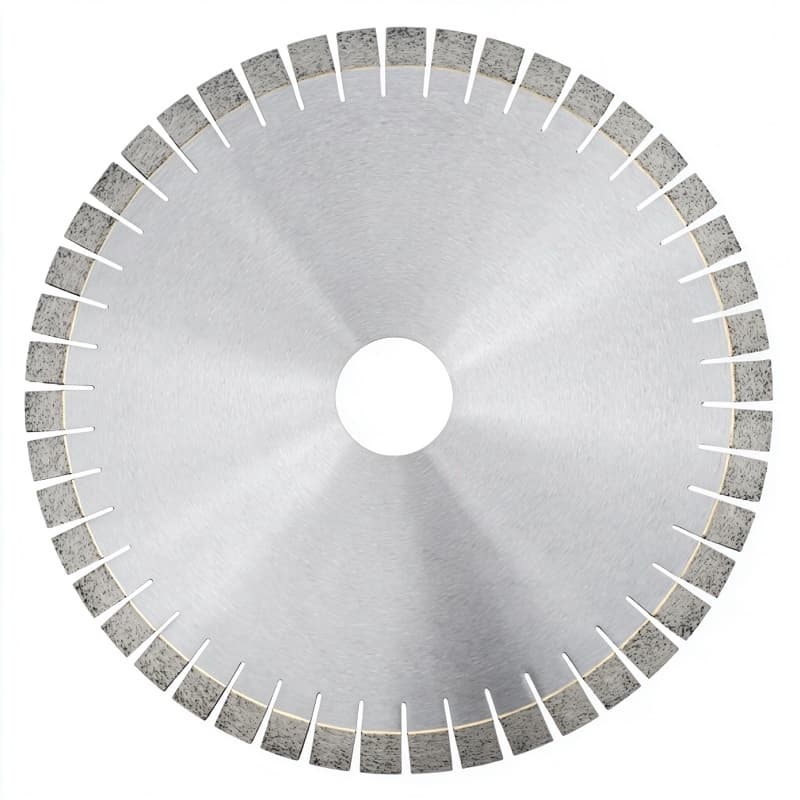
Granite Saw Blade (Short Segment) — JOY-GR-S
View specs →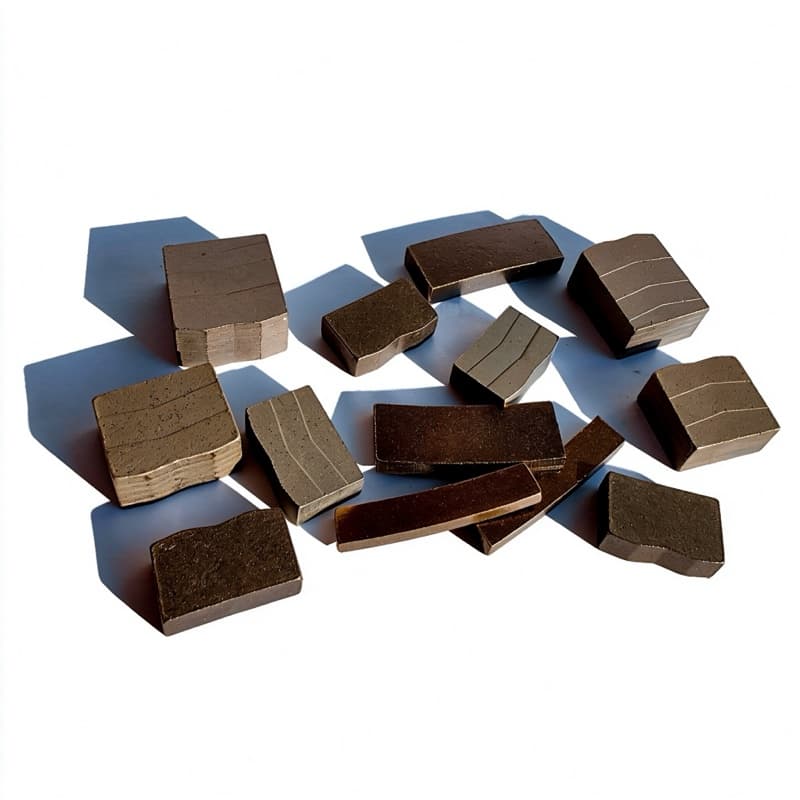
Quarry Blade Segment (Single Blade) — JOY-QB-S
View specs →Need this tool for your job?
MOQ 1 · 7–30 days by order quantity · FOB & CIF · free sample on request
Author & Manufacturer
Written and reviewed by JOY TECH — an SGS & BV audited, CE/RoHS certified diamond tools manufacturer founded in 2004, exporting to 50+ countries.
Quality & Compliance
Our factory and QMS are audited by SGS and Bureau Veritas. Products meet CE/RoHS requirements and every piece is 100% inspected before packing.
Verified Certificates
- SGS Audited Supplier — Report No. QIP-ASI227442 & QIP-ASR247051 (Audit Jan 29, 2024)
- Bureau Veritas Verified — Report No. MIC-ASR257059 (Audit Feb 20, 2025)
- CE & RoHS Certificate of Conformity — No. CS240925001HRZ (Issue Sep 25, 2024)