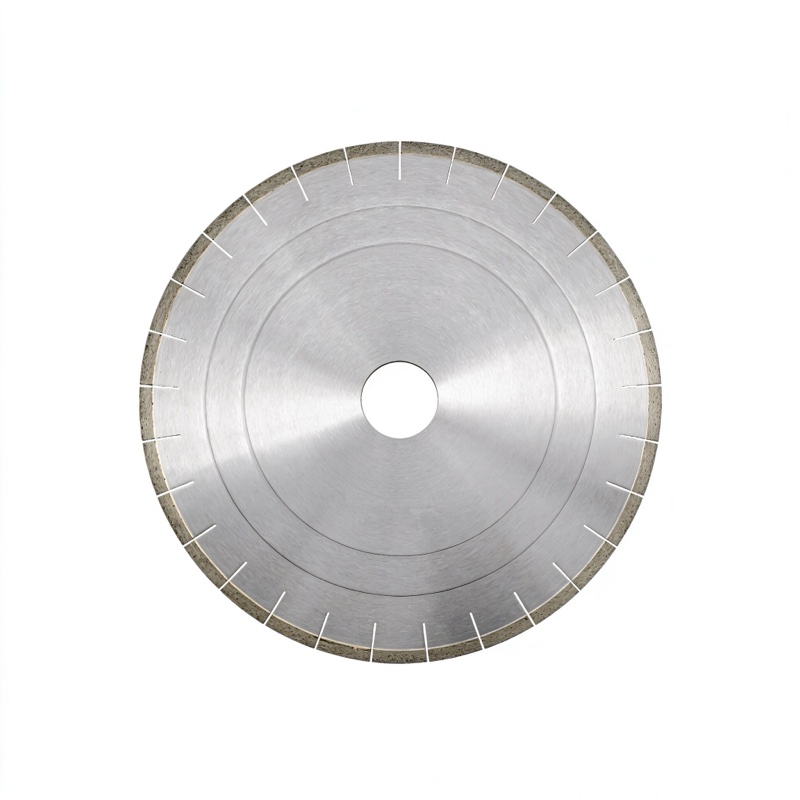
Match the blade diameter to the machine: 115–125 mm for angle grinders, 180–230 mm for larger grinders, 300–350 mm for hand-held cut-off saws, 350–450 mm for tile/stone saws, and 500 mm and up for floor saws. Never fit a blade larger than the machine's maximum rating.
| Machine | Typical Blade Diameter | Best For |
|---|---|---|
| Small angle grinder | 115–125 mm | Tile, thin stone, light cuts |
| Large angle grinder | 180–230 mm | Stone, masonry, deeper cuts |
| Cut-off saw | 300–350 mm | Concrete, brick, pipe |
| Tile / table saw | 250–450 mm | Stone slabs, large tile |
| Floor / road saw | 500–1200 mm | Deep concrete and asphalt cuts |
A>Use a 125 mm blade — never larger. The guard, flange and RPM rating are matched to that size.
A>No. The larger blade exceeds the machine's rating and guard, creating a serious safety risk.
A>Yes, up to the machine's limit — larger diameter means a deeper cut, but speed and torque must still match.
Match diameter to the machine, keep RPM within rating, and use the right arbor. For silent, stable large-blade work, the Dekton Saw Blade (Silent Core) — JOY-DK-SC is a strong choice; the Marble Saw Blade (Straight Slot) — JOY-MS-ST suits smaller stone jobs.
