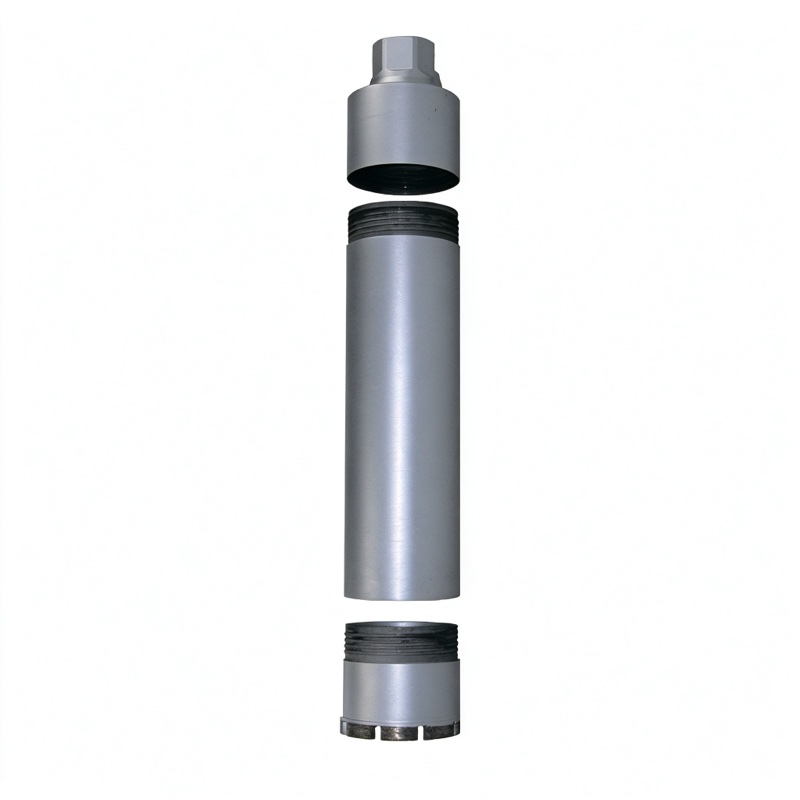
A glazed diamond core bit has a smooth, shiny segment face where the diamonds have polished flat without the bond wearing away. It stops drilling because no fresh diamond grit is exposed. Fix it by dressing the face on an abrasive material (a cinder block or dressing stone), restoring water flow, and increasing feed pressure slightly. Prevent it by choosing a bond matched to the concrete hardness.
Pull the bit out and inspect the cutting teeth. Instead of a rough, granular surface, they look polished and smooth, sometimes with a metallic sheen. The drill spins but does not advance, and smoke or heat may appear. This is common with a wet core bit run dry or with too light a feed; segment design affects how quickly the bond opens up.
Drill the bit into an abrasive dressing block, cinder block, or a slab with soft abrasive aggregate for 15-30 seconds, with water. The abrasive material wears back the bond, exposing fresh diamonds. Resume coring; the bit should bite again. If dressing does not restore cutting, the diamonds are fully worn and the segment needs replacement.
Match bond hardness to material: soft bond for hard dense concrete, hard bond for soft abrasive concrete. Maintain steady feed and confirm water reaches the bit. Avoid running the drill while stalled in the hole.
The best fix is prevention. Match bond to material, keep water flowing, and feed firmly enough that the bit actually cuts rather than rubs. Many operators glaze bits by being too gentle, afraid of breaking the barrel. A steady, confident feed wears the bond correctly and exposes fresh diamonds automatically.
Dressing only works while segment height remains. If segments are worn down to the steel core, dressing will not bring back lost diamonds. Replace the bit or re-tip the barrel rather than wasting hours trying to resurrect a spent tool.
On non-abrasive marble or dense limestone, even a correctly bonded bit can glaze. A brief dress on a cinder block restores bite. If this happens often, your bond is too hard for the material; order a softer bond.
Dress on abrasive block, restore water, firm up feed. Prevention is a bond matched to your concrete.
To dress, drill the glazed bit into a cinder block or abrasive dressing stone for 15-30 seconds with water. The abrasive wears the bond back, exposing fresh diamonds. If the bit still will not bite after two dressings, the segments are worn and need replacement or re-tipping.
Most glazing comes from too-light feed. Operators are often afraid to push, but a confident steady feed wears the bond correctly. Also confirm water reaches the crown of the bit; a dry crown glazes in minutes.
If a bit will not cut after dressing on abrasive block, the diamonds are spent. Re-tip the barrel or replace it. Dressing only restores exposed grit; it cannot make new diamonds grow. Do not waste an afternoon trying to revive a dead bit.
Confirm water reaches the crown before pushing. A dry crown glazes in minutes. If flow drops, withdraw and clear the feed line.
If glazing keeps coming back, your bond is too hard for the concrete. Order a softer bond. Dressing is a temporary fix; the right bond prevents recurrence.
Most glazing comes from being too gentle. A confident, steady feed wears the bond correctly and exposes fresh diamonds. Do not baby the bit.
Confirm water reaches the crown of the bit, not just the surface. A dry crown glazes in minutes. If flow drops, withdraw and clear the feed line before continuing.
A: Only on abrasive, soft concrete or block; hard concrete will not open a glazed face.
A: Dressing only works while segment height remains. Once segments are near worn out, replace them.
A: Not necessarily; early glazing is reversible. Repeated overheating may permanently damage diamond retention.
Glazing is a bond-and-feed problem, not worn diamonds. Dress the bit, restore water, increase feed, and order a bond matched to your concrete. Contact JOY TECH for core bits in soft, medium, and hard bonds for local aggregate conditions.
