

Diamond Cup Wheel vs Grinding Plug for Stair Treads
Diamond Cup Wheel vs Grinding Plug for Stair Treads
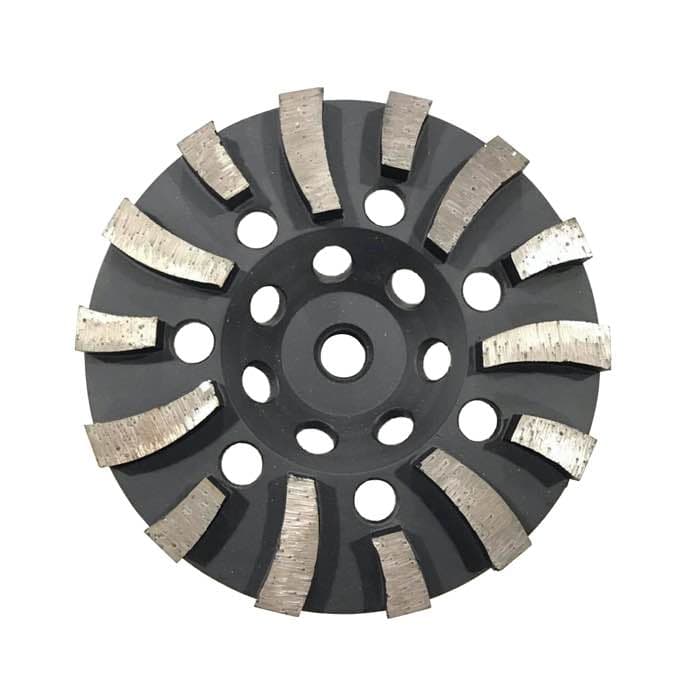
Quick Answer
Use a cup wheel on an angle grinder for the field of the tread and the riser face when you need speed and a flat profile. Use a grinding plug or a small-diameter cup wheel when you need to control the nosing, work into corners, or avoid rounding the stair edge. On stairs, the tool that wins is the one that keeps the nosing sharp and the tread flat without gouging.
Why Stairs Are Different From Floors
A stair tread is a narrow, elevated work surface with a visible nosing and a vertical riser. A floor grinder cannot reach it, and a large cup wheel can tip over the edge. The operator also works at height, often with a vacuum hose and a power cable, so tool weight and balance matter as much as removal rate.
The main risks are rounding the nosing, gouging the tread at the riser joint, and leaving a visible transition where the tread meets the stringer. A cup wheel cuts fast but can catch the nosing; a grinding plug is slower but gives better edge control.
Cup Wheel Strengths
A 100-125 mm diamond cup wheel on a variable-speed angle grinder removes coatings and levels small high spots quickly. A 12-arrow or hurricane segment cup wheel clears dust and slurry well, and the open segment pattern avoids loading on soft treads.
- Fast stock removal on treads and risers.
- Good for coating removal before a new overlay.
- Works with a dust shroud on flat treads.
- Cheaper per unit than a dedicated stair tool.
The limitation is the edge. A cup wheel’s rim is exposed, and tilting it over the nosing can round the edge in seconds.
Grinding Plug Strengths
A grinding plug is a small cylindrical or conical diamond tool that fits a die grinder or a small angle grinder. It reaches into the corner between tread and riser and lets the operator work the nosing from the top without tipping a large wheel over the edge.
- Edge control at the nosing and stringer.
- Corner access at the tread-riser joint.
- Lower kickback when the tool catches.
- Better for repair work and small areas.
It is slower and removes less per pass, so it is a detail tool, not a production tool for a whole staircase.
Recommended Workflow
- Set up a vacuum and a safe platform; never stand on a ladder for a full tread.
- Remove loose paint or coating with a scraper before grinding.
- Use a cup wheel flat on the tread, staying 20-30 mm back from the nosing.
- Use a grinding plug or a small cup wheel to blend the last 20 mm and the tread-riser joint.
- Check the nosing with a straight edge; it should stay square, not rounded.
- Vacuum, prime and coat within the manufacturer’s window.
Tool and Safety Selection
Use a variable-speed grinder and keep the wheel at the manufacturer’s RPM. A cup wheel rated for 12,000 rpm on a 15,000 rpm grinder is a hazard. For dust, use a shroud and a HEPA vacuum; on stairs, a compact hose is easier to manage than a long stiff hose.
Wear eye protection, hearing protection and a respirator. Secure the vacuum hose so it cannot pull the grinder off the tread. On exterior stairs, check for wind and wet surfaces before starting.
Frequently Asked Questions
Q: Can I grind stair treads with a floor grinder?
A: No. A floor grinder cannot fit on a tread and is unstable on the edge. Use a hand-held angle grinder with a cup wheel or plug.
Q: How do I keep the nosing from rounding?
A: Stay back from the edge with the cup wheel and finish the last 20 mm with a plug or a small wheel. Check with a straight edge as you go.
Q: Which tool removes paint faster?
A: A cup wheel. A plug is for detail and corners, not for stripping a full tread.
Q: Do I need a dust shroud on stairs?
A: Yes where possible. A shroud and HEPA vacuum control silica dust; on open stairs, plastic sheeting helps contain the plume.
Conclusion
Use a cup wheel for production and a grinding plug for the edges that a cup wheel cannot safely reach. Keep the nosing square, control dust, and do not trade speed for a rounded edge that will need a repair nosings later. JOY TECH supplies hurricane cup wheels and 12-arrow cup wheels for stair and detail work.
Products used in this guide
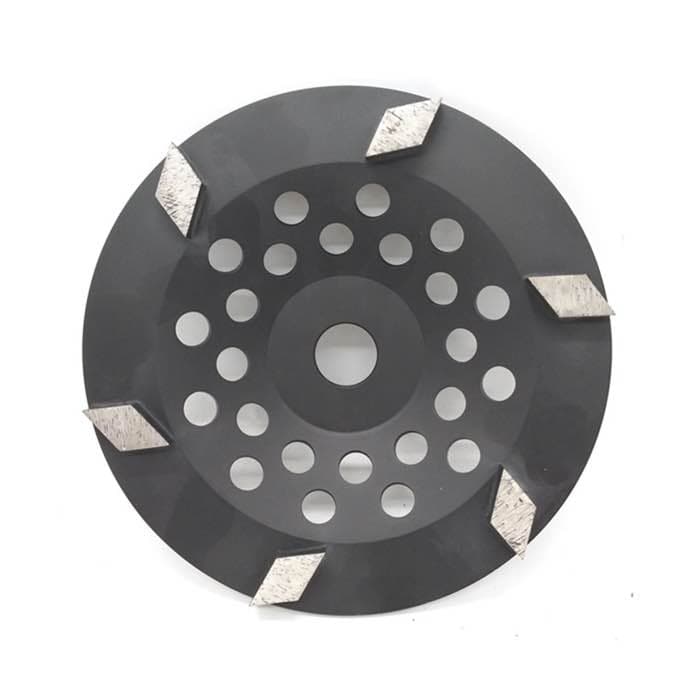
Diamond Grinding Cup Wheel with 6 Rhombus Segments (JOY-CW-RH6)
View specs →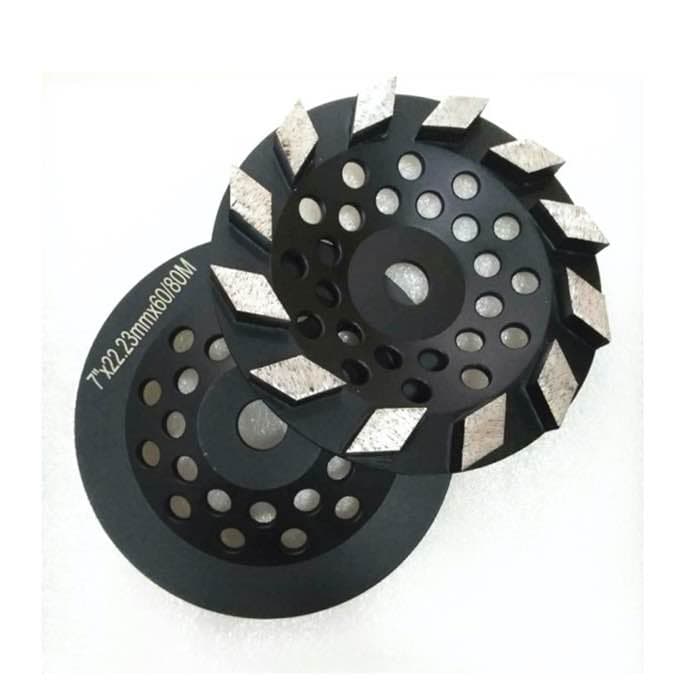
7'' 180mm Diamond Grinding Cup Wheel with 12 Rhombus Segments (JOY-CW-RH12)
View specs →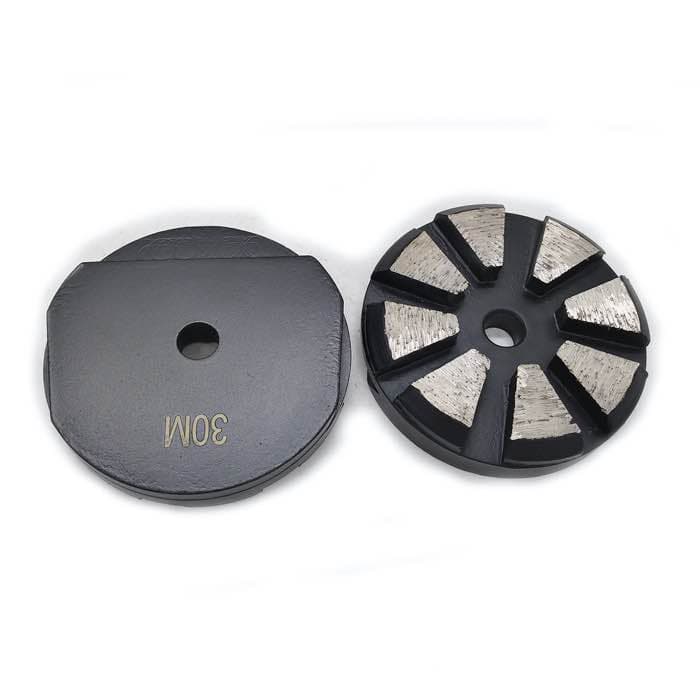
3'' Diamond Grinding Disc with 8 Segment for Lavina Floor Grinder (JOY-LVS-T8)
View specs →Need this tool for your job?
MOQ 1 · 7–30 days by order quantity · FOB & CIF · free sample on request
Author & Manufacturer
Written and reviewed by JOY TECH — an SGS & BV audited, CE/RoHS certified diamond tools manufacturer founded in 2004, exporting to 50+ countries.
Quality & Compliance
Our factory and QMS are audited by SGS and Bureau Veritas. Products meet CE/RoHS requirements and every piece is 100% inspected before packing.
Verified Certificates
- SGS Audited Supplier — Report No. QIP-ASI227442 & QIP-ASR247051 (Audit Jan 29, 2024)
- Bureau Veritas Verified — Report No. MIC-ASR257059 (Audit Feb 20, 2025)
- CE & RoHS Certificate of Conformity — No. CS240925001HRZ (Issue Sep 25, 2024)