Dry grinding is the standard for floor prep and most concrete work because it pairs with HEPA vacuum extraction and leaves the floor ready to coat. Wet grinding suppresses dust at the source, cools diamond tooling, and is preferred for stone and fine polishing. Wet will not ruin concrete — it creates slurry you must collect — but it slows production and delays coating.
Dry grinding uses a walk-behind grinder with a sealed shroud connected to an industrial HEPA extractor. It is fast, clean, and leaves the slab dry for immediate coating. It can, however, generate heat that glazes discs on hard concrete, and dust control depends on a working extractor.
Wet grinding feeds a slow water stream to the diamond segments. Dust is trapped as slurry, tools run cooler and last longer on hard stone, and the final polish looks deeper. Downsides: slurry disposal, GFCI/electrical safety, and the floor must dry fully before coating.
| Job | Recommended |
|---|---|
| Coating removal / prep indoors | Dry + HEPA |
| Hard concrete / glazing issues | Wet |
| Granite / marble / terrazzo polish | Wet |
| Outdoor driveway grind | Dry or wet (drainage) |
| Final resin polish | Either; dry burnish common |
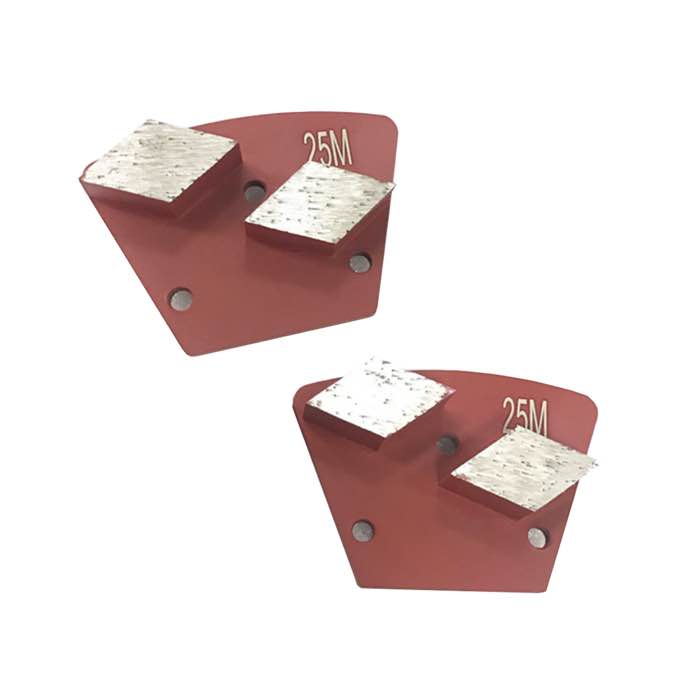
On a dry prep job, use a free-cutting metal disc like a trapezoid disc; for wet stone work, switch to a wet-rated bond and resin pads.
Wet concrete slurry is alkaline and silty. Let it settle in a drum, pour off clear water carefully, and harden the cake for landfill. Never hose it into storm drains.
Wet grinding produces alkaline slurry. Contain it with dams, channel it to a settling tank, and let solids settle. Dispose of hardened cake at a concrete waste facility. Never hose slurry into storm drains or septic systems — it clogs and pollutes.
Wet cooling extends diamond tool life on hard stone and dense concrete by keeping segments from overheating. On soft, abrasive concrete the difference is smaller. Resin pads often last longer wet because they do not resin-burn. Factor tool life into the wet-vs-dry decision.
No water on site? You must go dry with HEPA extraction. No power for a vacuum, or indoor silica exposure? Wet may be the only compliant option. Most commercial contractors carry both setups and choose per job.
Wet grinding often uses a slightly harder bond because water cools the segment. If you switch a dry-bond disc to wet, it may cut slower. Ask suppliers for wet-rated bonds. Resin pads are mostly wet-rated already.
Dry with vacuum wins for fast prep and immediate coating. Wet wins for dust-sensitive interiors and stone. Most contractors pick dry for commercial floor prep, wet for residential and stone.
It is fine to dry-prep and wet-polish. Just clean the floor between methods. Do not mix wet slurry with dry vacuum — it clogs the filter.
Dry grinding means louder dust; wet means splash. Both are tiring. Take breaks and rotate operators on big jobs.
Dry for production and coating prep; wet for dust-sensitive interiors and stone. Most commercial crews prefer dry with HEPA extraction because the floor is ready immediately. Residential and museum jobs often go wet to avoid dust migration. You can dry-prep then wet-polish — just clean the floor between.
Wet cooling lets you use a slightly harder bond. If you switch a dry disc to wet and it cuts slowly, the bond may be too hard for wet use. Ask the supplier for wet-rated tooling.
Dry for production, wet for control. Choose per site, and do not be afraid to mix methods. Either one works as long as you control dust and tool heat.
A: No — it just adds water. Once dry, the concrete is unchanged. Do not leave standing water on a fresh slab.
A: Many floor grinders accept a water feed kit. Use GFCI protection and waterproof leads.
A: Wet polishing usually yields a deeper, cleaner gloss on stone; dry burnishing gives a bright sheen on concrete.
A: Slightly, due to water management and cleanup, but tool life often offsets it.
Dry for production prep, wet for cooling and polish. Match the method to the material and the site. Contact JOY TECH for dry- and wet-rated diamond tooling.
