Average response time: under 24 hours
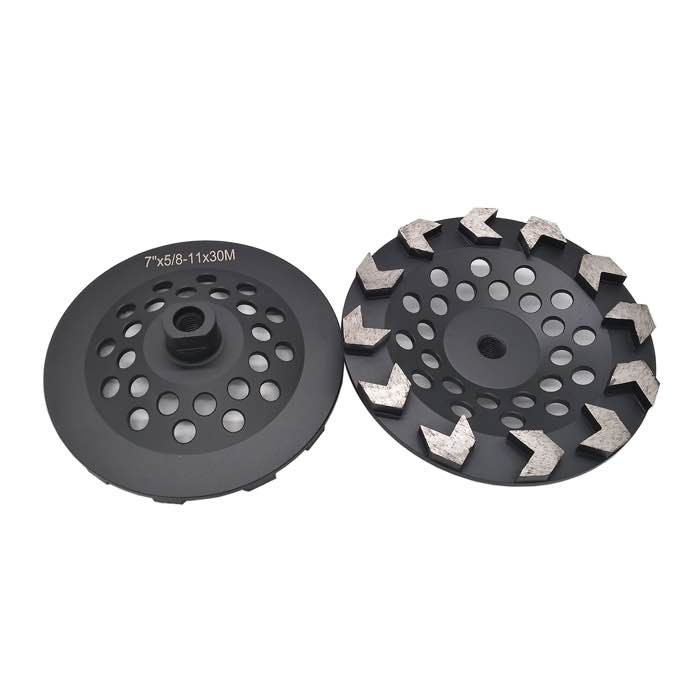
Dustless concrete grinding means pairing a certified HEPA dust extractor with a purpose-built grinding shroud on your angle grinder or floor grinder, and using matched diamond tooling such as a diamond cup wheel or trapezoid grinding disc so the machine cuts efficiently and produces less airborne dust in the first place. Connect the extractor to the shroud, fit a dust collector adapter if your hose and shroud do not match, wear a half-mask P100 respirator, and grind in overlapping 40-60 cm passes. This approach keeps indoor renovations, occupied warehouses and food or pharma facilities free of silica dust and meets OSHA Table 1 requirements.
Silica dust from concrete grinding is a confirmed lung carcinogen. OSHA 29 CFR 1926.1153 (Table 1) requires a specified dust-control method for every concrete cutting or grinding task, and most western European contractors follow the similar EN 17161 hierarchy. For a contractor quoting an occupied building, a hospital, a school or a food plant, offering dustless concrete grinding is no longer a premium add-on — it is the price of admission. Customers will ask for the HEPA rating, the airflow numbers, and a written method statement.
A blunt, overused or wrong-hardness diamond tool actually increases dust because it rubs the surface rather than cutting it. Sharp, matched diamonds shear the concrete paste cleanly and release less fines. For handheld work on a 125/180 mm angle grinder, a double-row or turbo diamond cup wheel with a bond matched to the concrete hardness gives the fastest cut and the lowest dust load. For walk-behind grinders, trapezoid shoes such as the triple-round-segment trapezoid disc remove laitance and light coatings evenly.
| Substrate hardness | Bond choice | Typical tooling |
|---|---|---|
| Soft / green concrete (C20-C25) | Hard bond | 30/40 or 40/60 metal-bond shoe |
| Medium (C30-C40) | Medium bond | 30/40, 60/80 |
| Hard / dense (C45+) | Soft bond | 16/20, 30/40 with higher diamond concentration |
| Coatings (epoxy, glue, mastic) | PCD | PCD coating-removal tooling |
Set up takes ten minutes and pays back immediately. First, seal the work area: plastic sheeting and painter's tape on door frames, and close HVAC returns. Stage a spare HEPA filter, a set of collection bags, and water for wet methods. Mount the shroud on the grinder so the skirt sits 1-2 mm off the floor — too tight and it drags, too loose and dust escapes. Connect the hose with the correct dust collector adapter; reducer rings leak and lose suction. Test the vacuum on bare floor for thirty seconds and watch for dust clouds at the shroud edge — if you see any, re-seat the skirt or lower the wheel guard.
Dry grinding with HEPA extraction is the industry standard for interior work because it leaves the surface dry and ready for coating the same day. Wet grinding suppresses dust completely but requires slurry containment, pumping, and drying time (typically 24-48 hours) before epoxy can be applied. Choose wet only where noise or silica risk is extreme (historic buildings, occupied hospitals) or where the surface is being polished to a high-gloss finish. For standard B2B floor prep — epoxy, polyurethane, or warehouse coatings — dry HEPA is faster and cleaner overall.
Even experienced crews make the same mistakes. Using a shop-vac instead of a HEPA extractor passes fine dust straight through. Running a worn-out filter negates the entire system. Forcing the grinder down to "go faster" heat-glazes the diamonds and clouds the air. Skipping the plastic containment means dust migrates through door gaps and clients reject the job. And under-sizing the cup wheel for the grinder RPM causes vibration, premature wear, and broken segments that eject as hot sparks.
No. A standard shop vacuum does not carry a HEPA rating and will pass respirable silica through the exhaust. For compliance and worker health you need a certified H-class or HEPA H13/H14 extractor rated for concrete dust, with automatic filter cleaning.
Match the shroud to the cup wheel diameter: 115/125 mm shroud for 115/125 mm wheels, 180 mm shroud for 180 mm wheels. The shroud should have an adjustable skirt and a 27-38 mm hose port, which fits most extractors with a standard adapter.
Most particles are below 10 µm and a large fraction below 2 µm — exactly the respirable size that reaches the alveoli. This is why a paper mask is not enough and a P100 (or FFP3) half-mask with HEPA extraction is required.
Usually no. Dry grinding with a correctly sized HEPA extractor meets OSHA Table 1 and produces a floor that is ready for coating the same day. Wet grinding is reserved for high-risk environments or for polishing work where water improves the finish.
Dustless concrete grinding is a system, not a single tool: matched diamond tooling, a HEPA extractor, a sealed shroud, correct technique, and worker PPE. Specify the right cup wheel or trapezoid shoe for the substrate, protect the client's building with containment, and document the method statement for the safety file. Done correctly, you can grind an entire warehouse overnight without leaving a dust film on the office desk outside the door.
Written and reviewed by JOY TECH — an SGS & BV audited, CE/RoHS certified diamond tools manufacturer founded in 2004, exporting to 50+ countries.
Our factory and QMS are audited by SGS and Bureau Veritas. Products meet CE/RoHS requirements and every piece is 100% inspected before packing.
Verified Certificates
