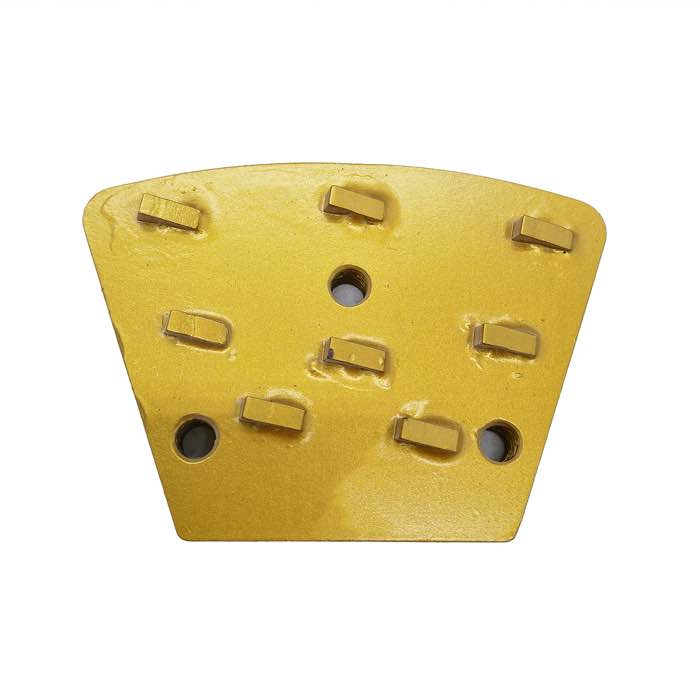
For a 20 sqm slab in a tight corner, the best setup is an angle grinder with a dust shroud, a PCD cup wheel for coating removal, and a small trapezoid or cup-wheel grinding disc for the rest, connected to a HEPA vacuum. A 5″ or 7″ grinder covers the area in manageable passes without needing a planetary machine.
Small areas — a 20 sqm basement corner, a closet floor, a small garage bay — do not justify the cost and logistics of a ride-on or planetary grinder. Hand-held angle grinders handle these jobs well when you choose the right tooling and technique:
| Tool | Use |
|---|---|
| 5″/125mm angle grinder (1200W+) | Main grinding tool |
| Dust shroud with HEPA vacuum | Silica dust control |
| PCD cup wheel | Coating, glue, paint removal |
| Turbo or segment cup wheel (30/40-60/80) | Concrete grinding and leveling |
| Small trapezoid disc on a plate | Larger passes on open floor areas |
Grinding concrete produces crystalline silica dust, which is a serious health hazard. Always use a dust shroud connected to a HEPA vacuum, and wear an appropriate respirator as backup. Wet grinding is an option where water and cleanup are practical, but dry with HEPA is the standard for indoor small jobs.
A>Yes, for minor leveling and high spots. For significant leveling (more than a few mm), use a coarser cup wheel and multiple passes, or consider a small planetary machine for a flatter result.
A>Start 30/40 to grind and open, then 60/80 to refine, then finer grits if polishing. For a prep-only job, stop at 60/80 after coating removal.
A>Typically 2-4 hours including coating removal and cleanup, depending on the concrete hardness and the condition of the surface. Plan for breaks; hand grinding is tiring.
A>Planetary machines give a more uniform finish over large areas, but for 20 sqm with careful technique, a hand grinder delivers a perfectly serviceable result — especially for prep before coating.
For a small slab, a 5″ or 7″ angle grinder with a dust shroud, a PCD cup wheel for coatings, and a segment cup wheel for grinding is the practical, low-cost setup. Keep the tool flat, overlap your passes, and control dust — then finish with JOY small-format tooling for a clean, ready surface.
