
How to Burnish a Polished Concrete Floor for Extra Shine
How to Burnish a Polished Concrete Floor for Extra Shine
Quick Answer
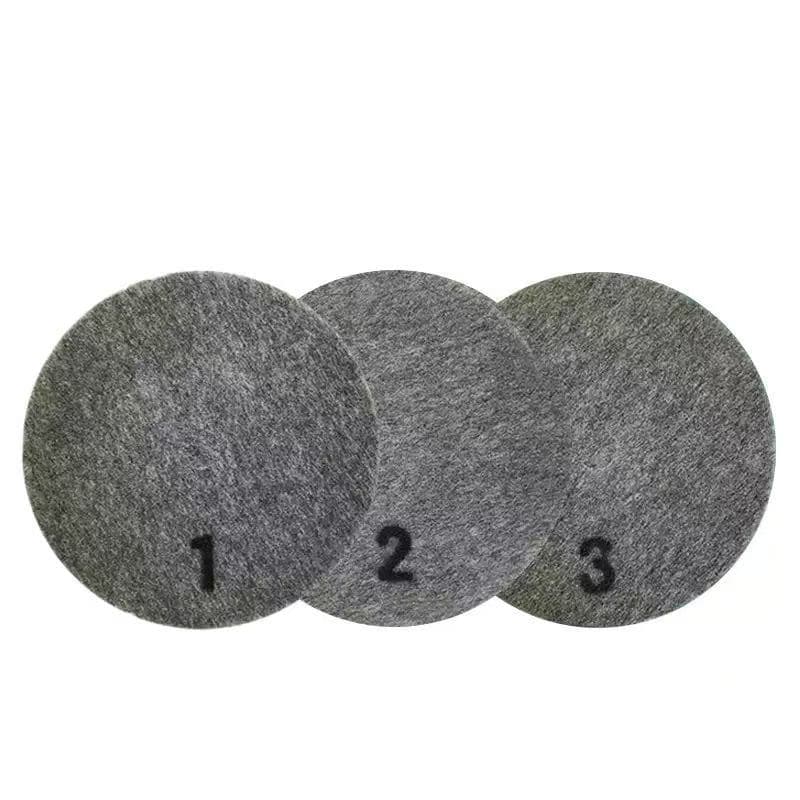
Burnishing is the final high-speed pass that lifts gloss and hardens the surface — use a floor burnisher with burnishing pads after your 1500–3000 polishing steps. Polishing creates the gloss; burnishing refines and protects it for daily traffic.
Key Features of Burnishing
- High speed: burnishers run at 1000–2000+ rpm — faster than floor polishers.
- Heat and friction: friction densifies the surface and raises shine.
- Pad types: resin pucks or burnishing pads, often with a diamond component.
- When: after polishing and densifying, and periodically as maintenance.
How to Choose: Burnisher vs Polisher
| Factor | Polisher | Burnisher |
|---|---|---|
| Speed | 500–1500 rpm | 1000–2500 rpm |
| Purpose | Grit progression, grinding | Final gloss, maintenance |
| Pads | Diamond resin pads | Burnishing pads / pucks |
| Use on | All grits | After 1500+ and on sealed floors |
How to Use It
- Complete the polish sequence and allow the densifier to cure.
- Attach burnishing pads with resin pucks to the machine.
- Run slow, overlapping passes at full speed until the gloss evens out.
- Repeat burnishing on a schedule to maintain shine under traffic.
Frequently Asked Questions
Q: When do I use a burnisher vs a polisher?
A: Use the polisher for the grit sequence; use the burnisher after 1500+ (or on a sealed floor) as the final gloss and maintenance step.
Q: Can burnishing damage polished concrete?
A: No — it is the standard finishing step. Skip it and the floor will look less shiny and wear faster.
Q: How often should I burnish?
A: High-traffic commercial floors often get a weekly or monthly burnish; residential can go quarterly.
Conclusion
Polishing creates the shine; burnishing locks it in. Finish the sequence, let the densifier cure, and run a burnisher with burnishing pads for gloss that survives daily traffic.
Maintaining the Shine
Burnishing is both a final finishing step and a recurring maintenance task. Schedule light burnishing on a regular cycle for commercial floors — dust tracked into the finish is what dulls it, not the polish itself. Keep burnishing pads clean and dry; a loaded pad smears rather than heats. Never burnish a wet floor, and avoid burnishing a new densified surface too early before it has cured. If shine drops after months of traffic, run through the normal polish sequence again rather than trying to force more burnisher speed. A weekly light burnish keeps the floor looking newer between full refinishing cycles.
Products used in this guide
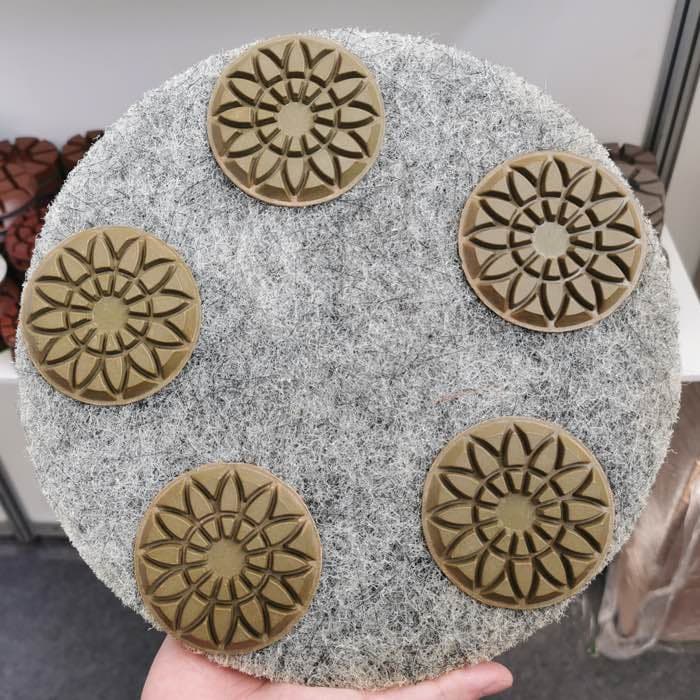
Burnishing Pads with Resin Pucks for Concrete Floor Polishing (JOY-RFP-BP3)
View specs →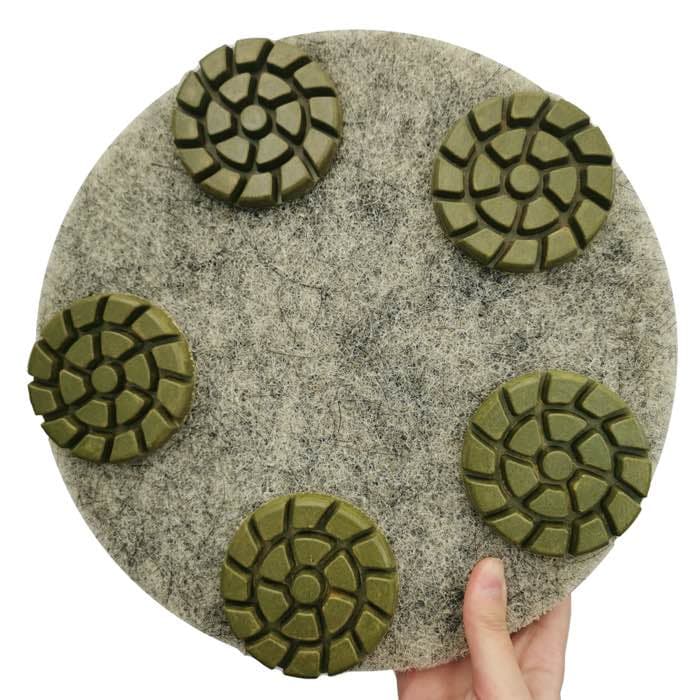
Burnishing Pads with Resin Pucks for Concrete Floor Polishing (JOY-RFP-BP4)
View specs →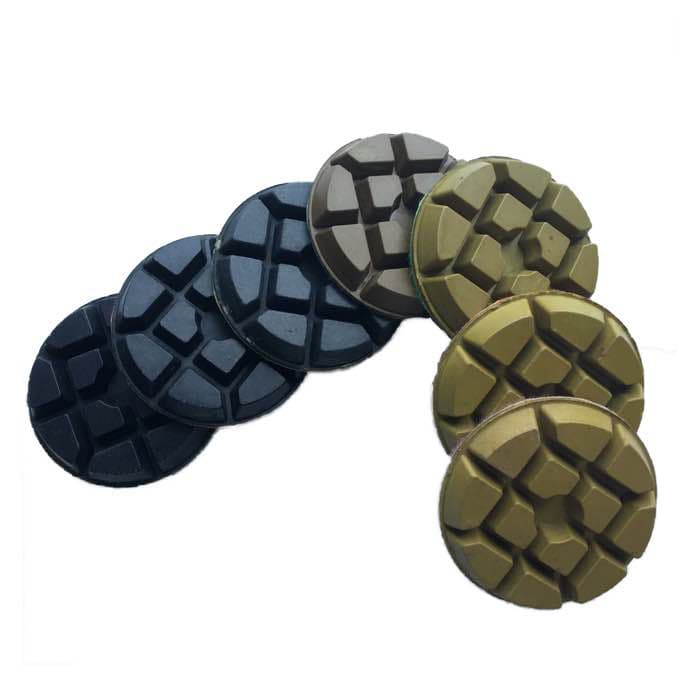
Diamond Resin Polishing Pads for Concrete Terrazzo Floor (JOY-RFP-01)
View specs →Need this tool for your job?
MOQ 1 · 7–30 days by order quantity · FOB & CIF · free sample on request
Author & Manufacturer
Written and reviewed by JOY TECH — an SGS & BV audited, CE/RoHS certified diamond tools manufacturer founded in 2004, exporting to 50+ countries.
Quality & Compliance
Our factory and QMS are audited by SGS and Bureau Veritas. Products meet CE/RoHS requirements and every piece is 100% inspected before packing.
Verified Certificates
- SGS Audited Supplier — Report No. QIP-ASI227442 & QIP-ASR247051 (Audit Jan 29, 2024)
- Bureau Veritas Verified — Report No. MIC-ASR257059 (Audit Feb 20, 2025)
- CE & RoHS Certificate of Conformity — No. CS240925001HRZ (Issue Sep 25, 2024)