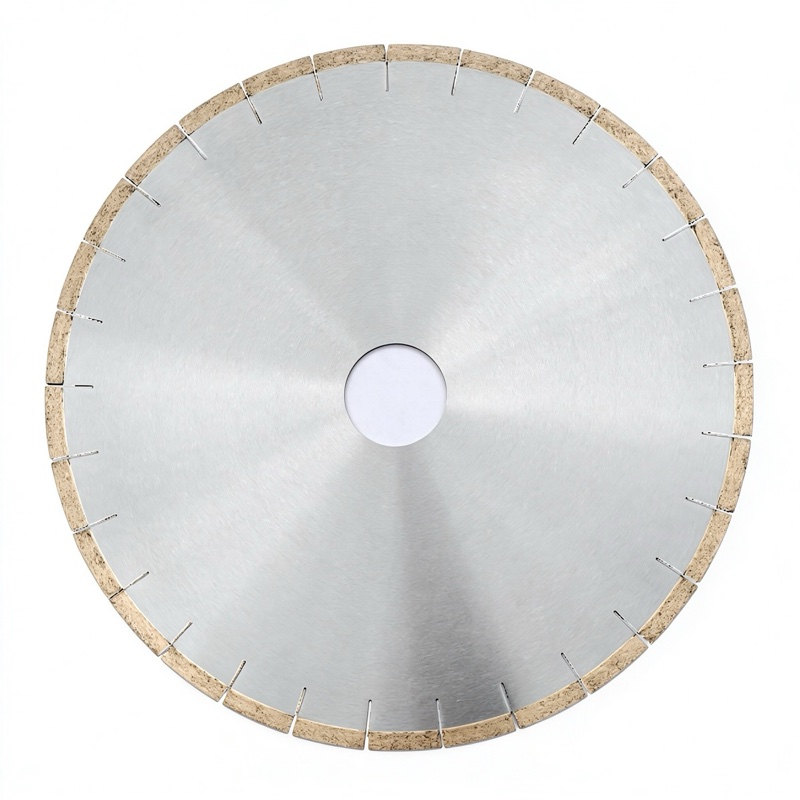
Choose a medium-to-soft bond diamond blade with a continuous or narrow turbo rim for limestone, and cut at moderate feed with water. The bond must wear slightly faster than the stone so the rim stays sharp instead of loading up with the soft calcareous dust.
Limestone is soft and porous, so it wears the blade's bond slowly while the diamond grit cuts easily. The result is that the metal bond does not erode fast enough — the rim "loads up" with stone powder, glazes over and starts burning the edge. This is why a blade that is perfect for granite fails on limestone.
A Marble Saw Blade (Straight Slot) is a good soft-stone starting point for limestone blocks and tiles; the Universal Stone Cutting Blade covers mixed soft stone jobs.
Not recommended. A hard-bond granite blade will load up and burn on limestone. A soft-stone or marble blade is the right tool.
The bond is too hard for the stone — the rim fills with dust and stops cutting. Switch to a softer bond or dress the blade with an abrasive block.
Wet. Limestone dust is abrasive and glazes the rim quickly; water keeps the rim open and the edge clean.
Limestone needs a soft-bond, wet-cut blade with a smooth rim. Match the bond to the stone and you avoid the loading and burning that make limestone frustrating. JOY TECH can supply soft-stone bonds for limestone, travertine and sandstone in any size.
