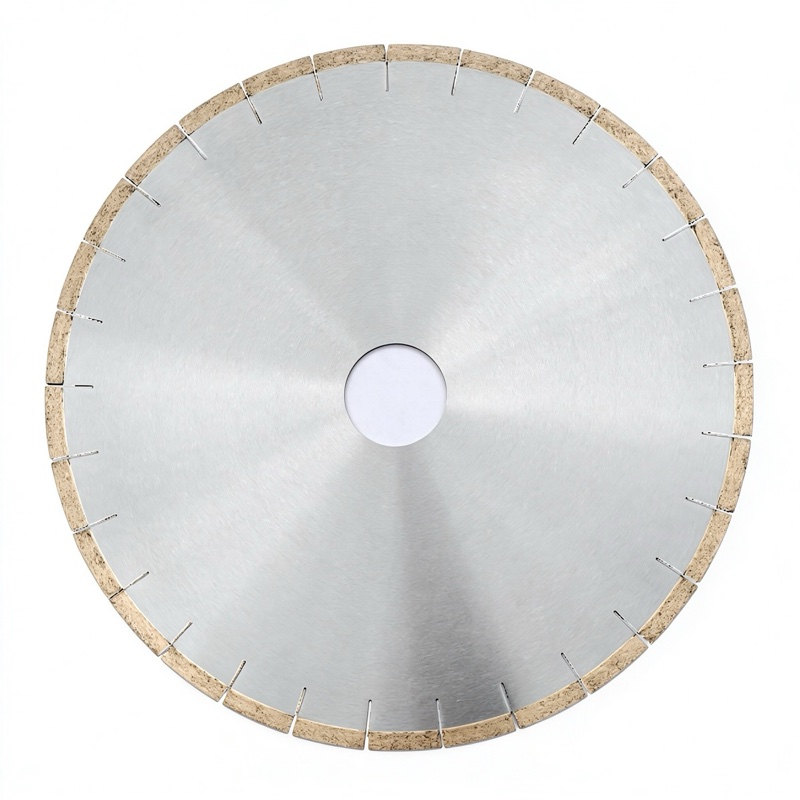
Cut marble floor tiles with a continuous-rim or turbo diamond blade on a wet tile saw. Marble is soft relative to granite, so a medium-hard bond turbo blade cuts fast, while a continuous rim gives the cleanest polished edge for visible cuts. Always cut wet — dry cutting burns marble and leaves a chalky edge. For production flooring work, a 250-350 mm blade on a rail saw or bridge saw is standard.
| Marble | Blade Type | Notes |
|---|---|---|
| Carrara / Calacatta | Continuous rim | Clean white edge, no staining |
| Travertine | Turbo rim | Soft, porous — cut with light feed |
| Dark marble | Turbo, medium bond | Slower feed, cool cutting |
| Honned / textured | Turbo rim | Fast, then hone the edge |
Our marble straight-slot blade gives a clean cut on white and light marble, while the granite long-segment blade handles mixed stone jobs.
A>For small jobs, yes, with a 115-125 mm turbo blade and wet sponge or spray. For flooring, a wet tile saw is cleaner.
A>Dry cutting or too-fast feed. Marble burns easily — always cut wet and slow down.
A>For visible, polished edges, yes. For hidden cuts, a turbo blade is fine.
A>Support both sides of the cut and feed gently — most marble cracks come from unsupported cuts or forcing the blade.
Choose a continuous or turbo blade, cut wet, and feed gently for clean marble floor cuts. Browse our marble cutting range for tile saws and bridge saws.
