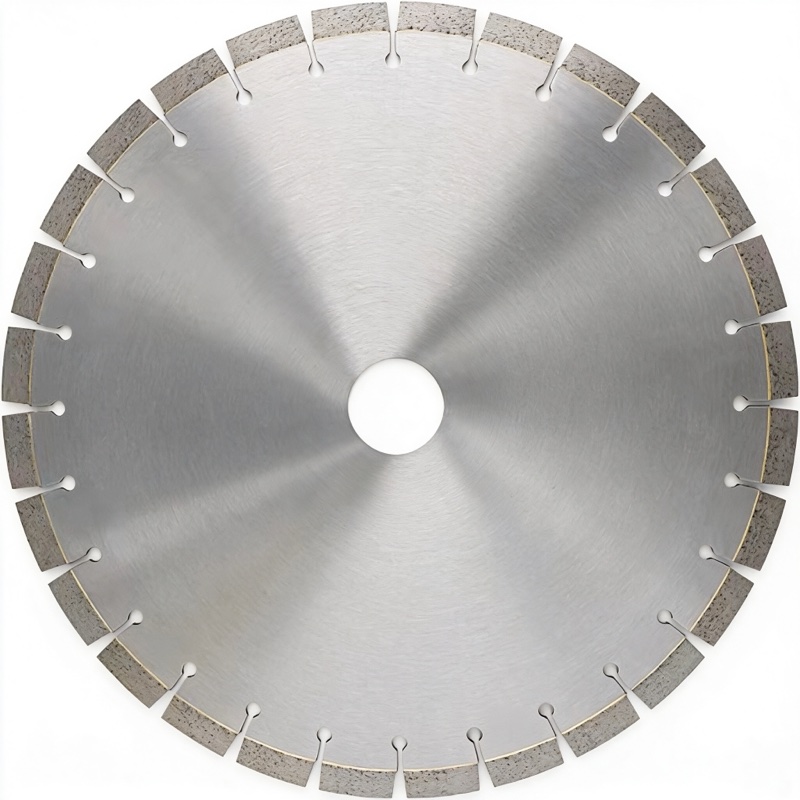
Cut natural slate with a continuous-rim or fine turbo diamond blade, run wet on a tile saw. Slate is a metamorphic rock that splits in layers, so the main risks are delamination (layers separating) and feathering at the cut edge. A continuous rim blade gives the cleanest edge; cut with the slate face up, feed gently, and support the tile on both sides. For thick slate slabs (25-40 mm), a turbo blade with a straight edge guide works well.
Slate forms in thin layers (cleavage planes). When a blade hammers the edge, the layers separate — that's delamination. Feathering is the frayed, broken edge you see on poorly cut slate. The fix is a smooth-cutting blade (continuous or fine turbo), low vibration, and a gentle, even feed.
| Factor | Recommendation |
|---|---|
| Rim type | Continuous rim for thin tile; turbo for slabs |
| Wet/Dry | Wet only |
| Feed rate | Slow and even — no forcing |
| Slate face | Cut with face up, score first |
| Support | Both sides of the cut |
Our marble straight-slot blade suits thin slate tile, while the granite long-segment blade handles thick slab work.
A>Dull blade, dry cutting, or forcing the feed. Switch to a continuous rim and cut wet.
A>For small cuts, yes, with a turbo blade and light passes. For tile work, a wet tile saw is cleaner.
A>Use a hole saw with diamond grit, or drill a pilot hole and cut with an angle grinder.
A>Not usually — but if the slate is used outdoors, seal the edge to prevent water penetration.
Continuous rim blades, wet cutting and gentle feed give clean slate edges without delamination. Browse our natural stone blade range for tile and slab saws.
