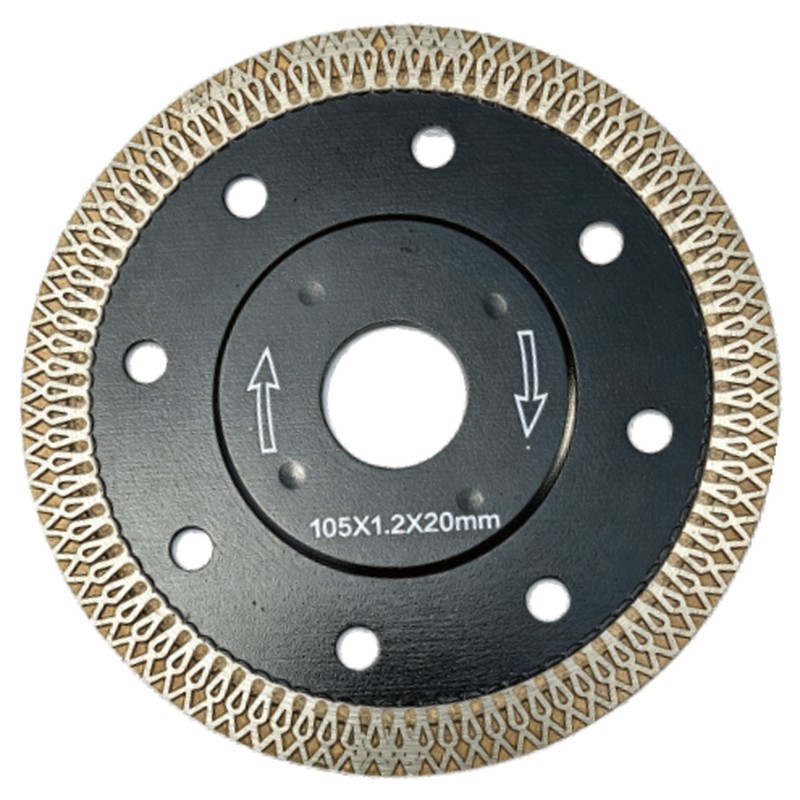
Cut concrete and clay roof tiles with a turbo rim diamond blade on an angle grinder — dry cutting with dust extraction is standard on roofs, though a damp blade cuts cleaner. Use a 115-125 mm turbo blade for most cuts, score the glazed face first, and cut slowly to avoid chipping the tile edge. For thick concrete tiles, cut from both sides; for clay and terracotta, use a softer bond turbo blade to prevent edge breakout.
| Method | Pros | Cons |
|---|---|---|
| Dry cut | Fast, mobile on roof | Dust, more chipping risk |
| Wet cut | Cleanest edge, less dust | Water supply on roof, mess |
| Damp (spray) | Balanced | Still some dust |
A turbo dry blade handles most roof tile cutting on a grinder; the turbo mesh disc is the cleanest choice for glazed and thin tiles.
A>For small wet-cut jobs, yes. For roof work, a grinder with a turbo blade is more practical.
A>Bond too hard for clay, or dry cutting too fast. Use a softer-bond turbo and slow the feed.
A>Yes — concrete tiles are abrasive; carbide blades dull in a few cuts.
A>Mark the miter with a bevel gauge, cut with a turbo blade and dress with a grinder if needed.
A turbo diamond blade cuts concrete and clay roof tiles fast with a clean edge. Browse our turbo blade range for roof and tile work.
