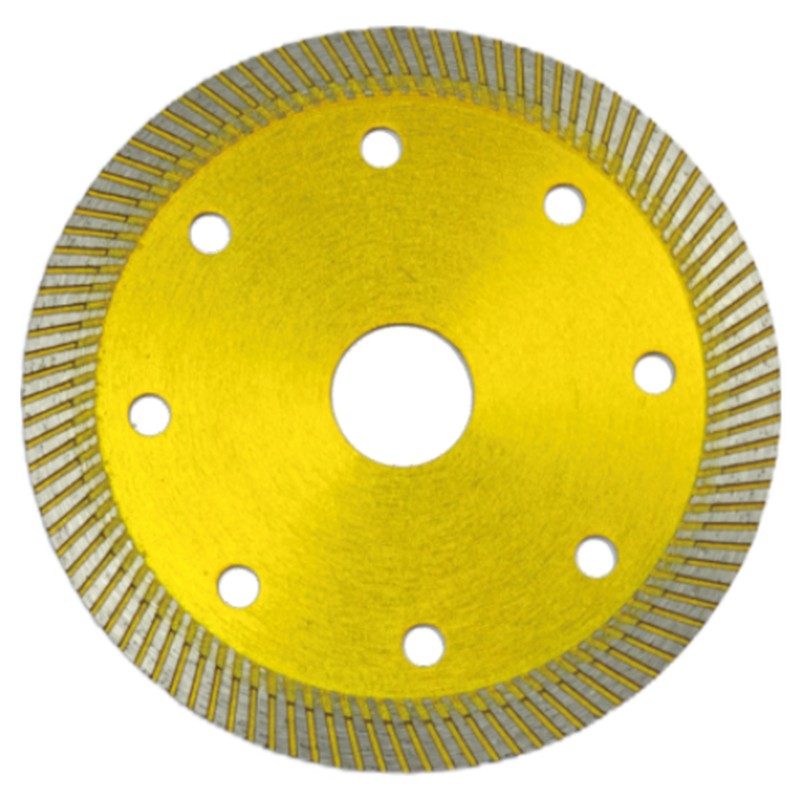
For roof tiles, choose a 105-125 mm thin turbo or continuous-rim diamond blade with a soft to medium bond. Clay tiles need a continuous or super-thin turbo rim to avoid cracking; concrete tiles tolerate a standard turbo blade; slate cuts best with a continuous-rim blade wet. Always cut on the ground with a tile saw or angle grinder on a stand — never free-hand a tile at roof height.
| Tile Type | Rim Type | Bond | Notes |
|---|---|---|---|
| Clay tile | Continuous / super-thin turbo | Soft | Brittle — cut slowly, wet |
| Concrete tile | Turbo mesh | Medium | More forgiving, faster feed |
| Slate | Continuous rim | Soft | Wet only — dry cuts splinter |
| Composite / solar tile | Fine turbo | Medium | Cut slow to avoid melting |
Roof tiles are thin, fired or cured shapes designed to flex on the roof, not to be cut. A segmented blade delivers impact loads that crack the glaze or split the clay. A thin turbo or continuous rim delivers a shearing cut with minimal shock, which is why professionals prefer it on rooftops.
Our super-thin turbo blade is ideal for clay and glazed tiles, while the turbo mesh disc handles concrete roof tiles faster.
A: Yes, but use a tile stand or bench. Free-hand cutting at roof height is the leading cause of cracked tiles and hand injuries.
A: Usually a segmented blade or a dull blade. Switch to a thin turbo rim and cut wet; score first.
A: A continuous-rim diamond blade run wet. Slate splinters with segmented rims.
A: A good quality turbo blade cuts 200-500 tiles depending on tile thickness and bond.
Thin turbo or continuous-rim blades prevent cracking on roof tiles. Browse our tile cutting range for 4" and 4.5" blades suitable for clay, concrete and slate.
