Average response time: under 24 hours
Choose a diamond core bit whose inner diameter is the pipe outside diameter (OD) plus 10-25 mm clearance — for a 110 mm PVC pipe, drill a 125 mm or 150 mm core hole; for a 4 inch (114 mm) steel pipe, use a 162 mm bit. Always size to the pipe's outside diameter, not the nominal size, and add clearance for insulation, fire-stop sleeve, or sleeve coupling. Use a wet diamond core drill bit for walls and floors over 100 mm thick, or a dry diamond core bit with a vacuum shroud for small penetrations in occupied buildings. Never drill a pipe-hole so tight that the pipe cannot flex or be fire-stopped.
This is the #1 sizing mistake. Nominal pipe size (NPS) is not the outside diameter. A 3 inch NPS steel pipe is actually 88.9 mm OD. A 110 mm PVC pipe is 110 mm OD. If you order a "3 inch core bit" thinking you will fit a 3 inch pipe, you will either drill too small (if the bit is 76 mm) or waste money on an oversized hole. Read the pipe spec, measure the OD with calipers, and then size the bit.
| Pipe | OD | Recommended bit | Clearance |
|---|---|---|---|
| 50 mm PVC | 50 mm | 63 mm | 13 mm |
| 110 mm PVC / soil | 110 mm | 125 or 150 mm | 15-40 mm |
| 3" NPS steel pipe | 88.9 mm | 100 or 117 mm | 11-28 mm |
| 4" NPS steel pipe | 114.3 mm | 132 or 152 mm | 18-38 mm |
| 150 mm drainage | 160 mm | 180 or 200 mm | 20-40 mm |
| HVAC duct 300 mm | 300 mm | 350 mm | 50 mm |
If the pipe is insulated (chilled water, hot water, refrigerant), the hole must clear the insulation, not just the pipe. Add 2× insulation thickness to the OD. If the spec calls for a fire-stop sleeve (required in most commercial walls and floors), the bit must clear the sleeve OD — usually a steel or PVC sleeve that is 1-2 sizes larger than the pipe. Ask the MEP engineer for the penetration detail before you order bits. Sizing on the fly at 7 am on site is how you end up with a 100 mm hole that needs to be re-cored at 150 mm.
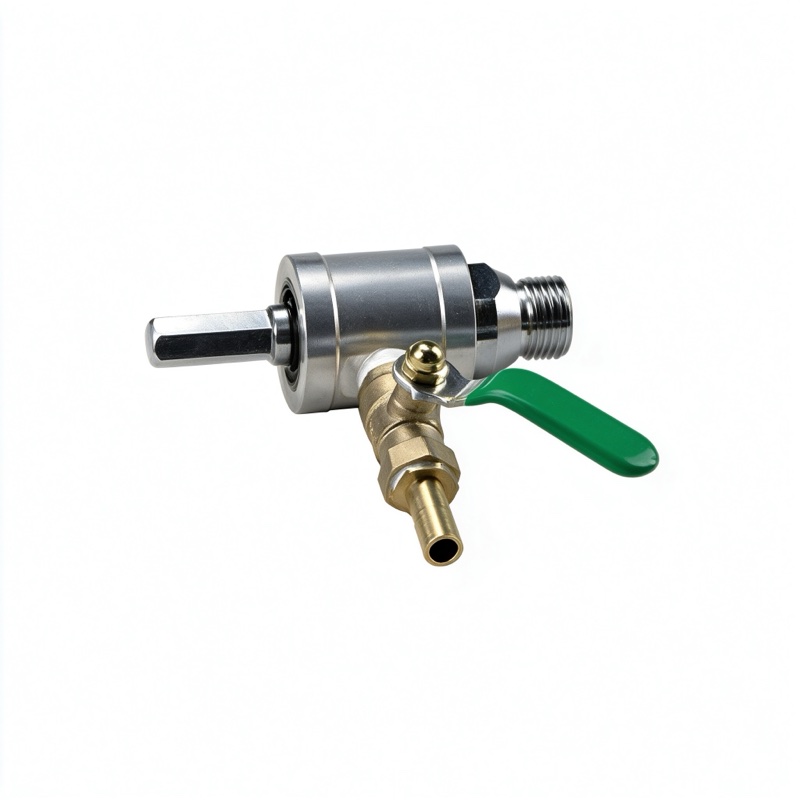
Wet core bits use water to cool the segments and flush the core. They cut faster, last longer, and are required for holes over 100 mm or in reinforced concrete. Dry core bits (threaded 5/8-11 or M16, toothed pilot) are for small holes up to 150 mm in walls and floors where water is impractical. Our full diamond core drill range covers both. Always use water with wet bits — dry-running a wet-rated bit destroys the segments in minutes. Use a vacuum shroud and dust collector adapter when dry drilling indoors.
Mark the centre with a centre punch. Use a drill stand or rig for holes over 76 mm — free-handing a 150 mm core drill wanders. Start at slow speed until the pilot bit bites, then increase. For wet drilling, feed water through the bit centre at 2-4 L/min. Keep the drill level; do not pry on the barrel. When the bit breaks through the far side, slow the feed — that is where spalling happens. Catch the core inside the barrel; a falling core can crack the slab.
For a plumbing or MEP service crew, stock these diameters on the truck: 27, 32, 52, 63, 76, 102, 117, 127, 152, 162, 200 mm. That covers 90% of plumbing, electrical and HVAC penetrations. Order larger sizes (250, 300, 350 mm) to job when needed — they are bulky to carry and rarely used.
125 mm or 150 mm. A 125 mm bit gives 7.5 mm clearance each side, which is enough for a clean fit but tight for fire-stop mastic. Most plumbers spec 150 mm to leave room for the seal.
Not for deep or large holes. Dry bits are for 100-150 mm maximum and light reinforcement. For rebar-heavy slabs and walls, switch to a wet rig — dry bits overheat and lose segments when they hit rebar.
Yes. Add 2× insulation thickness to the pipe OD. A 114 mm steel pipe with 25 mm insulation needs a 170-180 mm hole, not a 152 mm one.
Drill from the finished side whenever possible. When you near breakthrough, slow the feed. For wall holes in finished interiors, use a core rig with a vacuum base to keep the drill steady.
Sizing a core bit is simple once you measure the pipe OD, add clearance for insulation and sleeves, and choose wet or dry based on hole size. Stock the standard diameters on the truck, order specials to job, and never size by nominal pipe — measure, add clearance, and drill.
Written and reviewed by JOY TECH — an SGS & BV audited, CE/RoHS certified diamond tools manufacturer founded in 2004, exporting to 50+ countries.
Our factory and QMS are audited by SGS and Bureau Veritas. Products meet CE/RoHS requirements and every piece is 100% inspected before packing.
Verified Certificates
