

How to Cut a Concrete Slab for a Drainage Channel
How to Cut a Concrete Slab for a Drainage Channel
Quick Answer
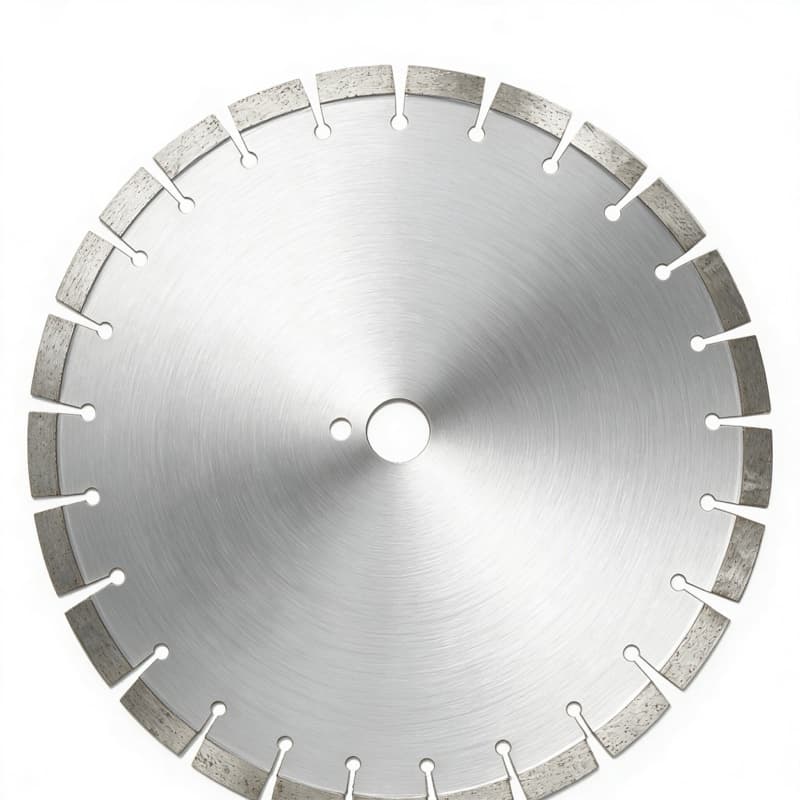
Use a laser-welded or high-frequency concrete saw blade sized to the channel width, and make two or more parallel passes with a floor saw to create a narrow trench. Cut to depth in 10–15mm increments, let water run for dust control, and switch to a rebar-cutting blade if you hit steel reinforcement.
Plan the Channel First
Before cutting, mark the channel line, decide the width and depth, and check what is beneath the slab (pipes, cables, rebar). A typical drainage channel is 100–150mm wide and 50–100mm deep depending on the grate system you are installing. The blade diameter must be large enough to reach the required depth in one pass — a 350mm blade reaches roughly 120mm depth.
How to Cut the Trench
- Choose the blade width — a 4–5mm kerf blade cuts narrow slots; for wider channels make two parallel cuts and break out the middle.
- Cut the outline first — score both edges of the channel to full depth, then remove the material between them.
- Cut in increments — never plunge a floor saw to full depth. Take 10–15mm passes to keep the blade cool and the cut straight.
- Break out the center — with a chipping hammer, or cut intermediate slots and chip the segments out.
- Clean and level the base — a grinder with a cup wheel flattens the bottom before the channel sits in place.
A Concrete and Asphalt Saw Blade (High Frequency Welded) is a reliable workhorse for slab trenching; for deep or reinforced slabs upgrade to the laser-welded version which tolerates rebar contact better.
Safety Tips
- Water supply — wet cutting controls silica dust and keeps the blade cool.
- Wear PPE — hearing protection, dust mask or respirator, gloves and safety glasses.
- Check for services — locate buried pipes and cables before cutting.
- Watch kickback — keep a firm grip and cut in a straight line with the guard in place.
Frequently Asked Questions
Q: What blade size do I need for a 100mm deep channel?
A 300mm blade cuts about 100mm deep; a 350mm blade reaches roughly 120mm. Always confirm the maximum depth of cut printed on the blade.
Q: Can I cut a channel in one pass?
Only for shallow channels. For depth over 30–40mm, incremental passes keep the blade cool and give you better control over cut quality.
Q: What if I hit rebar in the slab?
Stop, switch to a rebar-capable laser-welded blade or cut the steel separately with an angle grinder and metal cutting disc. Forcing a masonry blade through steel can crack segments.
Q: How do I keep the channel edges clean?
Score the outline cuts first at low feed speed, and finish the base with a diamond cup wheel. Chipping the edges with a hammer leaves an uneven seat for the drain.
Conclusion
Cutting a drainage channel in concrete is a two-step job: score the outline with the right concrete blade, then remove the center in controlled passes. Choose a laser-welded or HF-welded blade sized for your depth, cut wet, and handle rebar separately. JOY TECH's concrete blade range covers floor saws from 250mm to 600mm for channel work.
Products used in this guide
Concrete and Asphalt Saw Blade (High Frequency Welded) — JOY-CA-HF
View specs →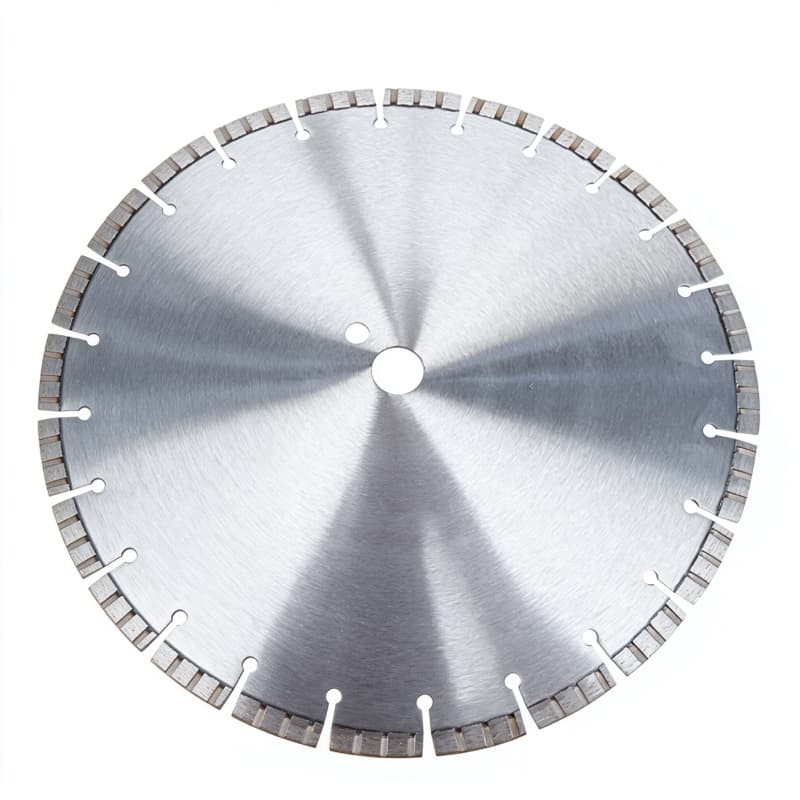
Concrete and Asphalt Saw Blade (Laser Welded) — JOY-CA-LW
View specs →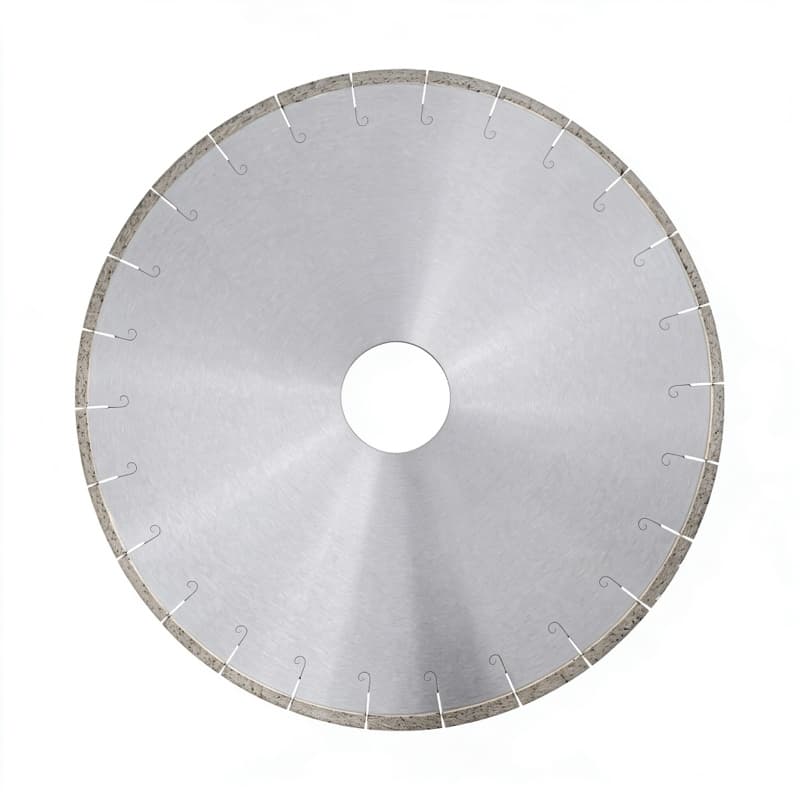
Ceramic Saw Blade (High Frequency Welded) — JOY-CR-HF
View specs →Need this tool for your job?
MOQ 1 · 7–30 days by order quantity · FOB & CIF · free sample on request
Author & Manufacturer
Written and reviewed by JOY TECH — an SGS & BV audited, CE/RoHS certified diamond tools manufacturer founded in 2004, exporting to 50+ countries.
Quality & Compliance
Our factory and QMS are audited by SGS and Bureau Veritas. Products meet CE/RoHS requirements and every piece is 100% inspected before packing.
Verified Certificates
- SGS Audited Supplier — Report No. QIP-ASI227442 & QIP-ASR247051 (Audit Jan 29, 2024)
- Bureau Veritas Verified — Report No. MIC-ASR257059 (Audit Feb 20, 2025)
- CE & RoHS Certificate of Conformity — No. CS240925001HRZ (Issue Sep 25, 2024)