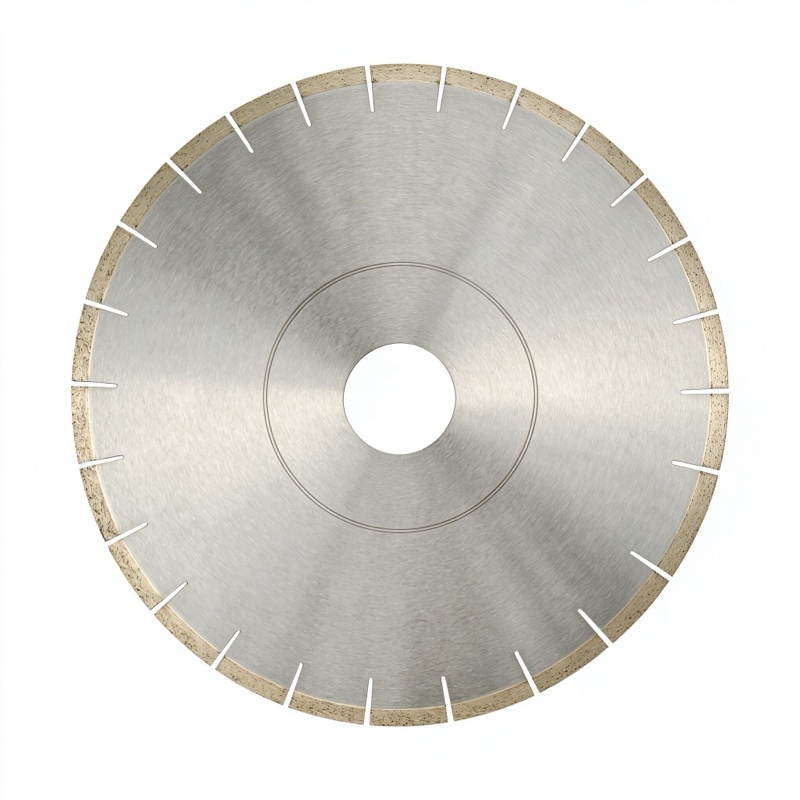
Yes, a continuous-rim diamond blade cuts glass and mirror cleanly — but only if it's a glass-specific continuous rim, run wet, on a table saw or ring saw at low RPM. A segmented or turbo blade will chip and crack the glass. Never cut glass free-hand with an angle grinder. With the right blade, water and a steady feed, you get a smooth cut that needs minimal polishing.
Glass is brittle and non-porous. A segmented blade hammers the edge and causes chips that propagate into cracks. A continuous-rim diamond blade grinds through smoothly, like grinding a pencil point — no impact, no chips.
| Factor | Recommendation |
|---|---|
| Rim type | Continuous rim, diamond coated |
| Wet/Dry | Wet only — dry cutting cracks glass from heat |
| RPM | Low — 2,000-3,000 RPM on the saw, not high |
| Saw | Glass table saw, ring saw, or band saw |
| Feed rate | Slow, steady — don't rush |
| Blade thickness | 1.5-2.0 mm thin rim |
Our nano glass saw blade is designed for glass, mirror and brittle engineered surfaces, while the quartz blade handles thicker engineered stone.
A: Yes, if the tile saw has a continuous-rim diamond blade and water feed. A standard segmented tile blade will chip the glass.
A: Usually heat (not enough water) or forced feed. Slow down and check water flow.
A: Up to 19 mm glass easily. Thicker automotive or laminated glass needs a band saw or specialist cutter.
A: A good continuous-rim cut leaves a smooth edge; polish with a diamond pad if it will be visible.
Glass cutting needs a continuous-rim blade, water, and a slow feed. Browse our glass and brittle material range for table and ring saws.
