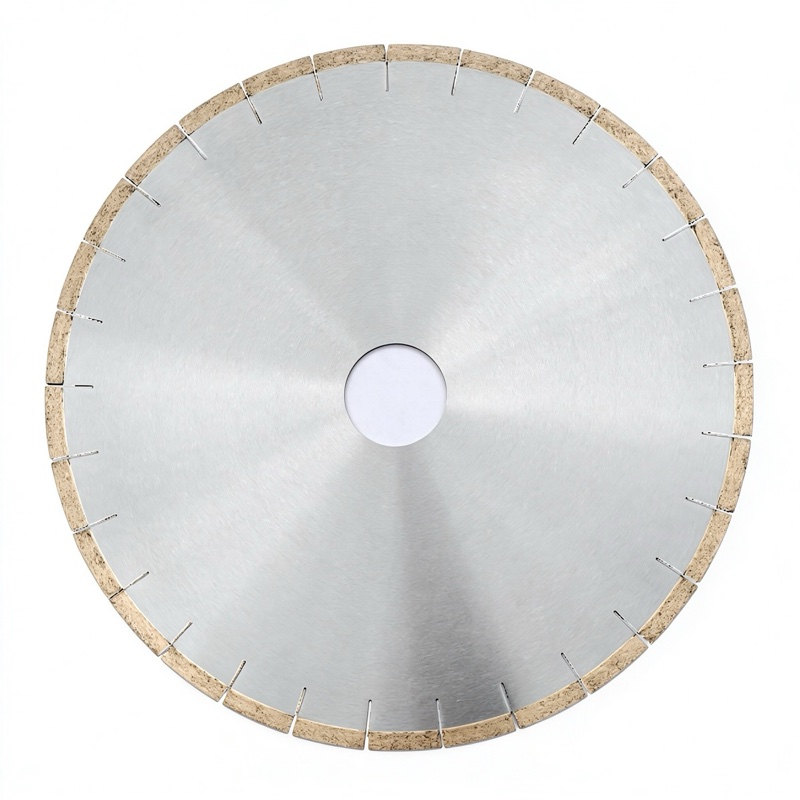
Cut sandstone with a continuous-rim, soft-bond diamond blade run wet at moderate feed. Sandstone is soft and layered, so the blade must cut with light pressure while water flushes the dust; a segmented blade or dry cutting will chip the edges and crack along bedding planes.
Sandstone forms in layers. A blade that vibrates or feeds too hard will split the stone along a bedding plane instead of cutting — leaving a stepped, broken edge. The fix is a smooth rim, wet cutting, and letting the blade do the work at steady low pressure.
A Marble Saw Blade (Straight Slot) suits sandstone pavers and soft stone; the Universal Stone Cutting Blade is a flexible alternative for mixed soft stone.
Yes, for thin pavers and trim cuts, with a continuous-rim blade and light pressure. Thick blocks are better on a wet saw.
Usually from vibration or forcing the feed. Slow down, support the piece, and make sure the blade is sharp and the right bond for soft stone.
Wet. Sandstone dust is highly abrasive and dry cutting overheats both the blade and the stone, causing cracks.
Sandstone cuts cleanly with a continuous-rim soft-bond blade, wet cutting and a gentle feed. Support the stone, control the speed, and you avoid both chipped edges and bedding-plane cracks. JOY TECH can supply soft-stone bonds matched to sandstone and other calcareous stones.
