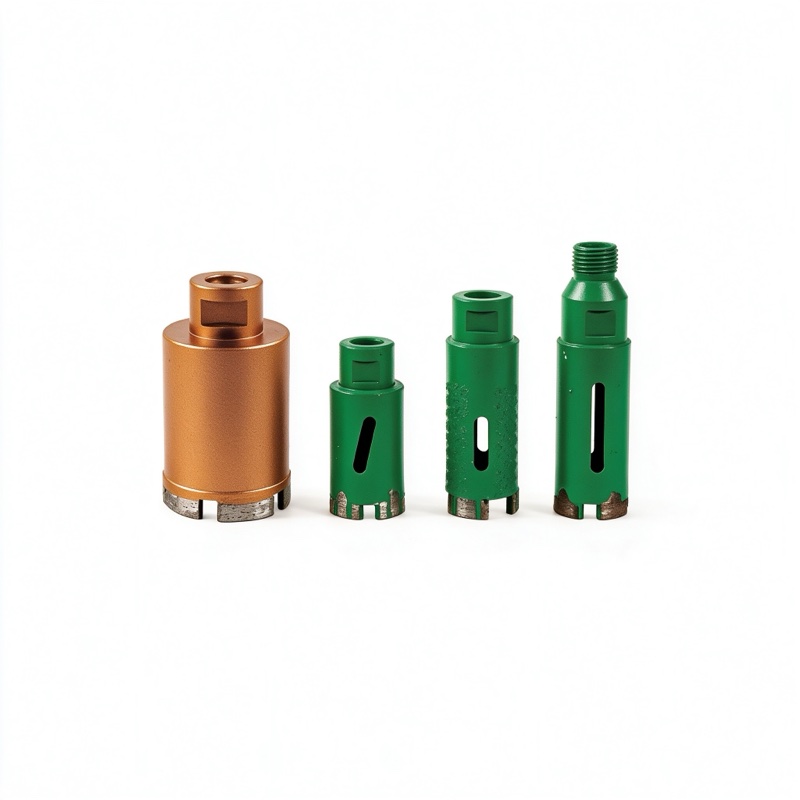
To drill tile without cracking it, use a diamond hole saw (not a masonry bit), drill at low speed with light pressure, keep the bit wet, and start at a shallow angle to avoid wandering. Do not hammer-drill tile; the percussion will crack it. For porcelain, score a starting dimple and take your time.
A standard masonry carbide bit chips glazed tile. A diamond-tipped hole saw like our stone hole saw grinds a clean circular hole, while the long-shank hole saw reaches through tile plus backing board. Run the drill in rotary mode only, never hammer mode.
Cracks come from hammer action, excessive pressure, a wandering start, or drilling dry. Tile is brittle; concentrated shock or heat radiates a crack across the face. If you feel the bit catch, stop and reposition rather than forcing through.
Hard porcelain needs a continuous-rim diamond hole saw and slower feed; ordinary ceramic tile is more forgiving. Always drill through the glazed face, not the back, to reduce breakout on the visible side.
Carbide-tipped masonry bits work for small anchors in soft tile but skate on glaze and chip edges. Diamond hole saws cost more per bit but cut clean round holes and last through dozens of fittings. For plumbers and electricians doing tap holes daily, the diamond bit pays back fast.
Drill from the finished face to control the visible edge, and back the tile with plywood near the back to prevent blowout. If the tile is already mounted, mask both sides of the hole to keep the drill from wandering and to catch water slurry.
For perfectly perpendicular holes in tiles, use a drill guide or jig that holds the drill at 90 degrees. Freehand angles are the main cause of cracked tile around wall fixtures.
Diamond hole saw, low speed, water, light pressure. No hammer, no forcing.
Mark the center, tape it, start at 45 degrees to nick a groove, then upright. Run under 1000 RPM with light pressure and water. Ease through the breakthrough. Never use hammer mode; it cracks tile instantly.
Hard porcelain needs a continuous-rim diamond hole saw and slower feed. Ordinary ceramic is more forgiving. Drill from the glazed face to control the visible edge, and back the tile with plywood to prevent blowout.
For perfectly perpendicular holes, use a drill guide jig. Freehand angles are the main cause of cracked tile around wall plates. Start shallow, keep pressure light, and let the diamond saw do the work.
Rotary only. Hammer mode cracks tile instantly. Light pressure, low speed, water, and a diamond hole saw are the whole recipe.
Back the tile with plywood near the breakthrough to prevent blowout. Drill from the glazed face to control the visible edge. Light pressure all the way.
Let the diamond hole saw cut. Heavy pressure cracks tile and dulls the bit. Start at an angle to nick a groove, then drill upright.
Hard porcelain needs a continuous-rim diamond hole saw and slower feed. Ordinary ceramic is more forgiving. Drill from the glazed face and back the tile with plywood to prevent blowout.
For perpendicular fixture holes, use a drill guide jig. Freehand angles crack tile around wall plates. Start at 45 degrees to nick a groove, then drill upright with light pressure.
Wear eye protection and keep fingers clear. A diamond hole saw grabs suddenly at breakthrough. Support the tile, go slow, and the result is a clean hole without cracked corners.
A: No. A twist bit skates and snaps; use a diamond hole saw or glass/tile bit.
A: No. High speed overheats and cracks tile; low speed with cooling is correct.
A: Drill halfway from the front, then finish from the back side, or support the tile underside.
Clean tile holes come from a diamond hole saw, low speed, water cooling, and light steady pressure. Skip the hammer mode and the bit will cut. Contact JOY TECH for diamond hole saws in the tap and fitting sizes plumbers and installers need.
