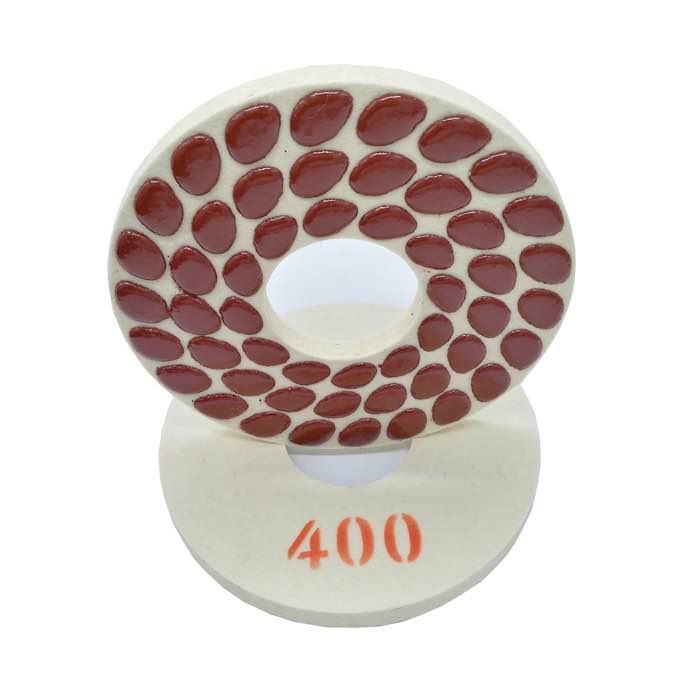
A mirror finish on polished concrete requires a perfectly flat, fully densified floor refined through a complete, non-skipped resin grit sequence ending in 1500 and 3000 grit, followed by a high-speed burnish. There is no single pad that creates mirror shine - it is the cumulative result of flatness, density, even scratch removal and heat polishing. Cut any corner (skip a grit, skimp on densifier, leave a low spot) and the reflection breaks up into a dull haze.
Mirror reflection depends on the surface being optically flat. Start with metal-bond diamond grinding to remove trowel marks and open the slab, then verify flatness by walking the floor with a straightedge or light at a low angle. Any wave will show as distorted reflection. Next, densify thoroughly while the slab is open - a lithium densifier hardens the paste so it can be polished to a glass-like layer instead of abrading away. Skip this and the floor polishes chalky, not glassy.
Progress in deliberate, overlapping steps and never jump grits. A typical mirror sequence:
Each step must fully remove the scratch pattern of the one before it. Use quality resin pads such as our Spiral Diamond Resin Polishing Pads, which cut evenly and leave a uniform scratch pattern that the next grit clears cleanly. For the metal-to-resin leap, a Copper Bond Hybrid Resin Pad bridges the scratch depth so you do not fight metal marks at high grit.
After 3000 grit, the floor may already look glossy, but the true "mirror" appears under heat. Run a high-speed burnisher (1500-2500 RPM) with a diamond burnishing pad or wool pad. Two slow, overlapping passes compress and heat the surface, producing the deep, wet reflection clients expect. Keep the floor clean; even one speck of grit scratched in now ruins the mirror.
| Stage | Goal | Common mistake |
|---|---|---|
| Metal grind | Flat, open slab | Leaving waves / trowel marks |
| Densifier | Harden the paste | Applying too late or too thin |
| Resin 400-1500 | Remove all scratches | Skipping a grit step |
| 3000 + burnish | Optical mirror layer | Forcing pressure / dirty floor |
A mirror finish forgives almost nothing. The human eye detects distortion in reflections, so even a subtle wave in the slab turns a mirror into a funhouse reflection. This is why high-end jobs use a grinder with sufficient weight and rigidity, and why crews check flatness repeatedly with a straightedge during metal grinding. If the floor has broad waves from the original pour, expect to spend most of your time in the metal stage; trying to flatten at the resin stage is too late.
Lighting also reveals the truth. Inspect the floor under strong, low-angle light and under the building actual fluorescent or LED layout before declaring it done. What looks glossy in daylight can show swirl marks under harsh overhead light. Do final inspection with the same lights the client will use, and touch up any visible swirl before handover.
Before handover, walk the floor with a flashlight held flat against it to catch swirl marks and streaks that normal lighting hides. Touch up any small area with 3000 grit and a final burnish. A mirror finish project is judged on its reflections, so this last inspection under real lighting is where premium work is won.
Do the final 3000 pass when the floor is completely clean and dry. Any grit left on the surface gets locked into the optical layer and ruins the reflection. Wipe the floor, change to fresh pads, then make the final burnish.
A: You must reach 3000 grit and then burnish. 1500 gives a satin gloss; mirror reflection needs the final resin step plus heat.
A: Yes, if it is structurally sound and flat. Worn or spalled concrete needs repair first; cracks and pits cannot be polished away.
A: Almost always a deeper scratch was left at 400 or 800. Back up, remove it fully, then re-run the sequence.
Mirror concrete is earned through flatness, density and a complete grit sequence, then finished with heat. Patience at each step beats chasing shine at the end. The takeaway is that a mirror finish rewards discipline more than expense. Flatness, density, a complete grit sequence and a careful final inspection are what produce it. Clients notice the reflection immediately, which is why the extra effort is worth it on premium projects. Contact JOY TECH for a quote on the full resin, transitional and burnishing pad set for a mirror-grade floor.
