Average response time: under 24 hours
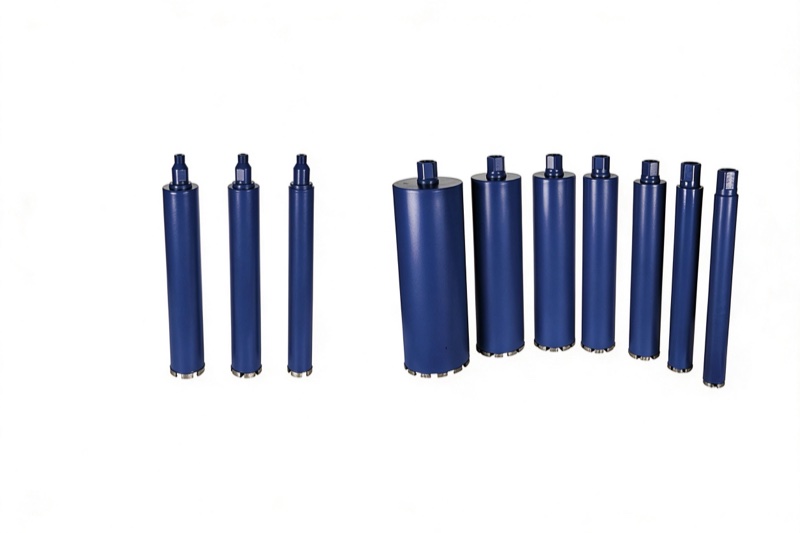
Quick Answer: Without water, keep a core bit cool by using a dry-rated core bit, running at the recommended speed with a pecking action to clear dust, and pausing to let the barrel cool between cuts. Shallow dry cores work well; deep dry cores need patience and a bit designed for dry use.
Dry coring needs a bit with a segmented rim and a bond designed for no water, because the friction heat has nowhere to go. A dry core bit is built for this, with wider segments and a cooling design that sheds dust. A wet-only bit glazes and burns quickly without water, so match the bit to the method before you start.
Run the drill at the speed printed on the bit, usually slower than wet coring, and work in a pecking cycle: drill a few seconds, withdraw to clear the dust, then advance again. The dust is the insulator, so clearing it lets the segments touch fresh concrete and shed heat. Do not force the feed; hard pressure generates more heat than cutting. On deeper holes, stop completely every few minutes and let the barrel cool in the air.
Dry coring removes material slower than wet coring, and the practical depth without water is usually 30 to 80 mm per setup before heat builds up. For deeper dry holes, step up in diameter or switch to a wet method. Keep the drill perpendicular so the rim contacts evenly; a tilted bit rubs one side and cooks the segments. If you see smoke or smell burning, stop immediately and let the bit cool.
A small battery misting bottle or a damp sponge wiped on the rim between pecks adds enough water to cool without flooding the hole. Vacuum dust continuously if the drill accepts a dust collector adapter. For many holes, a stone hole saw or short-shank dry bit with frequent withdrawal is simpler than a long dry core, and on masonry use a hammer drill with a masonry bit where a clean core is not required.
It depends on depth and speed, but a good rule is to pause after every 10 to 20 mm of advance and let the bit cool. Deep dry coring without pauses will glaze the diamonds quickly.
Yes, dipping the bit in water or wiping the rim between cuts cools it safely, as long as you let it drip before restarting so the dust does not turn to mud in the hole.
Dry coring works when you use a dry-rated bit, a peck-and-cool rhythm, the right speed, and realistic depth expectations. Clear the dust, watch for smoke, and the bit survives the job instead of burning out mid-hole.
Written and reviewed by JOY TECH — an SGS & BV audited, CE/RoHS certified diamond tools manufacturer founded in 2004, exporting to 50+ countries.
Our factory and QMS are audited by SGS and Bureau Veritas. Products meet CE/RoHS requirements and every piece is 100% inspected before packing.
Verified Certificates
