

How to Reduce Blade Vibration When Cutting Stone
How to Reduce Blade Vibration When Cutting Stone
Quick Answer
Blade vibration almost always comes from one of: a bent core, oversized or dirty flanges, an out-of-spec arbor, worn machine bearings, a side-fed cut, or a blade with uneven segment wear. Check the flanges (clean and correct size), verify the blade runs true on the saw arbor, and cut at 90° to the material — never side-grind with a cut-off blade. If the core is bent or the segments wear unevenly, replace the blade.
Top Causes and Fixes
| Cause | Symptom | Fix |
|---|---|---|
| Dirty flanges | Wobble at speed | Clean flanges and blade center |
| Wrong flange size | Side-to-side runout | Use matched flanges, at least 1/3 blade diameter |
| Bent core | Knock vibration, wavy cut | Replace blade — never straighten |
| Worn bearings | Vibration grows with RPM | Service the saw |
| Side grinding | Side wobble, side wear | Cut straight — never grind sideways |
| Uneven segment wear | Click-click at low RPM | Dress on abrasive block or replace |
| Arbor runout | Vibration even on new blade | Check arbor with dial indicator |
| Forced feed | Chatter, chipped segments | Slow feed, let blade cut |
How to Check Runout
Mount the blade and flanges, tighten to spec, then spin by hand. Watch the outer rim with a dial indicator or feel the wobble. Any runout over 0.05 mm on a 350 mm blade causes visible wavy cuts. If runout persists after cleaning, the blade is bent — discard it.
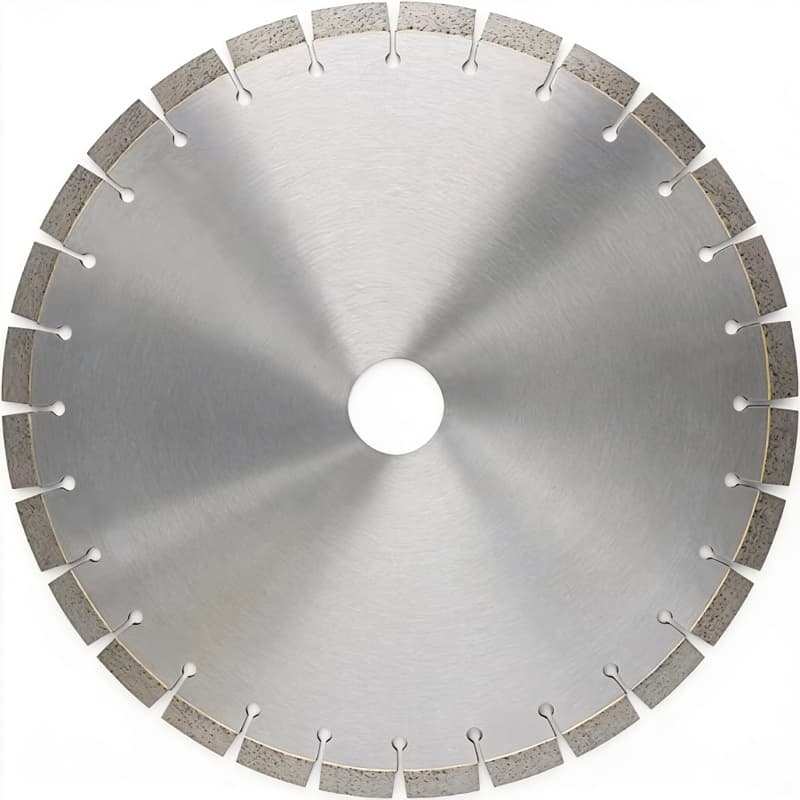
Our granite long-segment blade and marble straight-slot blade are tensioned at the factory for low vibration on bridge saws.
Safety Tips
- A vibrating blade can shed segments — stop and inspect at once.
- Never try to "true" a bent blade by heating or hammering.
- Always use the correct flange diameter for the blade size.
Frequently Asked Questions
Q: My new blade vibrates — is it defective?
A: Check flanges and arbor first. 80% of "new blade vibration" is dirty flanges or a worn saw, not a bad blade.
Q: Does a wider flange reduce vibration?
A: Yes, up to a point. Flanges should be 1/3 to 1/2 of blade diameter. Too large a flange interferes with cooling slots.
Q: Can I side-grind with a cut-off blade?
A: No. Cut-off blades are designed to cut on the rim, not grind on the side. Side load bends the core and can shatter it.
Q: Why does the cut come out wavy?
A: Vibration, worn guide bearings on the saw, or a wobbly rail. Check the blade first, then the machine.
Conclusion
Vibration is a symptom, not a defect. Clean flanges, run a straight cut, and inspect the core. Our stone cutting range is tensioned for smooth, low-vibration cuts on bridge and rail saws.
Products used in this guide
Granite Saw Blade (Long Segment) — JOY-GR-L
View specs →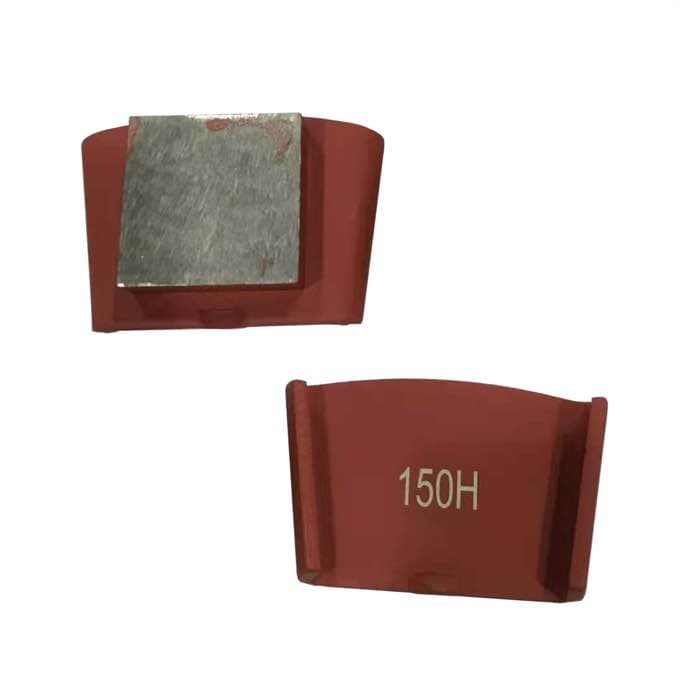
HTC Block Segment Diamond Grinding Disc (JOY-HTCS-Block)
View specs →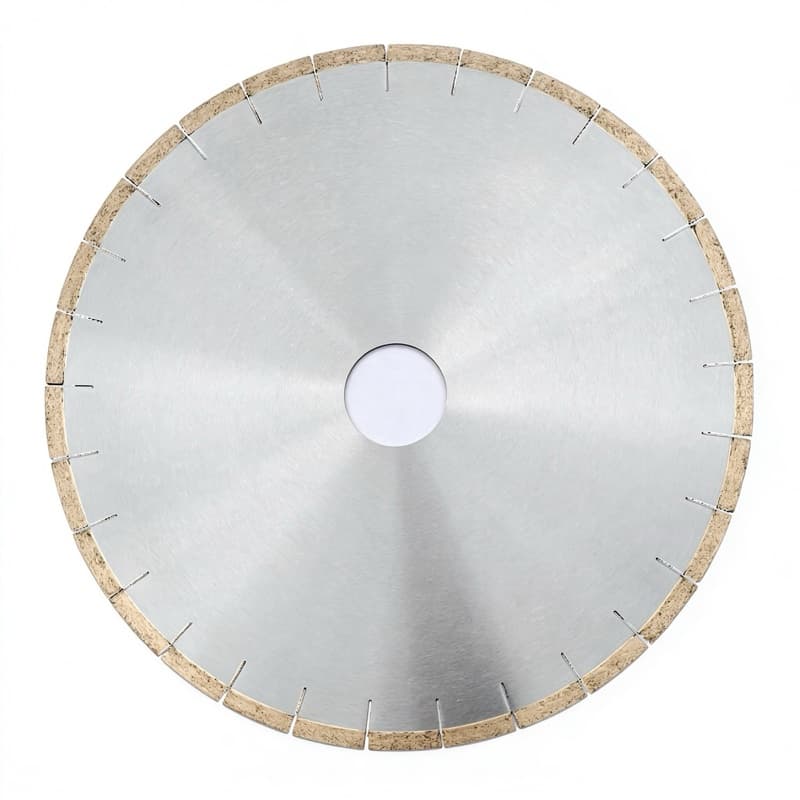
Marble Saw Blade (Straight Slot) — JOY-MS-ST
View specs →Need this tool for your job?
MOQ 1 · 7–30 days by order quantity · FOB & CIF · free sample on request
Author & Manufacturer
Written and reviewed by JOY TECH — an SGS & BV audited, CE/RoHS certified diamond tools manufacturer founded in 2004, exporting to 50+ countries.
Quality & Compliance
Our factory and QMS are audited by SGS and Bureau Veritas. Products meet CE/RoHS requirements and every piece is 100% inspected before packing.
Verified Certificates
- SGS Audited Supplier — Report No. QIP-ASI227442 & QIP-ASR247051 (Audit Jan 29, 2024)
- Bureau Veritas Verified — Report No. MIC-ASR257059 (Audit Feb 20, 2025)
- CE & RoHS Certificate of Conformity — No. CS240925001HRZ (Issue Sep 25, 2024)