Average response time: under 24 hours
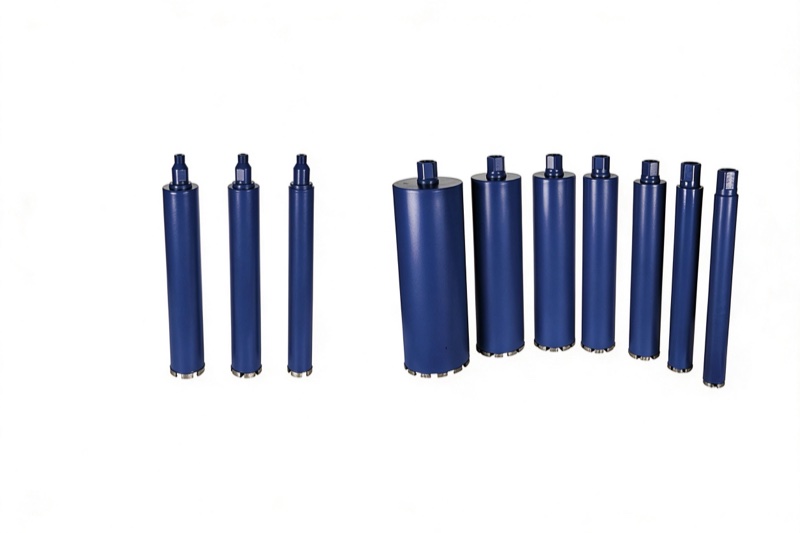
When a core drill bit sticks in concrete, first stop the motor and restore water or vacuum to the hole, then rock the drill gently side to side while lifting to free the bind — a jammed bit is usually pinched by swarf or a slightly oversize core. If it will not move, use the reverse function or manually rotate the barrel to shear the debris, and lift the bit while spinning. Never force the drill forward: jamming harder destroys the bit and the drill. If it is truly stuck, cut the core loose or drive the bit out with a hammer and punch rather than wrenching the machine.
A core bit jams when the annulus (the gap between the barrel and the core) packs with cuttings, or when the barrel binds against an oversize core, or when the bit deflects and the barrel wall grips the hole. The usual causes: drilling without enough water so swarf packs solid, pushing too hard so the barrel flexes, or hitting rebar that distorts the barrel. A bit can also jam at the end of the cut when the core tips and wedges in the barrel.
Work through these steps in order:
If the bit still will not move, it is likely wedged against rebar or the core has tipped. Do not keep yanking — the next step is to break the core or cut the barrel free.
If the core has tipped and wedged inside the barrel at breakthrough, drive it out from the back: remove the bit from the drill, tap a punch or rod down the barrel from the drive end, and push the core out. If the bit is stuck in the hole because the core broke and wedged, use a second smaller bit to drill the wedged core out, then remove the stuck barrel. For rebar that has caught the segments, rotate the bit to a clear segment position and back it out, or cut the rebar with a small grinder if accessible.
Prevention beats extraction: use a pilot bit and steady feed, keep water flowing, and ease off the feed at breakthrough so the core does not tip. A diamond core drill bit matched to the material and run wet rarely jams; the stuck ones are almost always dry, forced, or overloaded.
For choosing the right bit size to avoid binding in the first place, see core drill bit sizes.
Prevent the jam with a matched wet diamond core drill bit run with steady water flow.
Usually swarf packing the annulus (insufficient water), barrel deflection from pushing too hard, or a tipped core wedging in the barrel at breakthrough.
Stop the motor, restore water or vacuum, rock the drill gently while lifting, then try reverse rotation. If that fails, drive the wedged core out with a punch or cut it free.
Often yes if you stop quickly and free the bind without bending the barrel. If the barrel is bent or the segments are damaged, the bit is not worth saving.
Keep water flowing, feed steadily without forcing, use a pilot bit, and ease off at breakthrough so the core does not tip. A matched wet bit run correctly rarely jams.
A stuck core bit is usually a symptom of dry, forced, or overloaded drilling: swarf packs, the barrel flexes, or the core tips. Free it by stopping, restoring water, rocking and reversing — never by driving harder. If it is wedged, cut the core out or drive it from behind. Run the bit wet, fed steadily, with water to the end, and the jam that costs you a bit and an hour simply will not happen.
Written and reviewed by JOY TECH — an SGS & BV audited, CE/RoHS certified diamond tools manufacturer founded in 2004, exporting to 50+ countries.
Our factory and QMS are audited by SGS and Bureau Veritas. Products meet CE/RoHS requirements and every piece is 100% inspected before packing.
Verified Certificates
