

Polishing Pads for Terrazzo Restoration
Polishing Pads for Terrazzo Restoration
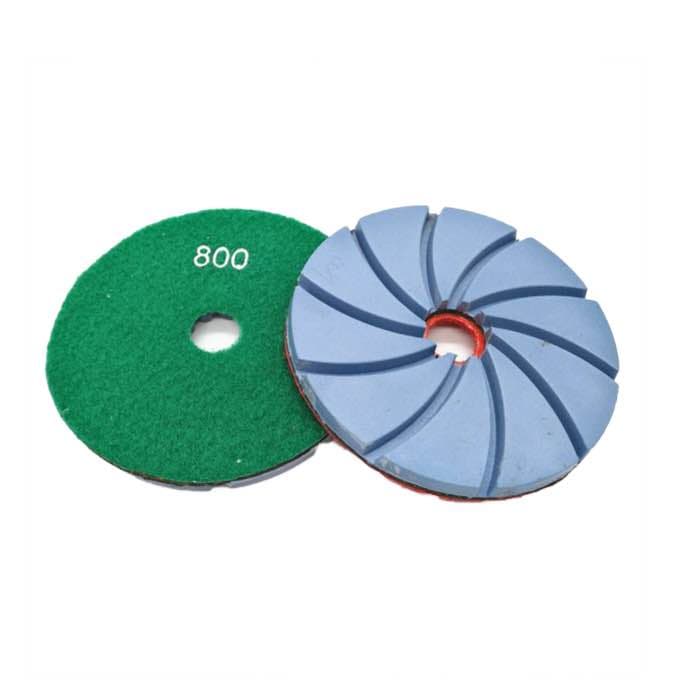
Quick Answer
Restore 50-year-old terrazzo by grinding with coarse metal-bond segments to expose fresh chips, then polishing with resin pads from 100 up to 1500–3000 grit, finishing with a densifier or sealer. Work wet on terrazzo to protect the softer matrix.
Key Features of Terrazzo Restoration
- Softer matrix: terrazzo is softer than granite — use wet polishing to control heat.
- Exposure step: coarse metal (30–50) removes years of wear and re-exposes chips.
- Chip level: grind until chips are flush; over-grinding creates pitting.
- Sealing: old terrazzo benefits from densifier or penetrating sealer after polishing.
How to Choose Pads for Terrazzo
| Stage | Pads | Grit |
|---|---|---|
| Expose chips | Metal bond | 30–50 |
| Transition | Hybrid / transitional | 100–200 |
| Polish | Resin | 400–800 |
| Gloss | Resin + wool | 1500–3000 |
How to Use It
- Test a corner to judge matrix hardness and chip size before full restoration.
- Grind wet with coarse metal until chips are uniformly exposed.
- Move to 125 mm resin polishing pads for terrazzo and work up through 1500.
- Finish with wool polishing pads and apply a densifier or sealer.
Frequently Asked Questions
Q: Can I polish old terrazzo dry?
A: Dry is possible but hotter and dustier; wet is safer for the matrix and gives better gloss on older floors.
Q: How deep should I grind to expose chips?
A: Just enough to make chips flush — usually 1–2 passes with coarse metal. Too deep creates pitting that must be repaired.
Q: Do I need to seal terrazzo after polishing?
A: Yes. Densify or seal to protect the matrix and make the gloss easier to maintain.
Conclusion
Restoring terrazzo is a grind-then-polish process. Expose chips with metal, polish with resin and wool, then protect the floor with a sealer. Start with terrazzo resin pads for consistent results.
Restoring With Patience
Old terrazzo rewards a slow coarse step: rushing the exposure stage leaves half-worn chips and a pitted surface that finer grits cannot fix. Work wet throughout, because the cement matrix heats and burns faster than the stone chips. When the floor has old wax or sealers, strip them first — otherwise the polishing pad drags residue instead of cutting. Densifier or penetrating sealer goes on after the final grit, not before, and needs its full cure time. For maintenance, a periodic light polishing pass keeps the shine; deep restoration is only needed when chips are exposed and uneven across the floor.
Products used in this guide
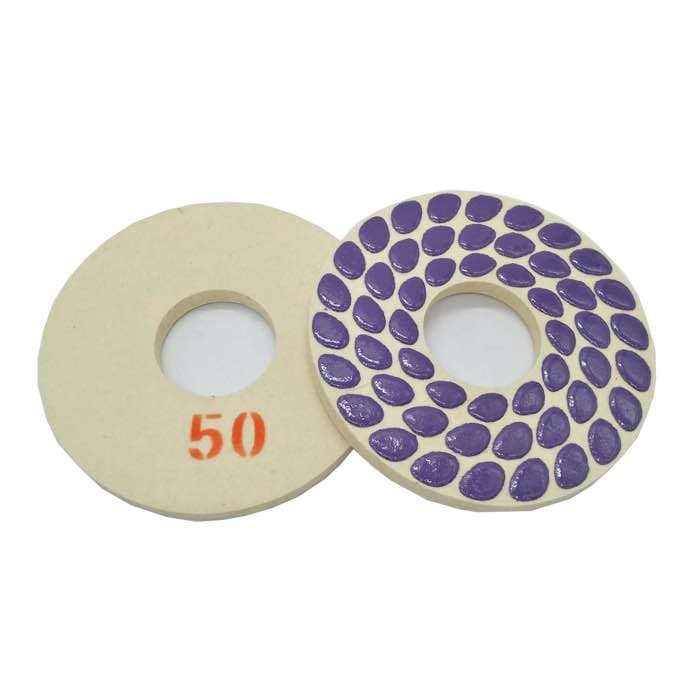
Dry Polishing Wool Pads for Concrete Floor (JOY-RFP-W1)
View specs →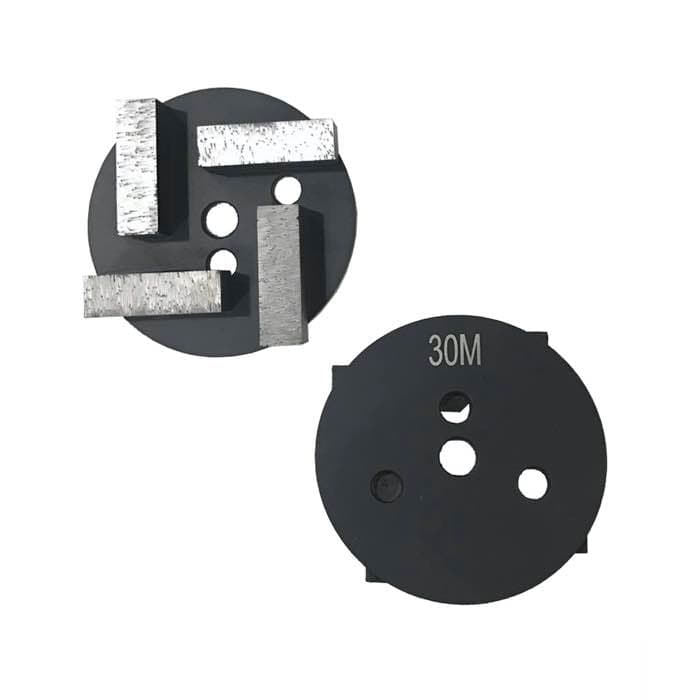
3'' Metal Bond Diamond Grinding Disc with 4 Segments (JOY-TP3-B4)
View specs →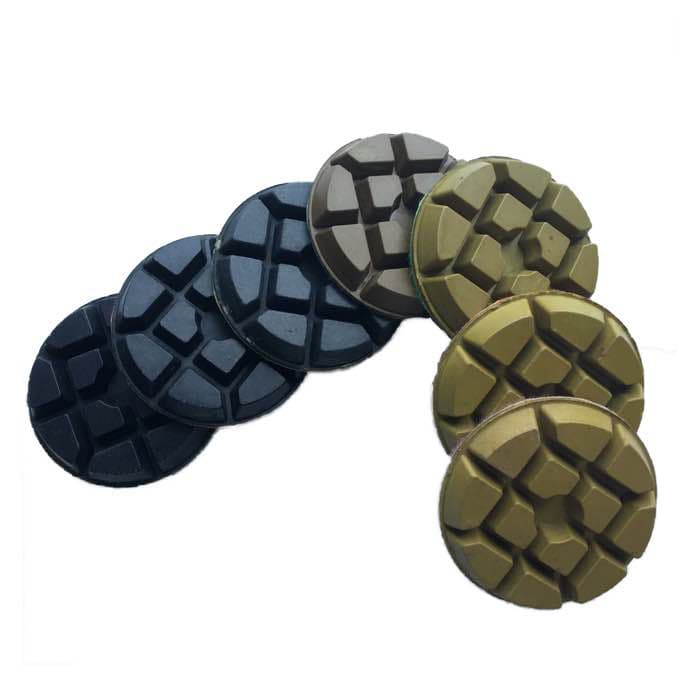
Diamond Resin Polishing Pads for Concrete Terrazzo Floor (JOY-RFP-01)
View specs →Need this tool for your job?
MOQ 1 · 7–30 days by order quantity · FOB & CIF · free sample on request
Author & Manufacturer
Written and reviewed by JOY TECH — an SGS & BV audited, CE/RoHS certified diamond tools manufacturer founded in 2004, exporting to 50+ countries.
Quality & Compliance
Our factory and QMS are audited by SGS and Bureau Veritas. Products meet CE/RoHS requirements and every piece is 100% inspected before packing.
Verified Certificates
- SGS Audited Supplier — Report No. QIP-ASI227442 & QIP-ASR247051 (Audit Jan 29, 2024)
- Bureau Veritas Verified — Report No. MIC-ASR257059 (Audit Feb 20, 2025)
- CE & RoHS Certificate of Conformity — No. CS240925001HRZ (Issue Sep 25, 2024)