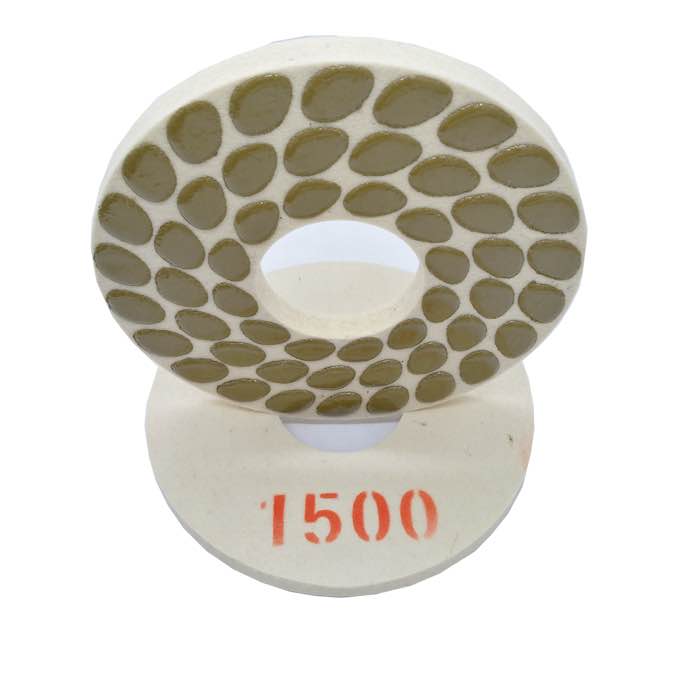
Yes, worn terrazzo can be fully restored with diamond tooling. Terrazzo is a matrix of cement or epoxy binder holding marble, granite or glass chips, and it is polished the same way as concrete: grind flat with metal-bond diamonds, densify the cement binder if it is cementitious, then refine through diamond resin pads to 1500-3000 grit and burnish. The goal is to re-expose the colored chips evenly and bring the binder and chips to a uniform, mirror-like plane.
Old terrazzo loses its shine because the thin top layer of binder wears, exposing uneven chip edges and absorbing dirt. Surface sealers also yellow and scratch over decades. The fix is not to re-coat on top of a dull, scratched slab - it is to grind away the damaged layer, expose fresh material, and polish the whole plane flat. Because the chips are harder than the binder, careful grinding keeps both at the same level.
| Grit stage | What it does |
|---|---|
| 30-60 metal | Remove old sealer, level surface |
| 120 metal | Even chip exposure |
| 200-400 resin | Remove grinding scratches |
| 800-1500 | Build clarity |
| 3000 + burnish | Mirror finish |
Do not skip metal grinding hoping resin pads will fix dullness - resin cannot cut through an old sealer. Keep pads clean; terrazzo slurry loads resin quickly, so change or clean pads often. On epoxy-based terrazzo, use a milder sequence and avoid excessive heat that can melt the epoxy binder. Finally, terrazzo shows scratches dramatically, so never drag grit across a polished section - clean between grits.
Restoring old terrazzo often reveals surprises. As you grind, the colored chips re-emerge brighter, but the binder may look darker or uneven in patches. That is normal - once the whole plane is flat and polished, the color reads uniformly again. If some chips are missing or cracked, patch them with matching epoxy before final polishing so the repair blends in.
Modern epoxy terrazzo behaves differently from old cement terrazzo. Do not overheat epoxy terrazzo with aggressive dry grinding, because the binder can smear or melt. Use controlled pressure and, when needed, wet passes. The reward is worth the care: well-restored terrazzo is one of the most durable and beautiful floors there is, often outlasting surrounding finishes by decades.
Restored terrazzo needs the same care as polished concrete: daily dust control and periodic burnishing. Because terrazzo contains hard chips, it wears extremely well and often needs less re-polishing than plain concrete. A well-restored terrazzo floor can go decades between major restorations with routine maintenance.
If the terrazzo is very old or dark, expect the first passes to look messy as years of buildup grind off. Trust the sequence; clarity emerges once the whole plane is consistent.
On epoxy terrazzo, keep pad pressure light near the end so you do not overheat and discolor the binder. Let the diamonds do the cutting.
Restored terrazzo is also a green choice - you keep the existing floor out of landfill while recovering its original beauty, which clients increasingly appreciate.
A: Yes, if the stains are within the grinding depth. Surface stains grind away; deep aggregate stains may remain visible.
It is slower than concrete because of the mixed hard chips, but a full restoration on a small lobby is typically a few days.
Polished terrazzo is often left unsealed after densification; a light impregnator can be added for stain resistance.
Terrazzo restoration is diamond grinding and polishing in disguise - re-level the chips and binder, refine with resin pads, and burnish to glass. It is one of the most satisfying floors to bring back to life. The takeaway is that terrazzo restoration is one of the most rewarding floor jobs, because the result lasts for decades. Grind flat, patch chips, refine with resin pads and burnish, and you bring an old floor back to life. Contact JOY TECH for a quote on terrazzo-specific metal and resin polishing pads.
