Average response time: under 24 hours
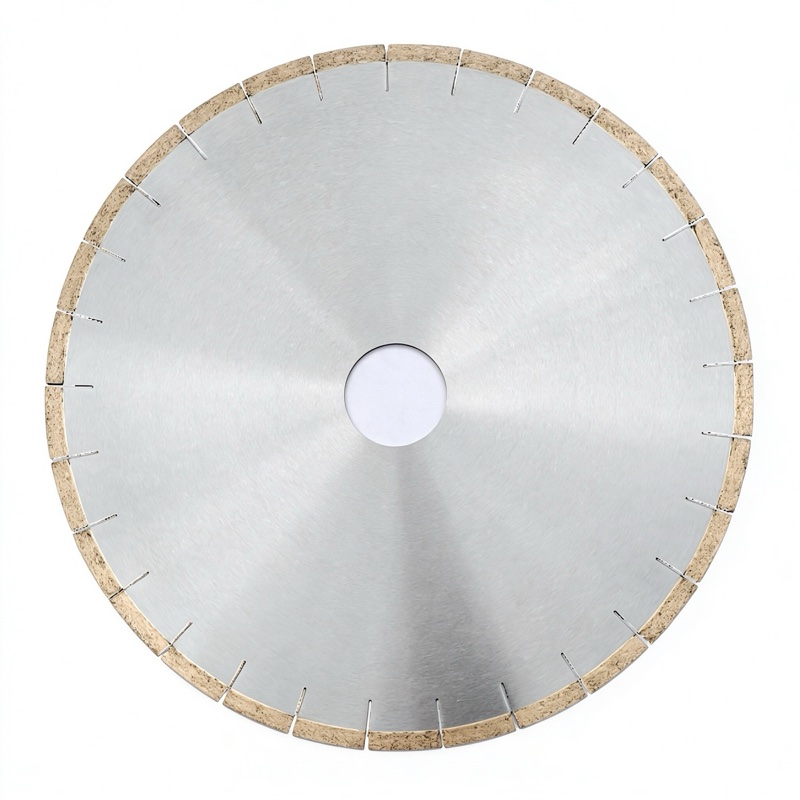
Kickback on a portable cut-off saw happens when the blade binds in the kerf and the saw jumps back toward the operator. Prevent it by keeping blade exposure to no more than 150 mm below the sole plate, checking that the upper guard spring closes freely, and never twisting the saw sideways in a cut. Start every cut with the front edge of the sole plate on the slab, feed at a steady pace, and let the blade stop before lifting it out of the kerf. If the guard sticks or the spring is weak, fix it before the next cut: a lazy guard is the single most common reason a kickback injury happens on a jobsite.
A diamond blade cuts on the forward edge of the segment. If the saw drifts sideways, the side of the segment rubs against the kerf wall, friction spikes, and the saw is pulled back. The same thing happens if you drop the blade into a cut at an angle, if the cut closes up behind the blade as the slab moves, or if you try to saw through a hidden rebar or pipe that suddenly stops the blade. Kickback is fast, often under a quarter of a second, and there is no time to react once it starts.
The upper and lower blade guards are there to catch the blade if it kicks back or if the saw slips. A guard that does not close all the way, or that springs open too slowly, leaves the blade exposed at exactly the moment the saw jumps. On many jobsites, guards are wedged open or removed because they make deep cuts harder; that is a calculated risk that almost always ends badly.
With the saw unplugged, manually rotate the lower guard from fully open to fully closed. It should move smoothly without grinding, and the spring should snap it shut with firm pressure. If the pivot is gritty, clean it with a wire brush and a small amount of light oil. If the spring is weak or broken, replace it before the next shift. The JOY LW-HH high-horsepower blade is used on heavier saws where guard force matters most, because a stiffer saw needs a guard that responds faster.
Set the depth so the blade protrudes only 5 mm to 10 mm below the slab for a cut, not the full blade diameter. On a 350 mm saw used on a 150 mm slab, that means roughly 160 mm of exposed blade, which is close to the upper limit. More exposure than needed turns the blade into a lever that magnifies any bind into a kickback. Less exposure also means a straighter cut, because the blade is supported by the kerf deeper down. Always lock the depth adjustment knob after setting it; a knob that slips mid-cut will drop the blade deeper and can bind instantly.
A well-aligned saw cuts a straight kerf with even chip marks on both sides. The saw feeds forward without pulling left or right, and the lower guard closes as soon as the saw leaves the slab. If the saw pulls to one side, the cut wanders, or the guard lags behind, stop and inspect before continuing.
A guard that aligns correctly still needs the right setup around it. Wear hearing protection, safety glasses, gloves and a dust mask with a HEPA filter; concrete dust from a cut-off saw is finer than from a grinder and reaches deeper into the lungs. Make sure the saw has a working anti-vibration handle, that the fuel or battery level will last through the cut, and that the area around the cut line is clear of bystanders. Kickback throws the saw backward at waist to chest height, so anyone standing within 2 m behind the saw is at risk.
A glazed or warped blade is more likely to bind than a sharp, straight one. If the cut starts drifting even after you check the guard, inspect the blade for side cracks, dishing, or a worn flange. The diamond saw blade range lists diameters and segment types that match common portable cut-off saws, and a fresh blade in good condition is the cheapest safety upgrade you can buy.
If you are cutting reinforced concrete, thick asphalt, or a job where the saw will be running all day, it is worth reviewing the setup with the supplier rather than guessing. The team at JOY TECH support can recommend a blade type and segment height that suits your saw class and keeps the guard working the way it was designed to.
Written and reviewed by JOY TECH — an SGS & BV audited, CE/RoHS certified diamond tools manufacturer founded in 2004, exporting to 50+ countries.
Our factory and QMS are audited by SGS and Bureau Veritas. Products meet CE/RoHS requirements and every piece is 100% inspected before packing.
Verified Certificates
