

Sandstone vs Granite: Saw Blade Bond and Segment Design
Sandstone vs Granite: Saw Blade Bond and Segment Design
Quick Answer
Sandstone is soft, porous and abrasive; it needs a hard bond, a lower diamond concentration and a segment that clears fines quickly. Granite is hard, dense and abrasive; it needs a tougher bond with a higher diamond concentration and a segment that holds its shape under high unit pressure. Using a granite blade on sandstone usually glazes and slows; using a sandstone blade on granite wears out fast.
Rock Properties That Drive Blade Design
Sandstone is composed of quartz grains cemented with silica, carbonate or clay. It is porous and relatively weak, but the quartz is abrasive. The blade must cut without pulling large chunks from the edge, and the bond must wear fast enough to expose new diamond.
Granite is interlocked feldspar and quartz with low porosity and high compressive strength. The diamond sees high unit pressure and heat. The bond must hold the diamond long enough to cut, but not glaze.
Bond Hardness
Bond hardness is the wear rate of the metal matrix. A hard bond holds the diamond longer and is used for soft, abrasive stone. A soft bond wears faster and exposes new diamond, and is used for hard, dense stone.
| Stone | Bond | Why |
|---|---|---|
| Sandstone | Hard | Resists abrasion from quartz fines |
| Granite | Medium-soft to medium | Exposes diamond under high pressure |
| Marble | Soft | Prevents glazing on soft stone |
| Limestone | Soft-medium | Fast cutting, avoids loading |
These are starting points. The machine power, blade diameter and feed rate also shift the optimum. A hard bond on a low-power saw can glaze; a soft bond on a high-power saw can wear too fast.
Diamond Concentration and Grit
Sandstone usually runs a lower diamond concentration with a coarser grit because the stone cuts easily and the main risk is bond wear. Granite runs a higher concentration with a finer, tougher diamond because the stone resists penetration and the diamond load is high.
For a production granite blade, the segment often has a layered or sandwich structure: a tough outer layer for the first cut and a faster-cutting inner layer. For sandstone, a single-layer segment with a hard bond is simpler and more economical.
Segment Shape and Kerf
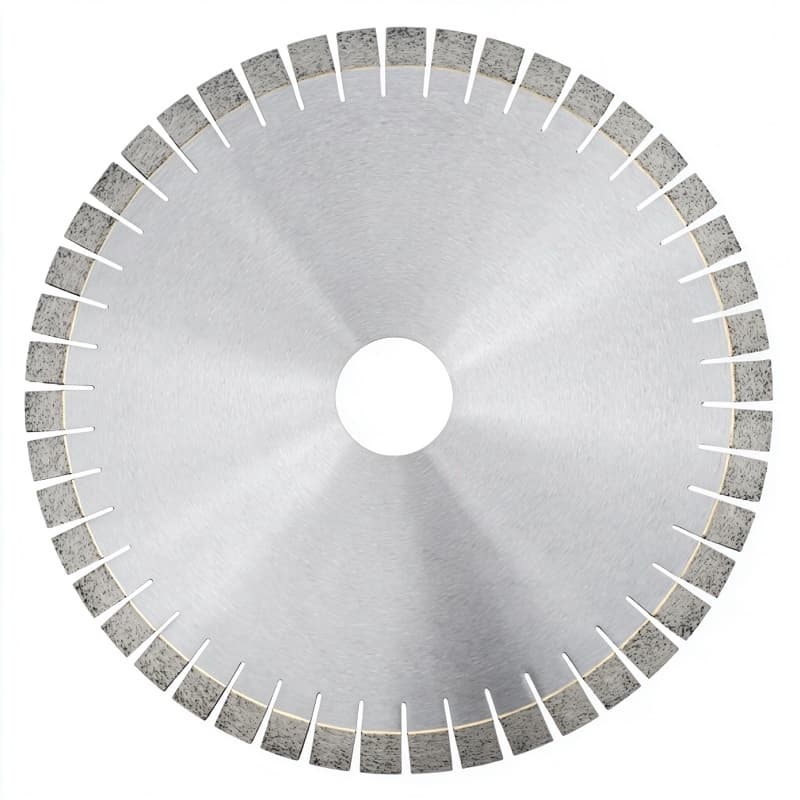
Sandstone can be cut with a narrow kerf and a segment that clears fines. A segment with deep grooves or a segmented rim reduces contact area and helps flush the soft fines. Granite needs a segment with a stable footprint; a very narrow segment can deflect under the high feed force.
For slab cutting, a long segment gives more diamond contact and a straighter cut in granite. A short segment is better for tile and thin slab where the blade needs a free-cutting edge.
Coolant and Cutting Parameters
Sandstone is usually cut wet to control silica dust and flush fines. Water flow should be steady; too little water turns the fines into a paste that loads the segment. Granite is also cut wet on bridge saws; the water must reach the segment, not just the blade side.
Feed rate: sandstone can be fed faster because it is weaker, but the blade must not chip the edge. Granite needs a slower, steady feed; forcing it raises heat and segment wear. On a hand-held saw, let the blade cut at its own rate and avoid side pressure.
Frequently Asked Questions
Q: Can one blade cut both sandstone and granite?
A: A general-purpose blade can, but it will not be optimal for either. For production, use a sandstone-specific hard bond and a granite-specific tougher bond.
Q: Why does my blade glaze on sandstone?
A: The bond is too soft or the diamond concentration is too high for the abrasive fines. Use a harder bond and more water.
Q: Why does granite wear out a sandstone blade?
A: The bond is too hard and the diamond load is too high. The segment cannot expose new diamond and the bond cracks or polishes.
Q: Does segment shape matter for edge chipping?
A: Yes. A fine, continuous rim reduces chipping on sandstone and marble; a segmented rim cuts faster but can chip a fragile edge.
Conclusion
Sandstone rewards a hard bond and fast fines clearance; granite rewards a tougher bond, higher diamond concentration and a stable segment. Match the blade to the rock, not to the saw alone. JOY TECH supplies long-segment granite blades, short-segment granite blades and diamond wire saws for granite for stone producers.
Products used in this guide
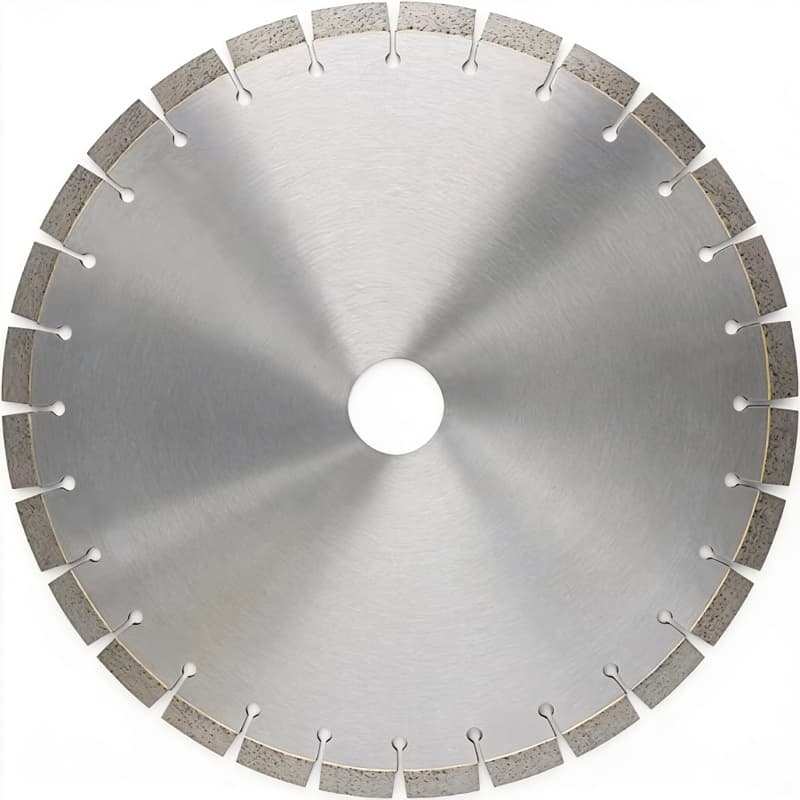
Granite Saw Blade (Long Segment) — JOY-GR-L
View specs →Granite Saw Blade (Short Segment) — JOY-GR-S
View specs →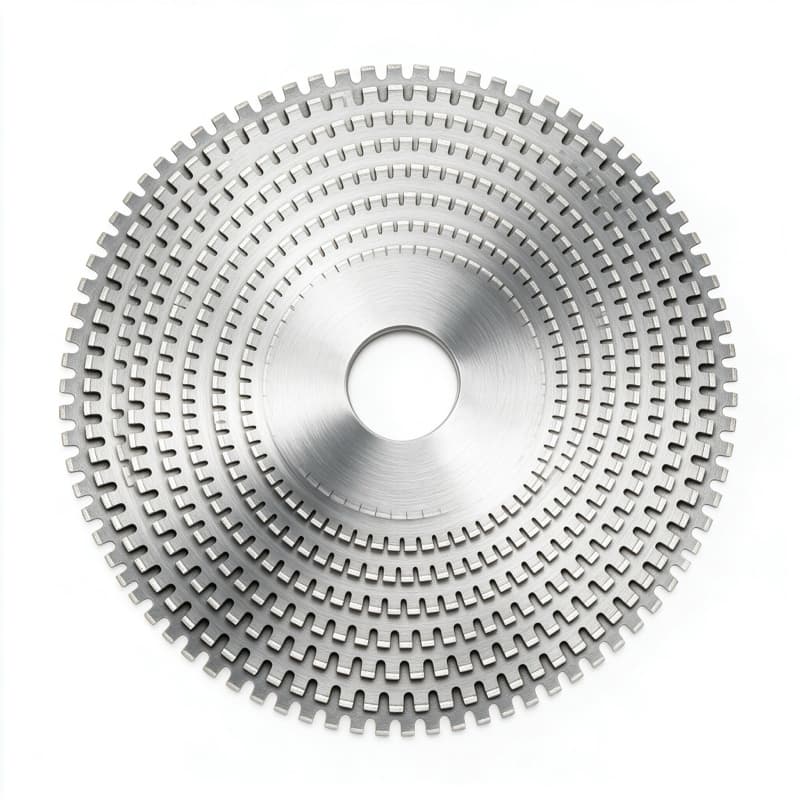
Diamond Segment for Multi-Blade (Ganged Saw) — JOY-MB-S
View specs →Need this tool for your job?
MOQ 1 · 7–30 days by order quantity · FOB & CIF · free sample on request
Author & Manufacturer
Written and reviewed by JOY TECH — an SGS & BV audited, CE/RoHS certified diamond tools manufacturer founded in 2004, exporting to 50+ countries.
Quality & Compliance
Our factory and QMS are audited by SGS and Bureau Veritas. Products meet CE/RoHS requirements and every piece is 100% inspected before packing.
Verified Certificates
- SGS Audited Supplier — Report No. QIP-ASI227442 & QIP-ASR247051 (Audit Jan 29, 2024)
- Bureau Veritas Verified — Report No. MIC-ASR257059 (Audit Feb 20, 2025)
- CE & RoHS Certificate of Conformity — No. CS240925001HRZ (Issue Sep 25, 2024)