Average response time: under 24 hours
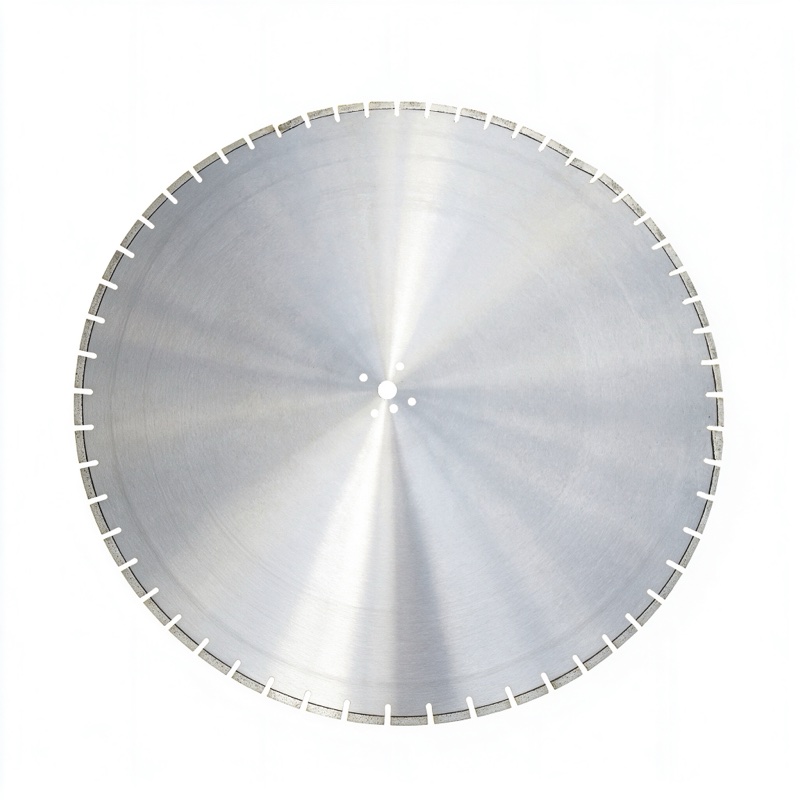
Every concrete contractor — from a one-man tuckpointer to a 20-person flatwork crew — should carry five diamond tools on the truck: (1) a 350 mm laser-welded cut-off blade for saw cuts and control joints; (2) a wet diamond core bit for plumbing, electrical, and HVAC holes; (3) a set of trapezoid grinding plates (30/46/70 grit) for surface prep and repair; (4) a resin polishing pad set (50 to 3000) for finished floors; and (5) a PCD coating-removal tool for epoxy, glue, and thin-set. Buy the first four in the first season; add the PCD once you start bidding coating-removal jobs. The five together cover roughly 90% of the diamond work a general concrete contractor will encounter, and a properly equipped truck will out-bid and out-finish competitors on almost every job.
The workhorse of the fleet. It handles control joints, expansion cuts, pipe chase sawing, and demolition cuts in cured concrete with or without light rebar. Laser-welded segments — where each segment is welded on with a laser beam rather than silver-brazed — survive wet cutting and occasional rebar hits without throwing segments. A 350 mm (14") blade runs on most walk-behind saws at 5,400 RPM max. Budget USD 45-USD 90 per blade depending on segment height (10 mm vs 15 mm) and bond. Pick a high-horsepower laser blade if your saw is ≥13 hp; pick a general-purpose concrete/asphalt laser blade for mixed jobsites. Dry use is possible but wet cutting extends life 2-3x and controls silica.
If you bid any job with openings — plumbing, electrical, vent, anchor holes — you need core bits. Start with the common diameters: 25 mm (1") for conduit, 50 mm (2") for small pipe, 100 mm (4") and 150 mm (6") for plumbing and HVAC. Buy wet bits with a 1-1/4"-7 thread (North America) or M27 (EU) so they fit the standard drill rigs. A wet core bit lasts 50-200 holes depending on concrete hardness and rebar; dry bits are for brick and block only. See choosing core bits. Keep a dry core bit on the truck for brick/block rescue jobs.
For surface prep, leveling, glue and thin-set removal, and mechanical profiling, you need a set of metal-bond grinding plates that fit your grinder (Husqvarna, WerkMaster, Lavina, Superabrasive, etc.). Buy one holder plate plus a set of 30, 46, and 70 grit — that covers 90% of prep work. For Iron Horse-style grinders, the triple-round trapezoid disc is a reliable entry; for WerkMaster machines, see the rhombus/shark-style range. Buy bond matched to your concrete hardness — soft bond for hard concrete, hard bond for soft asphalt-overlay concrete. See choosing grinding segments.
If you do finished concrete — showrooms, warehouses, retail floors, terrazzo — you need the full resin pad set. A standard set runs 50, 100, 200, 400, 800, 1500, 3000 grit. Buy 17" or 20" pad drivers plus the required sizes for your machine. The floor polishing pad set is the most-reordered SKU in the category because pads wear out and need replacement every 1,000-3,000 m². Budget USD 200-USD 400 per full set per machine. Store them sealed and cool — see storage rules.
The one tool contractors buy later and wish they had bought first. PCD (polycrystalline diamond) tools remove epoxy, polyurethane, glue, mastic, thin-set, and paint 5-10x faster than metal-bond diamond, without glazing. If you bid renovation work — and most concrete contractors do — a PCD tool pays for itself in one coating-removal job. Start with a single-bar or double-bar PCD holder for your grinder; it costs USD 80-USD 150 but saves days of labor. See PCD vs diamond for coating removal.
| Tool | First-season buy? | Typical unit price (USD) | Covers jobs |
|---|---|---|---|
| 350 mm laser blade | Yes — first week | 45-90 | Saw cuts, control joints, demolition |
| Wet core bit (multi-size) | Yes — first month | 35-180 ea | Holes for MEP, anchors, vents |
| Trapezoid plates 30/46/70 | Yes — first month | 25-55 ea | Surface prep, leveling, repairs |
| Resin pad set 50-3000 | When you win a polished floor | 200-400 / set | Finished floors, terrazzo |
| PCD coating remover | Second season | 80-150 | Epoxy, glue, thin-set, paint |
A: There are "universal" blades, but they compromise on every substrate. For a contractor doing concrete every day, a concrete-specific laser blade outlasts a universal blade 2:1. Save the universal blade for the occasional hand saw, not the walk-behind.
A: Minimum one spare per size on the truck, plus a 2-week supply in the warehouse. A blade thrown by rebar on a Friday afternoon costs more in downtime than the blade itself. Core bits are slower-moving — one spare in each common diameter.
A: Start with the full set once you win a polished floor job. If you skip the low grits (50/100/200), you cannot correct coarse scratches from the metal-bond step, and the floor will haze. Half a set is a false saving.
For a new contractor, a reputable import from a factory with traceable spec sheets cuts Hilti/Husqvarna performance at 30-40% of the price. Keep one premium-brand blade on the truck for jobs where you must not fail; buy the rest from a consistent import supplier.
The five tools above do not cover every diamond job — wall chasers, wire saws, and large-plane diamond wire saws come later — but they cover the daily work of a general concrete contractor. Buy them in order, match each to your machine and substrate, and keep spares. Browse our concrete blade range and tell us your machine model and substrate — we will spec the exact SKU for your truck.
Written and reviewed by JOY TECH — an SGS & BV audited, CE/RoHS certified diamond tools manufacturer founded in 2004, exporting to 50+ countries.
Our factory and QMS are audited by SGS and Bureau Veritas. Products meet CE/RoHS requirements and every piece is 100% inspected before packing.
Verified Certificates
