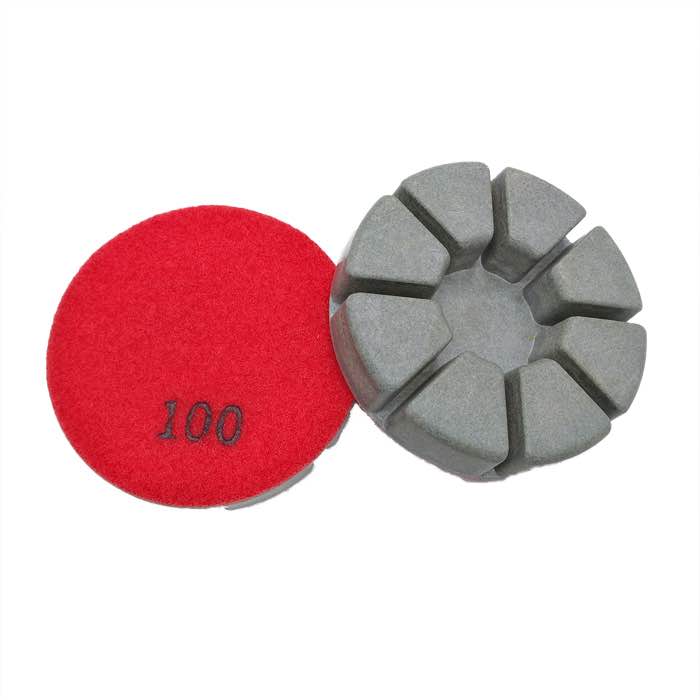
Use wet pads for natural stone, terrazzo and jobs where dust is prohibited; use dry pads for concrete floors when you need speed and portability with a vacuum-shrouded grinder. Wet polishing gives a slightly cooler cut and higher gloss on stone; dry polishing is faster on concrete and easier to manage on site.
| Factor | Wet Pads | Dry Pads |
|---|---|---|
| Dust | None (water slurry) | Requires vacuum / shroud |
| Gloss on stone | Higher, cooler cut | Good on concrete |
| Speed | Slower (water management) | Faster on concrete |
| Surface | Stone, terrazzo, concrete | Concrete, terrazzo, some stone |
| Clean-up | Slurry collection needed | Minimal, dust bag only |
A: No. Wet and dry pads use different resin formulations. Use each pad only as intended.
A: On hard natural stone, dry pads can generate heat and burn resin. Wet is safer on marble and granite.
A: Dry polishing on concrete is usually cheaper (faster, less water management), but on stone, wet often achieves the required gloss in fewer passes.
Match the method to the material: dry for fast concrete work, wet for stone and terrazzo. For a reliable dry range, try the 3'' 15mm Thickness Diamond Dry Polishing Pads (JOY-RFP-06); for general concrete and terrazzo polishing, the 3'' Diamond Resin Floor Polishing Pads (JOY-RFP-05) is a solid choice.
