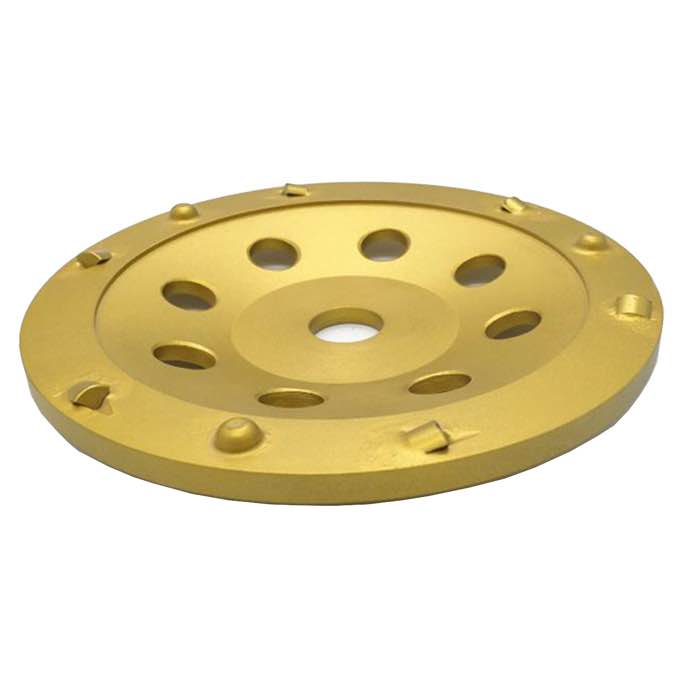
A diamond grinding disc stops cutting when the diamonds are worn flat and no new crystals are exposed — this is called glazing or loading. The surface looks smooth and shiny instead of sharp. Fix it by dressing the disc: grind aggressively through an abrasive dressing block, a scrap of concrete block, or a glazed silica-free brick for 30-60 seconds to open new diamonds. If glazing keeps happening, the bond is too hard for the material and you need a softer-bond disc.
Diamond tools work by micro-fracturing the old crystals so new sharp ones emerge. If the bond is too hard for the material, it holds onto the worn diamond instead of releasing it, and the segment "glazes over." Other causes:
If the disc glazes again after dressing, it is the wrong bond. Switch from a hard bond to a softer bond for soft concrete, or vice versa. A cup wheel such as the hurricane cup wheel is tuned for free cutting and resists glazing on general concrete.
| Symptom | Cause | Fix |
|---|---|---|
| Shiny smooth segments | Glazing (bond too hard) | Dress, or softer bond |
| Segments caked in black epoxy | Loading (soft coating) | Use PCD tooling |
| Little dust, slow cut | Dull / end of life | Replace disc |
Before you dress the disc, identify which problem you have. Loading means the segments are caked with soft material (epoxy, glue, paint) — you will see black or colored buildup. Glazing means the segment face is a smooth, glassy shine with exposed diamonds worn flush. End-of-life means the segment is physically low and the diamonds are gone. Loading is fixed with PCD tooling, glazing with dressing, and wear with replacement.
Commercial dressing stones are resin-bonded abrasive blocks designed to open diamond segments. If you do not have one, a solid concrete cinder block or a silica-free abrasive brick works in a pinch. Grind it under pressure for 30-60 seconds, then test cut. Do not use sandstone or river rock — they are too soft and do not wear the bond.
After dressing, keep the disc cutting freely by avoiding dwell, using enough downward pressure from machine weight, and matching bond to concrete. If you glaze twice in one job, the bond is wrong — stop and order a softer (for hard concrete) or harder (for soft concrete) set rather than dressing every hour.
If dressing no longer restricts bite and the segment is worn down to 20% of its original height, the disc is finished. Continued use is slower than replacement. Keep track of disc life per job so you know when a set is due. For cup wheels, when the steel hub shows through on two or more segments, retire it — bare steel will score the floor.
A: Resin pads glaze when pushed on soft coatings. Lightly dressing on a dressing stone restores bite, but a loaded resin pad is usually done.
A: New discs often need a 30-second break-in on an abrasive block to expose the first layer of diamonds. Skip this and operators think the disc is defective.
A: Marginally, but a dressed disc cuts like new and saves hours. It is far cheaper than replacing the disc.
A: No — forcing a glazed disc just generates heat and can crack segments. Dress or change the bond instead.
A non-cutting diamond disc is usually a bonding mismatch, not a defect. Keep a dressing block on the truck, learn the glaze symptoms, and choose bond hardness to match your concrete. Contact JOY TECH to match a free-cutting bond to your slab hardness.
