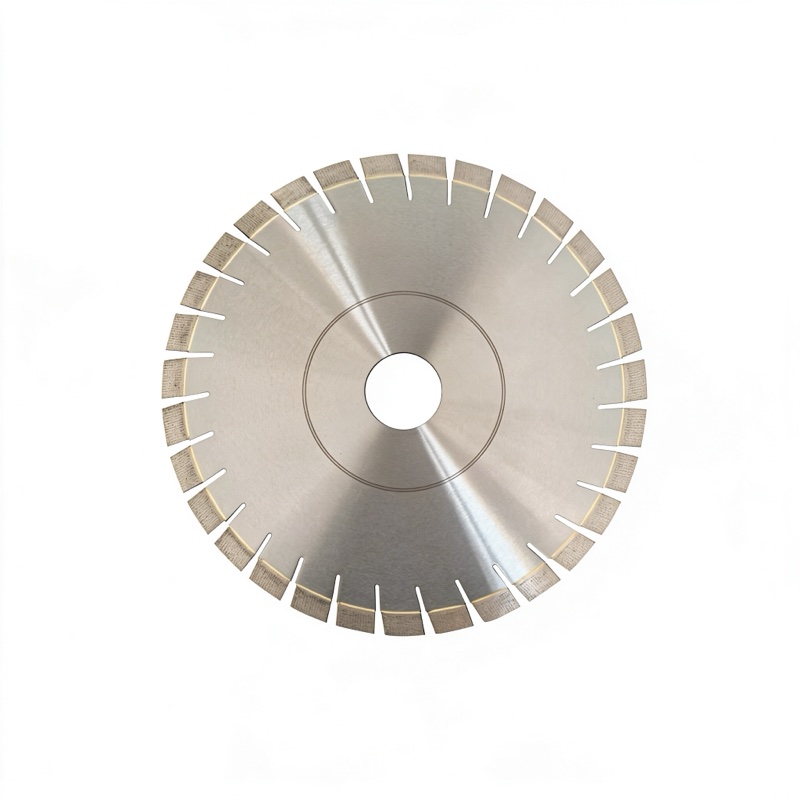
An ARIX (ordered segment) blade is better for hard granite because its diamond segments are arranged in a controlled, staggered pattern instead of randomly distributed grit. The ordered clusters expose fresh diamonds in sequence, so the blade cuts faster, runs cooler, and self-sharpens more predictably on hard stone like granite. For slabs, countertops and heavy granite work, ARIX blades deliver straighter cuts and longer life than conventional blades at the same price point.
In a conventional segment, diamond grit is mixed randomly in the metal bond. Cutting hard granite blunts the exposed diamonds, and the blade slows until the bond wears to reveal new grit. In an ARIX ordered segment, diamond clusters are placed in a precise lattice pattern. As each cluster dulls, the next staggered cluster takes over — like a conveyor of sharp cutting points. The result is a constant cutting speed and much less heat.
| Benefit | ARIX Ordered | Conventional |
|---|---|---|
| Cutting speed | Constant, fast | Slows as grit dulls |
| Heat build-up | Lower | Higher |
| Edge quality | Straighter, cleaner | Can wander on hard stone |
| Self-sharpening | Predictable | Irregular |
| Blade life | Longer on hard stone | Shorter |
Our ARIX stone saw blade is engineered for bridge saws cutting hard granite, while the granite long-segment blade is the workhorse for softer granite and general fabrication.
A>No — it refers to a specific ordered diamond cluster layout in the segment. You can see the lattice pattern on the segment face.
A>Yes — it's excellent on quartzite, hard sandstone and engineered stone, but the biggest gain is on hard granite.
A>Typically a small premium over conventional blades, offset by longer life and faster cutting on hard stone.
A>It works, but marble is soft — a standard turbo or continuous rim blade is cheaper and equally good on marble.
ARIX ordered segments keep cutting speed constant on hard granite, with less heat and longer blade life. Browse our ARIX and granite blade range for bridge and slab saws.
