Average response time: under 24 hours
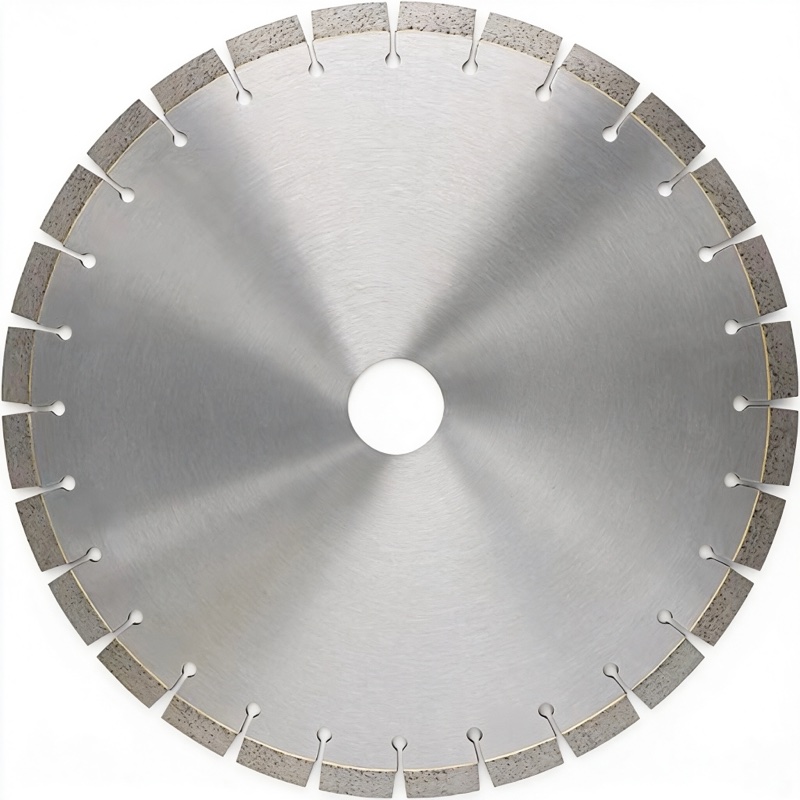
A low quote on a diamond saw blade is usually 20-40% lower not because the factory is cheaper but because it is quoting a thinner steel core, shorter segment height, lower diamond concentration, or a softer bond than your spec. To compare apples to apples, force every supplier to quote on the same RFQ: identical diameter, bore, segment height, diamond concentration (30/40/50 US mesh), bond grade, steel core thickness, welding method, packaging, and FOB port. The factory that refuses to specify these on the PI is the one most likely to surprise you at QC.
Two blades can both be a 350mm laser-welded saw blade, yet one outlasts the other 3x in real cutting. The difference is almost always one of five variables.
| Variable | Cheap quote typically uses | Pro-grade typically uses | Cost impact |
|---|---|---|---|
| Segment height | 9-10 mm | 12-15 mm | 25-35% of blade cost |
| Diamond concentration | 20-25% low-grade grit | 30-40% premium grit | 20-30% |
| Steel core thickness | 2.0-2.2 mm | 2.4-2.8 mm | 8-12% |
| Welding method | Sintered / silver braze | Laser welded | 15-25% |
| Bond hardness | Generic medium | Custom for substrate | 10-15% performance |
A diamond saw blades quoted at USD 18 per piece may use a 10mm segment and 2.0mm core; the same diameter at USD 28 may use a 14mm segment and 2.6mm laser-welded core. Real-life lifespan difference is typically 2-3x.
A quote on EXW (ex-works) excludes inland trucking to the port, port documentation, and export clearance. Those add USD 300-800 per shipment in China. FOB Shanghai/Ningbo includes those costs up to the ship's rail. CIF adds ocean freight and insurance to destination. When comparing suppliers, convert every quote to the same term. A USD 22 EXW quote versus a USD 25 FOB quote is actually more expensive once inland trucking and THC are added.
Also confirm the port. FOB Yantian (Shenzhen) differs from FOB Shanghai by USD 200-500 per container on the inland leg. Fujian-based factories often quote FOB Xiamen, which is fine but has fewer direct sailings to the US West Coast than Shanghai or Ningbo.
Once quotes come back, normalize to USD per mm of segment height or USD per expected linear meter of cut. The cheapest per-piece blade is rarely the cheapest per meter cut. The same logic applies to diamond core drill bits: compare per-hole cost, not per-bit cost.
Numbers only go so far. Order 2-3 sample pieces from the top 2 finalists and run them side by side on the same substrate. Track a simple metric: linear meters cut per mm of segment wear. A blade that costs 30% more but lasts 80% longer wins. Most buyers who skip this step end up reordering the cheaper blade twice, then quietly switching suppliers within a year.
Also compare the warranty and after-sales terms in writing. A reputable factory offers 6-12 months warranty against segment breakage or weld failure and credits defective pieces at replacement cost. A cheap quote that offers 'we will see' after shipment is not cheap at all when 2% of a 3,000-piece order arrives with cracked cores. Ask each shortlisted supplier for two customer references in your country; a factory that hesitates to provide references is telling you something. Also ask about spare-parts policy: if a bore is wrong on a 5,000-piece order, does the factory re-cut the bores in your country (via a local machine shop it pays for) or ship replacements on the next container? The answer separates suppliers who stand behind their work from those who vanish after the balance wire clears.
Because one quote is a hardware-store consumer blade (sintered, thin core, low diamond) and the other is a pro-grade laser-welded contractor blade. They look identical in a photo but are different products. Insist on a spec sheet.
No. Pick the lowest quote that meets your spec. A quote that is 15% below the market average usually hides a variable you will discover at QC. Quotes 30% below average are almost always spec cuts.
Honest suppliers send a spec sheet or drawing with the PI, ask about your substrate and machine RPM, and push back if your spec is unrealistic. Suppliers who immediately say 'yes, no problem' to every request are usually guessing.
Yes, on volume. Once the sample is approved, ask for price breaks at 1,000, 3,000, and 5,000 pcs. Most factories have a clear ladder: -10% at 1,000 pcs, -18% at 3,000 pcs, -25% at 5,000 pcs.
Comparing diamond tool quotes is a spec-matching exercise, not a price auction. Build a one-page RFQ that forces suppliers to disclose segment height, concentration, bond, core thickness, and trade term, then sample the top two. Buyers who do this consistently source tools at 15-25% lower lifetime cost than those who click the cheapest Alibaba listing.
Written and reviewed by JOY TECH — an SGS & BV audited, CE/RoHS certified diamond tools manufacturer founded in 2004, exporting to 50+ countries.
Our factory and QMS are audited by SGS and Bureau Veritas. Products meet CE/RoHS requirements and every piece is 100% inspected before packing.
Verified Certificates
