Average response time: under 24 hours
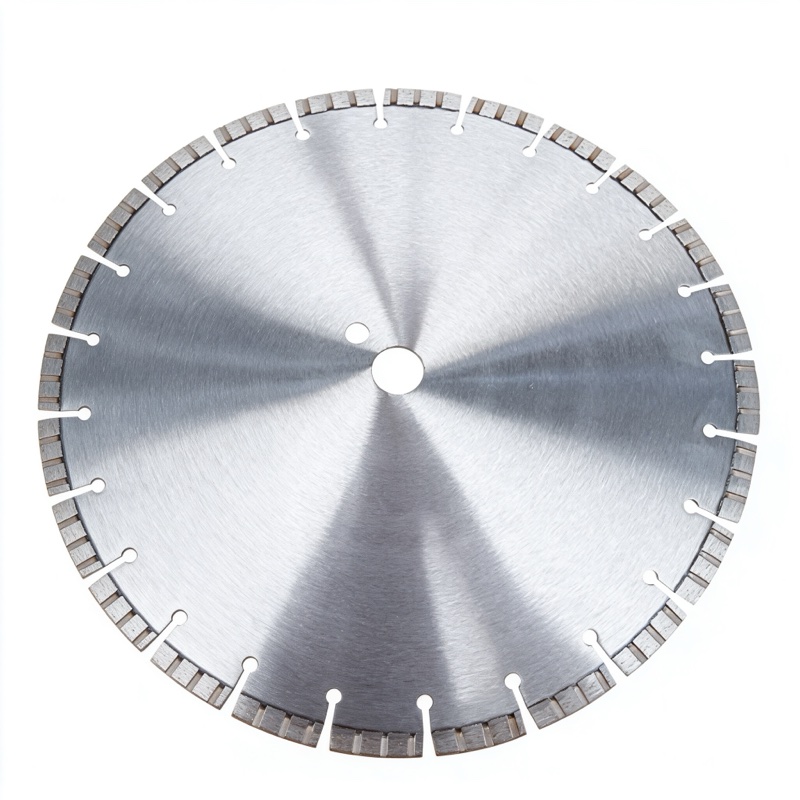
To cut concrete straight with a circular saw, clamp a straight guide board to the slab at the exact offset of the blade edge, run the saw base plate against it, and cut in two or three shallow passes with a diamond saw blade. Measure the offset by marking a line, setting the saw blade beside the mark, and measuring from the board to the cut line — not by eyeballing the blade. Keep the saw speed up, the feed steady, and finish with a full-depth pass along the same groove.
Concrete pulls a handheld saw sideways the moment the blade meets aggregate, and the vibration makes it easy to drift. Without a physical guide, the cut wanders, the blade binds, and the finished line looks like a hand-drawn curve. The blade also cuts on the side closest to the base plate, so the guide offset must be measured precisely or every cut will be consistently off by a few millimeters.
Use a straight board at least 20 mm thick and as long as the cut. Place it on the slab, set the saw with the blade beside the marked line, and slide the base plate against the board. Measure the gap between the board and the line, then move the board to that exact offset. Clamp or screw the board down so it cannot shift under vibration.
For long cuts, a second clamp in the middle stops the board from bowing. For repeated cuts, keep the same board and offset and mark the slab instead of re-measuring every time. If you are cutting several slabs to the same size, a jig that registers the slab edge saves time and guarantees identical pieces.
Fit a diamond blade designed for concrete — a segmented rim for speed or a continuous rim for finish. The blade must be sharp: a glazed blade deflects and drags. Match the blade to the material; the same rules apply whether you cut cured slabs or green concrete, and for asphalt you would pick a dedicated blade (see cutting asphalt with a diamond saw blade).
Run the saw at full speed and push at a steady rate that lets the blade cut without stalling. Let the saw do the work — forcing it heats the rim and pulls the cut off line. In a two-pass cut, the first pass is a shallow groove that steers every later pass; resist the urge to go full depth immediately.
Keep the saw base flat on the slab. Lifting the rear handle tilts the blade and bevels the cut. If the blade binds at the end of the cut, slow down for the last few centimeters instead of forcing through — the free edge is where most breakout and blade damage happen.
Yes, with a diamond blade rated for concrete. A wood-cutting blade will overheat and wear out almost immediately; the saw itself only needs enough power and a blade that fits the arbor.
With a handheld saw, cut a shallow groove first, then deepen in passes. Cutting full depth in one pass overloads the blade, heats it, and pulls the cut off line.
Without a clamped guide, vibration drifts the blade. Use a guide board set at the measured blade offset and run the base plate against it for the full length.
Water helps keep the blade cool and controls dust, but many handheld setups cut dry. If you cut dry, take shallower passes and let the blade cool between cuts.
A straight concrete cut with a circular saw is a matter of setup, not strength: a clamped guide board set at the true blade offset, a sharp diamond blade, and progressive passes that steer the cut. Slow down at the end, keep the base flat, and check the blade for damage after the job. With this routine, concrete slabs cut straight, square, and ready to install — every time.
Written and reviewed by JOY TECH — an SGS & BV audited, CE/RoHS certified diamond tools manufacturer founded in 2004, exporting to 50+ countries.
Our factory and QMS are audited by SGS and Bureau Veritas. Products meet CE/RoHS requirements and every piece is 100% inspected before packing.
Verified Certificates
