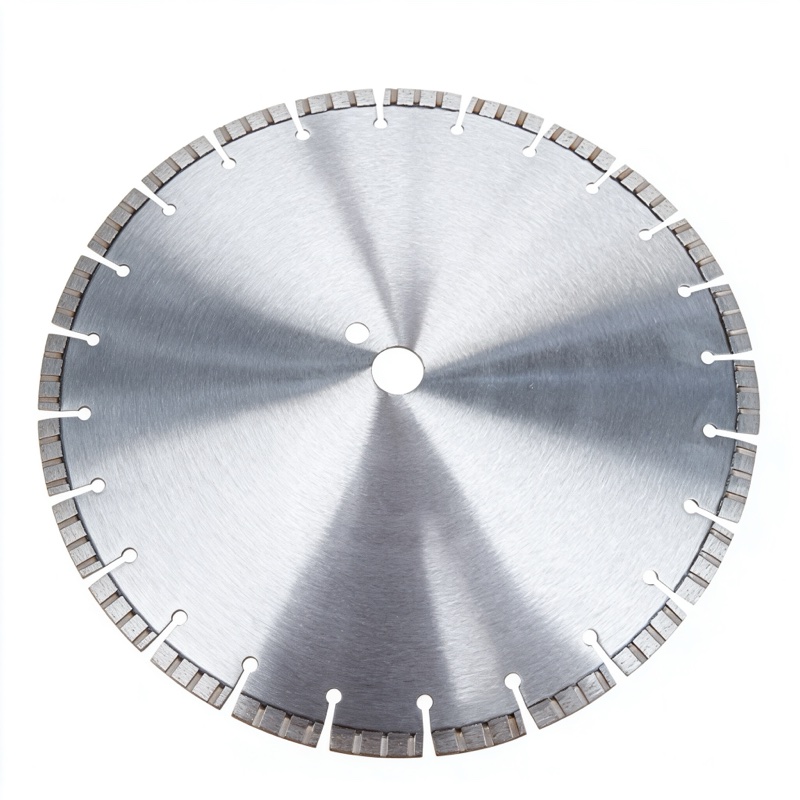
Yes, a diamond blade cuts cast iron pipe cleanly, but you need a diamond blade rated for metal — not a standard concrete blade. Use a 350-400 mm laser-welded metal-cutting diamond blade at the correct RPM, wet if possible, on a cut-off saw or pipe cutter. A standard abrasive chop-off wheel wears out in minutes on cast iron; a diamond blade lasts for hundreds of cuts and produces a square, chip-free end.
An abrasive wheel cuts cast iron by grinding itself away — it throws sparks, heats the pipe, and wears down in a few cuts. A diamond blade cuts by exposing diamond grit that stays sharp, producing a clean cut with minimal heat and a straight end that threads easily into couplings.
| Factor | Recommendation |
|---|---|
| Blade type | Diamond segmented or turbo rim, metal-cutting grade |
| Diameter | 350 mm (14") for pipe up to 200 mm OD; 400 mm for 300 mm |
| RPM | Match the saw — typically 4,500-5,500 RPM for 350 mm |
| Wet/Dry | Wet reduces heat and extends life; dry is possible short cuts |
| Saw | Cut-off saw, pipe cutter, or wall saw with pipe clamp |
Our laser-welded blade handles cast iron, concrete and rebar in the field, while the high-horsepower blade tackles heavy metal and reinforced sections.
A: It will, but the bond is too hard for metal and will glaze over fast. A metal-cutting diamond blade has a softer bond that keeps diamonds exposed.
A: Hundreds of cuts on typical 100-200 mm pipe, compared with 5-15 cuts on an abrasive wheel.
A: Small diameter pipe, yes, with a 115-125 mm diamond metal-cutting blade. For large sewer pipe, use a 350 mm cut-off saw.
A: A diamond cut is square and clean; a quick deburr with a file is usually enough for couplings.
A diamond blade rated for metal is the fastest, cleanest way to cut cast iron pipe. Browse our laser-welded cutting range for pipe, rebar and heavy metal jobs.
