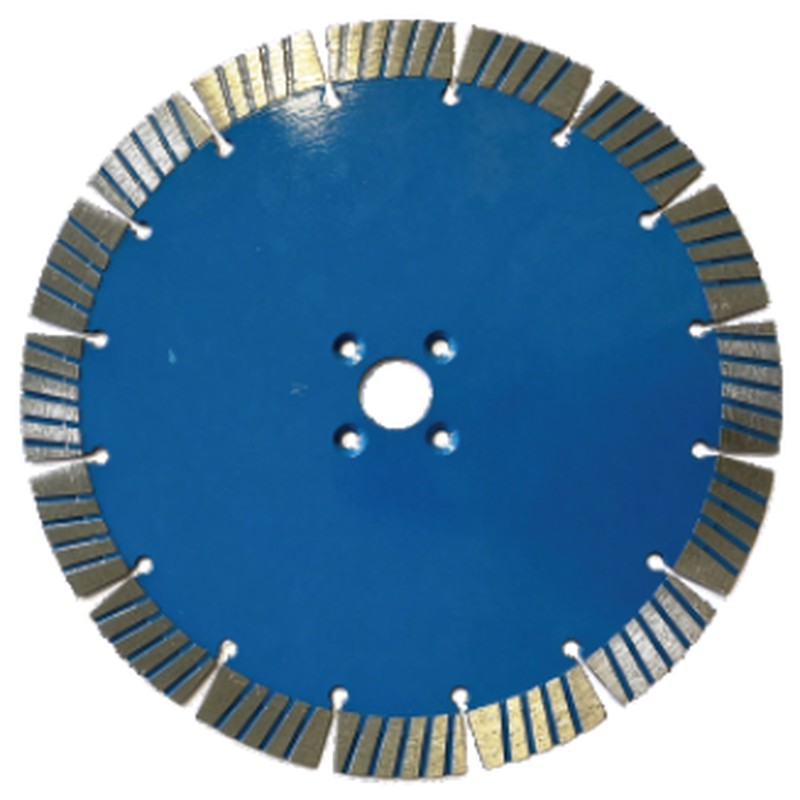
Cut fiber cement soffit and fascia board with a turbo or continuous-rim diamond blade on a circular saw or angle grinder. Fiber cement is cement bonded with cellulose fibers — it's abrasive and brittle, so a diamond blade (not carbide) is required. Use a 165-190 mm blade on a circular saw with a dust shroud, or a 115-125 mm turbo blade on a grinder. Score the face first and cut from the back to prevent chip-out on the visible edge.
Fiber cement board (HardiPlank, James Hardie and similar) contains cement and silica — it dulls carbide teeth within a few cuts. Diamond blades cut hundreds of boards with the same edge. The trade-off: diamond blades cost more upfront but last 20-50x longer on fiber cement.
| Factor | Recommendation |
|---|---|
| Blade type | Turbo rim or continuous rim diamond |
| Size | 165-190 mm circular saw; 115-125 mm grinder |
| Wet/Dry | Dry OK with dust extraction; wet for cleanest edge |
| Feed | Medium, steady — don't force |
| Dust control | Shroud + HEPA vacuum — silica hazard |
Our general-purpose turbo dry blade cuts fiber cement soffit and siding cleanly on angle grinders, while a circular saw blade suits long fascia runs.
A>Yes, a turbo masonry blade works well. Carbide wood blades don't — they dull instantly.
A>Dry with dust extraction is standard on ladders. Wet cutting is cleaner but impractical up high.
A>Score the painted face first, then cut from the back. Tape also helps on thin fascia.
A>A diamond turbo blade — 165-190 mm for circular saw, 115-125 mm for grinder trim cuts.
Diamond turbo blades cut soffit and fascia fiber cement fast with a clean edge. Browse our small-diameter blade range for circular saws and grinders.
