

Diamond Wire Saw vs Wall Saw for Reinforced Concrete Demolition
Diamond Wire Saw vs Wall Saw for Reinforced Concrete Demolition
Quick Answer
Use a diamond wire saw when the cut is deep, the geometry is irregular, the wall or slab is heavily reinforced, or low vibration matters. Use a wall saw when you need straight, plumb openings with controlled depth on a flat wall or slab, and when fast setup and a compact footprint matter more than unlimited depth. Wire saws win on thickness and access; wall saws win on straightness and speed on regular cuts.
The decision is not about which tool is “better”. It is about cut geometry, rebar density, water supply, floor or wall access and how the piece will be lifted. This guide gives contractors and demolition buyers a practical selection checklist.
Cut Geometry and Depth
A wall saw runs on a track and plunges a circular blade into the wall. Blade diameter sets the depth: a 900 mm blade reaches about 400 mm, and a 1200 mm blade reaches about 500 mm. Beyond that, the saw body and track interfere.
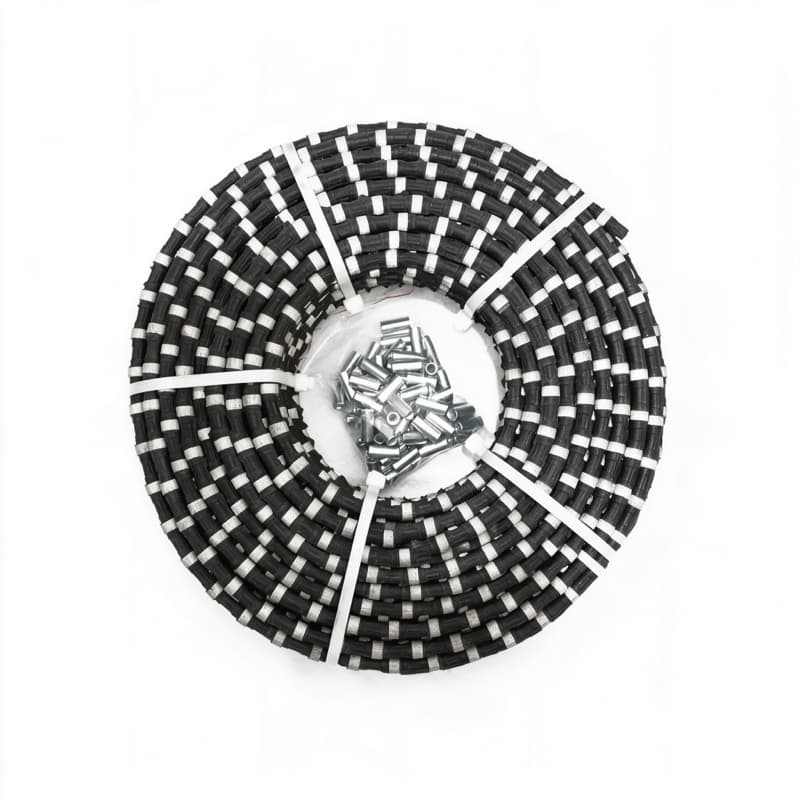
A wire saw has no depth limit set by blade diameter. It loops a diamond-impregnated wire through guide pulleys and can cut 1 m, 2 m or thicker sections in one setup. That makes it the default for dam walls, bridge piers, foundation piles and thick transfer beams.
| Condition | Better choice | Reason |
|---|---|---|
| Straight opening in a 300 mm wall | Wall saw | Fast track setup, clean jambs |
| 1.5 m thick pier or abutment | Wire saw | No blade-depth ceiling |
| Inside a basement with poor access | Wire saw | Wire can be routed through small openings |
| Many repeated rectangular openings | Wall saw | Track and blade repeat accurately |
Reinforcement and Cutting Behavior
Wall saw blades cut concrete and rebar in the same pass, but heavy rebar slows feed and raises segment wear. If the wall has closely spaced 32 mm bars or dense mesh, expect 20-40% slower cutting and a higher cost per metre.
A diamond wire saw handles dense reinforcement more evenly because the wire contacts the cut over a longer arc. The trade-off is that the wire can drift in a very inhomogeneous section if guide pulleys are not rigid. For heavily reinforced foundations, wire saws usually produce a flatter cut with less local spalling.
Access, Water and Site Logistics
Wall saws need a flat, clear track line, a water supply and a drain or vacuum recovery. They are compact but the track must be anchored, and the operator needs space at both ends of the cut.
Wire saws need a larger water flow because the wire runs at high speed around pulleys and generates fines. Plan 15-30 L/min depending on wire length and cut area. The wire path also needs safe anchor points and guards; a broken wire is a serious hazard. On jobs where water cannot be drained, both methods need slurry containment and a wet vacuum.
For a renovation inside an occupied building, wire sawing is often quieter and produces less vibration at the cut boundary. Wall sawing is faster but the track anchoring can transmit vibration into the slab.
Cost and Schedule Comparison
Wall sawing is usually cheaper for short, straight cuts because setup is quick and the blade is a familiar consumable. Wire sawing carries higher setup time: pulleys, wire routing, water and a larger crew. On long or thick cuts, wire saw cost per square metre drops and overtakes wall sawing.
- Short openings, under 3 m: wall saw is normally the low-cost option.
- Thick sections over 500 mm: wire saw avoids multiple passes and is usually faster.
- Irregular or curved cuts: wire saw, because a wall saw cannot follow a curve.
- Remote or confined access: wire saw, because the wire can be fed through the opening.
Safety and Quality Checks
Both methods require a written method statement, exclusion zone and water management. For wire saws, check wire condition, pulley alignment and anchor strength before every shift. For wall saws, check track anchors, blade guard and depth stop. On reinforced concrete, never assume the rebar map is correct; scan before drilling or anchoring the track.
Cut quality is judged by the jamb flatness, spalling at the exit edge and reinforcement exposure. A wire saw should leave a consistent striation pattern; a wall saw should leave clean, parallel saw marks without steps between passes. If the cut wanders, stop and check pulley or track alignment rather than forcing the feed.
Frequently Asked Questions
Q: Can a wall saw cut through 600 mm concrete?
A: Not in one pass with a standard blade. A 1200 mm blade reaches roughly 500 mm. Beyond that, use a wire saw or cut from both sides with a larger saw.
Q: Is a wire saw safe for occupied buildings?
A: Yes, with a proper exclusion zone, wire guards, water containment and a method statement. Vibration and noise are usually lower than impact demolition, but the wire itself is a high-energy hazard.
Q: Which method is faster on a 300 mm wall?
A: Wall sawing. Setup is quicker and the cut is straight. Wire sawing only becomes faster when thickness, length or access rules out a circular blade.
Q: Do both methods need water?
A: Yes for diamond cutting. Dry wire cutting exists for special cases, but most reinforced concrete demolition uses water for cooling and dust control.
Conclusion
Choose the wall saw for straight, repetitive openings within blade depth; choose the wire saw for thick, curved, confined or heavily reinforced cuts. Price the method by total cut area, not by the saw’s hourly rate. JOY TECH supplies diamond wire saws for concrete and laser-welded high-horsepower blades for contractors who need both methods in one fleet.
Products used in this guide
Diamond Wire Saw for Concrete — JOY-WS-C
View specs →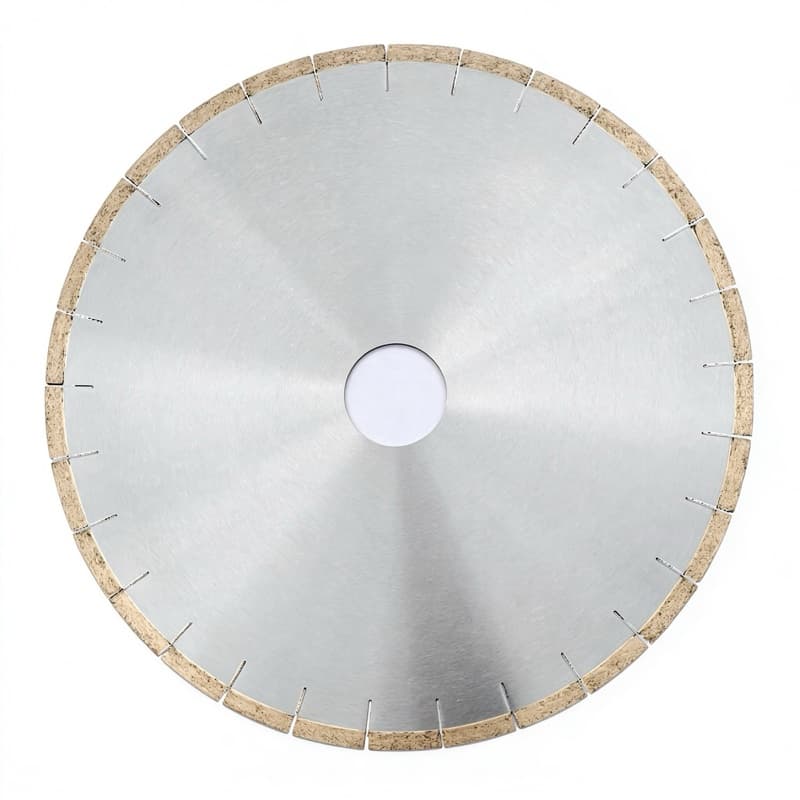
Marble Saw Blade (Straight Slot) — JOY-MS-ST
View specs →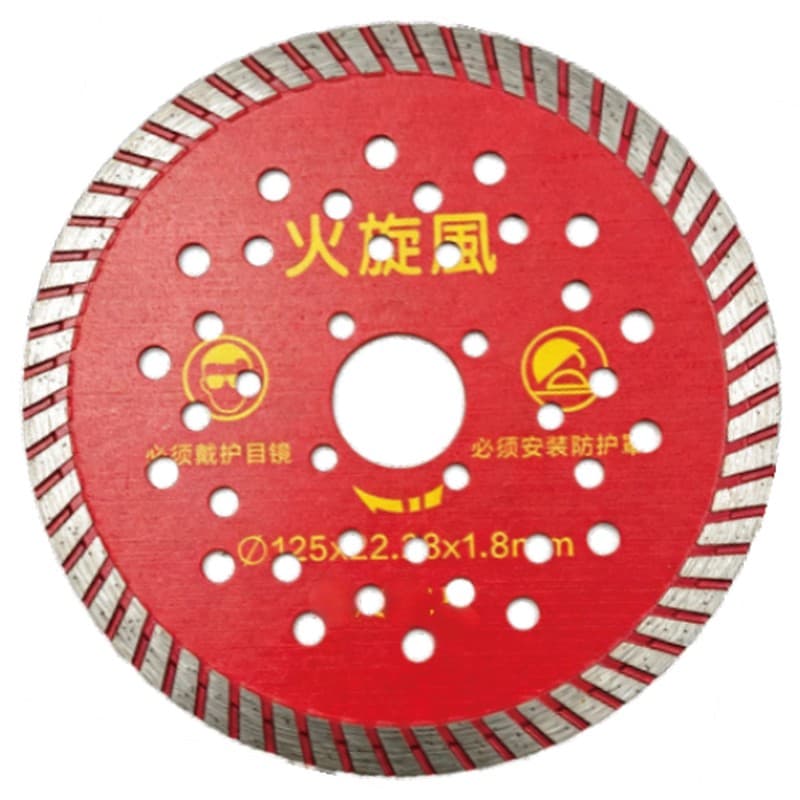
Hot Pressed Turbo Diamond Saw Blade — JOY-TB-HP
View specs →Need this tool for your job?
MOQ 1 · 7–30 days by order quantity · FOB & CIF · free sample on request
Author & Manufacturer
Written and reviewed by JOY TECH — an SGS & BV audited, CE/RoHS certified diamond tools manufacturer founded in 2004, exporting to 50+ countries.
Quality & Compliance
Our factory and QMS are audited by SGS and Bureau Veritas. Products meet CE/RoHS requirements and every piece is 100% inspected before packing.
Verified Certificates
- SGS Audited Supplier — Report No. QIP-ASI227442 & QIP-ASR247051 (Audit Jan 29, 2024)
- Bureau Veritas Verified — Report No. MIC-ASR257059 (Audit Feb 20, 2025)
- CE & RoHS Certificate of Conformity — No. CS240925001HRZ (Issue Sep 25, 2024)