

Flange Diameter and Blade Stiffness on Hand-Held Saws
Flange Diameter and Blade Stiffness on Hand-Held Saws
Quick Answer
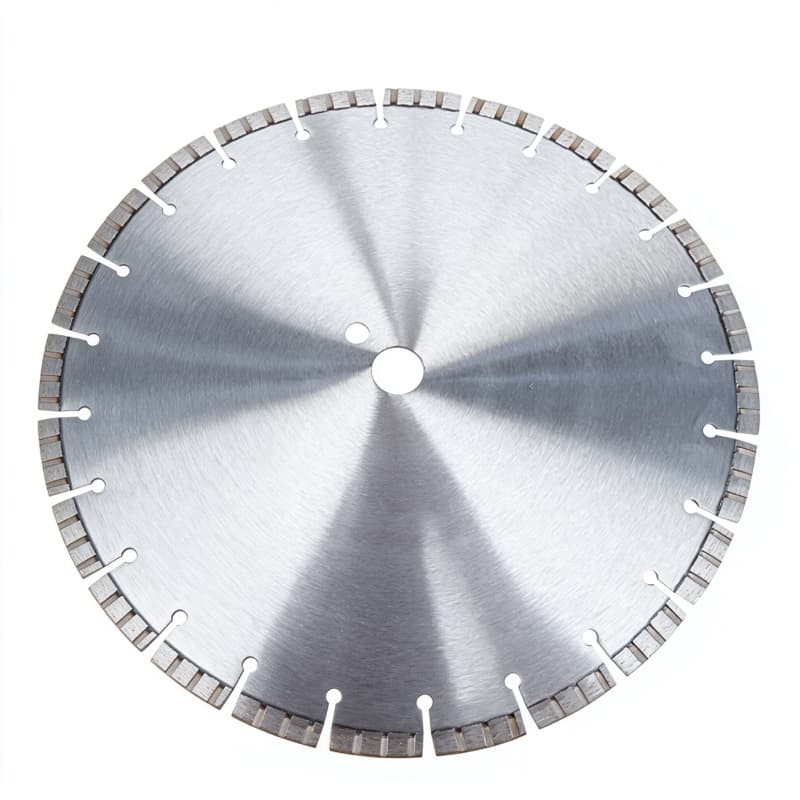
A larger flange supports more of the blade core and reduces flex, but it also limits the maximum depth of cut. A smaller flange gives more depth but less support, so the blade deflects more easily. On hand-held saws, use the largest flange the saw and blade allow, keep both faces flat and clean, and never mix a worn flange with a thin core blade.
What the Flange Actually Does
The flange clamps the blade core between two hardened rings. Friction drives the blade, and the clamp stiffness resists lateral deflection. The blade does not become “stiffer” because the steel is thicker; it becomes stiffer because the clamped diameter is larger and the unsupported span is shorter.
A small flange concentrates load near the arbor. Under side load, the unsupported rim can deflect, the kerf widens and the segment edges rub. A large flange spreads the clamp load and keeps the rim running true, but the flange radius reduces the maximum cut depth.
Flange Size vs Depth of Cut
Maximum depth is roughly half the blade diameter minus the flange radius. A 350 mm blade with a 100 mm flange can cut about 125 mm; with a 140 mm flange it drops to about 105 mm. Always check the saw manual and the blade’s depth rating before changing flanges.
| Blade diameter | Flange diameter | Approx max depth |
|---|---|---|
| 230 mm | 60 mm | 85 mm |
| 300 mm | 80 mm | 110 mm |
| 350 mm | 100 mm | 125 mm |
| 400 mm | 120 mm | 140 mm |
Worn Flanges and Runout
A flange that is grooved, dished or burred will not clamp flat. The blade then runs out of plane and cuts an oversize kerf. Check both faces with a straight edge and a dial indicator. Runout over 0.05 mm at the flange face is enough to cause visible vibration on a thin blade.
Never install a blade over a flange with dried slurry or a damaged key slot. Clean both faces, check the arbor for burrs and torque the retaining bolt to the saw manufacturer’s value. Over-tightening warps the flange; under-tightening lets the blade slip.
Thin Blades and Small Flanges
Thin kerf blades are less stiff and more sensitive to flange condition. If you run a thin blade on a small flange, reduce side load: start the cut straight, do not twist the saw, and let the blade exit before lifting. On deep cuts, a thin blade with a small flange can wander enough to bind.
For hand-held saws, a blade with a reinforced core or a silent core can compensate for a smaller flange, but it does not replace a flat flange. The core profile and tension matter as much as thickness.
Field Checks Before Cutting
- Clean both flange faces and the arbor thread.
- Check flange flatness with a straight edge; replace if light shows under the edge.
- Mount the blade and spin it by hand; it should not wobble or touch the guard.
- Run at full speed for 30 seconds without load and listen for a beat or scrape.
- Make the first cut in scrap and measure kerf width against the segment width.
Frequently Asked Questions
Q: Can I use a larger flange to stop blade wobble?
A: Only within the saw’s depth limit. A larger flange improves support but reduces cut depth and may foul the guard. Fix runout first.
Q: How much flange runout is acceptable?
A: Under 0.05 mm at the flange face for thin blades. For standard blades, under 0.1 mm is a practical field limit.
Q: Why does my blade cut a wider kerf than the segment?
A: Side deflection from a worn flange, too much feed force or a blade that is not tensioned. Check flange flatness and reduce side load.
Q: Do silent-core blades need a different flange?
A: No, but they are less tolerant of a damaged flange because the core is designed to damp vibration, not to correct runout.
Conclusion
Flange diameter is a trade between support and depth. Use the largest flat flange the saw allows, check runout before every blade change, and never force a thin blade through a curved cut. JOY TECH supplies laser-welded concrete and asphalt blades and high-horsepower blades with matched flange requirements.
Products used in this guide
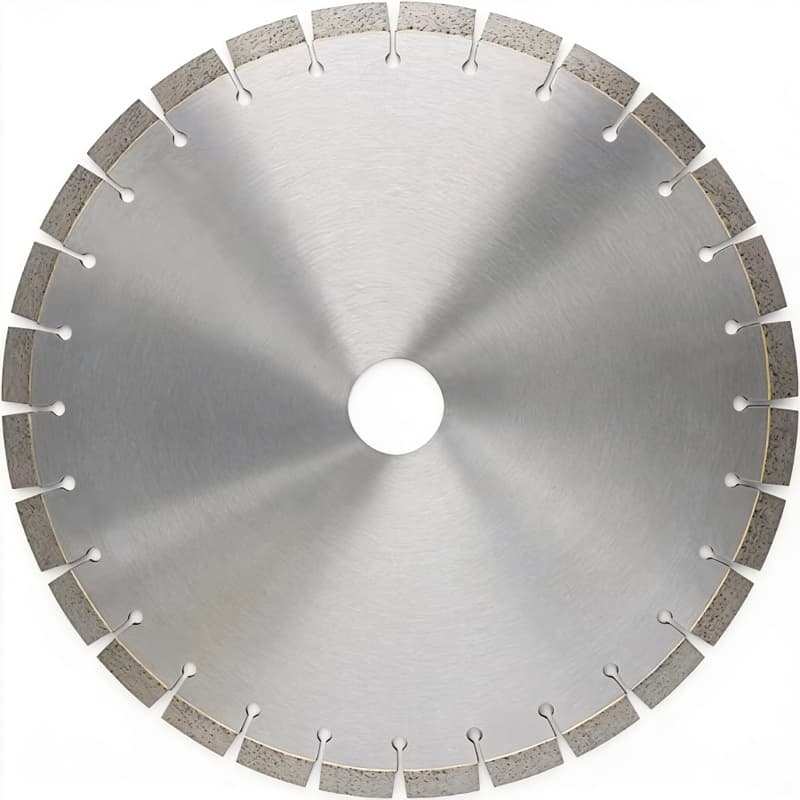
Granite Saw Blade (Long Segment) — JOY-GR-L
View specs →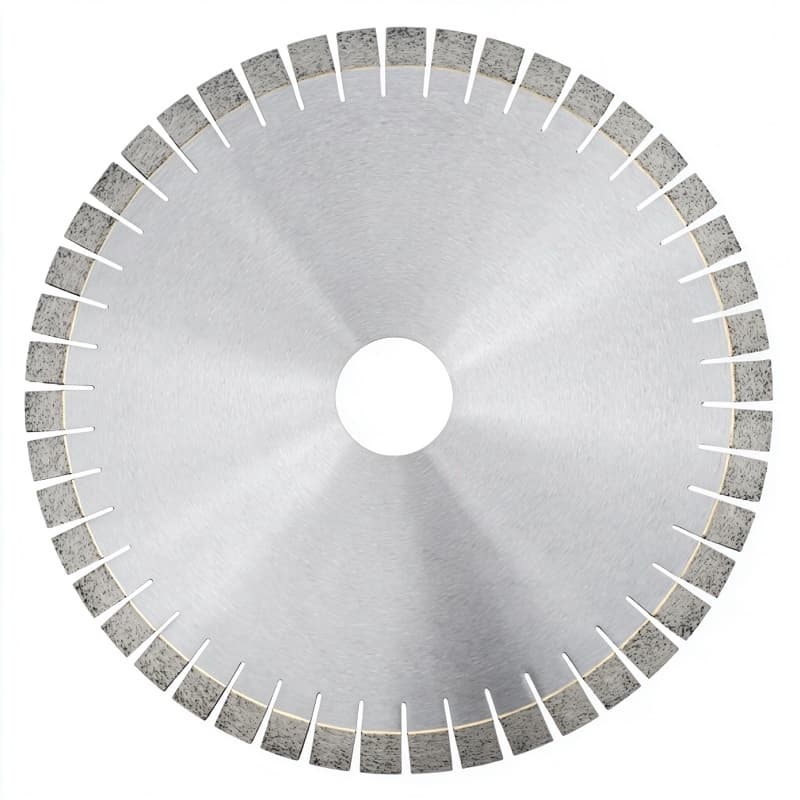
Granite Saw Blade (Short Segment) — JOY-GR-S
View specs →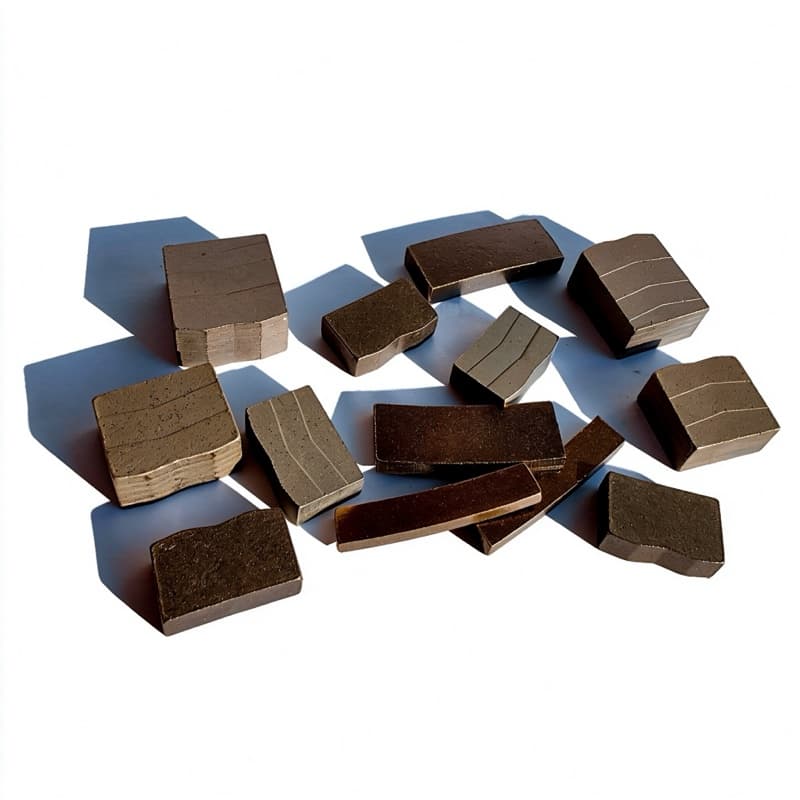
Quarry Blade Segment (Single Blade) — JOY-QB-S
View specs →Need this tool for your job?
MOQ 1 · 7–30 days by order quantity · FOB & CIF · free sample on request
Author & Manufacturer
Written and reviewed by JOY TECH — an SGS & BV audited, CE/RoHS certified diamond tools manufacturer founded in 2004, exporting to 50+ countries.
Quality & Compliance
Our factory and QMS are audited by SGS and Bureau Veritas. Products meet CE/RoHS requirements and every piece is 100% inspected before packing.
Verified Certificates
- SGS Audited Supplier — Report No. QIP-ASI227442 & QIP-ASR247051 (Audit Jan 29, 2024)
- Bureau Veritas Verified — Report No. MIC-ASR257059 (Audit Feb 20, 2025)
- CE & RoHS Certificate of Conformity — No. CS240925001HRZ (Issue Sep 25, 2024)