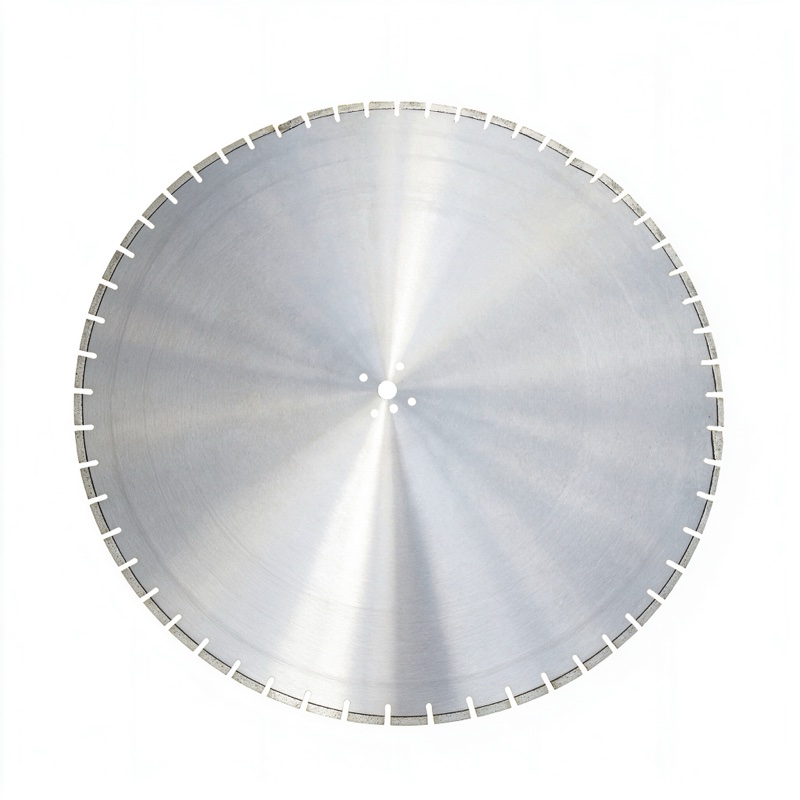
Yes, hook-slot blades cut asphalt faster than standard U-slot blades. The angled slots eject hot asphalt chips quickly, prevent bitumen from re-welding to the segment, and let the blade run cooler. They're the standard choice for production asphalt cutting — road work, utility trenching, and joint widening. For concrete, a hook-slot blade doesn't help much; a standard laser-welded segmented blade is still the right tool.
Asphalt is a mix of stone aggregate and bitumen binder. When you cut it, the bitumen heats up, sticks to the segment, and glazes the diamond. Hook slots are angled channels through the segment that act like tiny ejectors — the rotation flings hot asphalt out before it can stick. The blade stays sharp and cuts at full feed rate all day.
| Feature | Hook Slot | Standard U-Slot |
|---|---|---|
| Speed on asphalt | Fastest | Good, but glazes over time |
| Bitumen clearance | Excellent | Moderate |
| Cutting concrete | OK, but not optimized | Better |
| Blade life on asphalt | Longer | Shorter (glazing) |
| Cost | Slight premium | Standard |
Our laser-welded concrete/asphalt blade handles mixed road work, while the high-horsepower blade covers heavy asphalt and reinforced overlays.
A: Yes, but it's not optimized. Hook slots mainly help with bitumen clearance; on concrete, a standard laser-welded segment cuts better.
A: Bitumen build-up. Switch to a hook-slot blade or dress the current blade on an abrasive block.
A: Many contractors run dry for asphalt because water traps bitumen against the segment. Follow the blade label.
A: Same depth rule as concrete: roughly 1/3 of blade diameter. 450 mm blade ≈ 150 mm depth.
Hook-slot blades are a real productivity upgrade for asphalt crews. Browse our road and asphalt blade range for 350-600 mm walk-behind saws.
