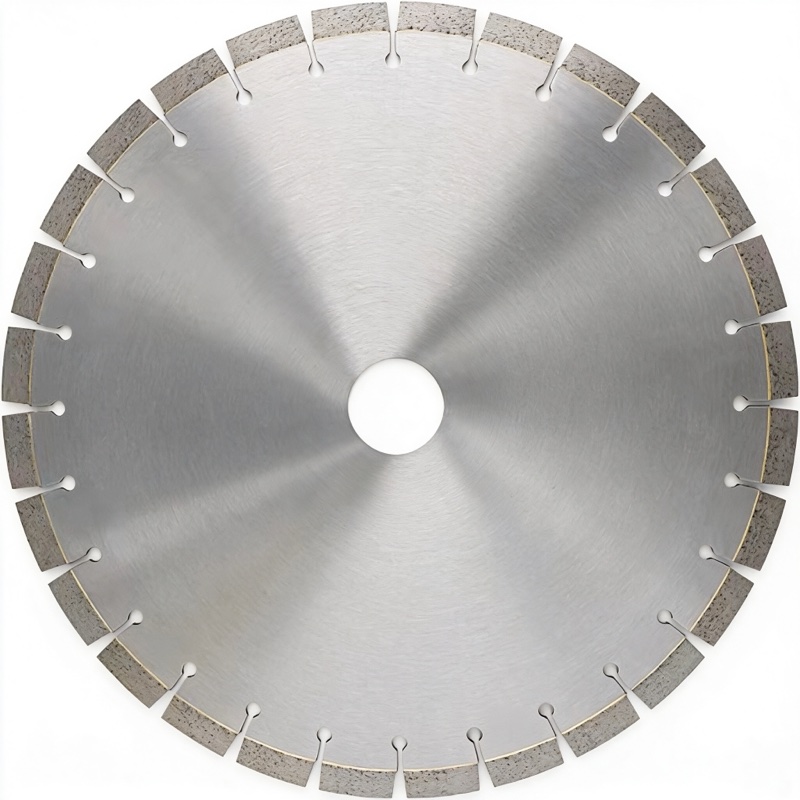
Cut fireplace stone with a turbo rim blade for thin veneer and finished edges, or a segmented blade for rough fire brick and thick stone. Match the blade to the stone type: granite veneer needs a harder bond, limestone and soapstone are soft and cut fast with a turbo blade. Wet cutting keeps dust down and prevents heat cracks in thin veneer.
| Stone | Blade Type | Notes |
|---|---|---|
| Granite veneer | Turbo rim, hard bond | Slow feed, wet cut |
| Limestone / travertine | Turbo or continuous rim | Soft — don't force, clean edge |
| Soapstone | Turbo, soft bond | Very soft, fast cutting |
| Fire brick / refractory | Segmented | Abrasive — medium bond |
| Fieldstone / irregular | Segmented, aggressive | Rough work, speed over finish |
Our granite long-segment blade handles granite and hard stone, while the marble straight-slot blade gives a clean finish on limestone and travertine.
A: Yes, for thin veneer and trim cuts with a 115-125 mm turbo blade. For large pieces, use a wet tile saw.
A: A segmented blade in a medium bond — fire brick is abrasive and eats soft blades fast.
A: Strongly recommended — thin veneer cracks from heat and dry cutting makes silica dust. If dry, use extraction.
A: Use a ring saw or angle grinder with a small turbo blade; cut slowly and follow the curve with multiple passes.
Match the blade to your fireplace stone — turbo for veneer, segmented for brick. Browse our masonry and stone range for fireplace projects.
