

How to Choose Diamond Blade for Cutting Porcelain Slab
How to Choose Diamond Blade for Cutting Porcelain Slab
Quick Answer
For 1200x2400mm porcelain slabs, use a continuous-rim or thin turbo porcelain blade (300–400mm) on a bridge or CNC saw running wet at moderate RPM. Support the full slab, feed steadily, and make the cut in one continuous pass — the blade and setup matter more than the slab itself for chip-free cuts.
Why Porcelain Slabs Chip
Large-format porcelain is extremely hard and brittle. Any vibration, blade runout or unsupported area causes edge chipping. The blade needs a smooth rim that holds the edge while cutting, and the slab needs support right up to the cut line on both sides.
Blade Requirements
- Continuous or thin turbo rim — smooth cut, minimal vibration.
- Porcelain-specific bond — hard enough for the dense surface without glazing.
- Finer grit — cleaner edge on hard-fired porcelain.
- Low-runout core — a flat, balanced blade is essential for chip-free edges.
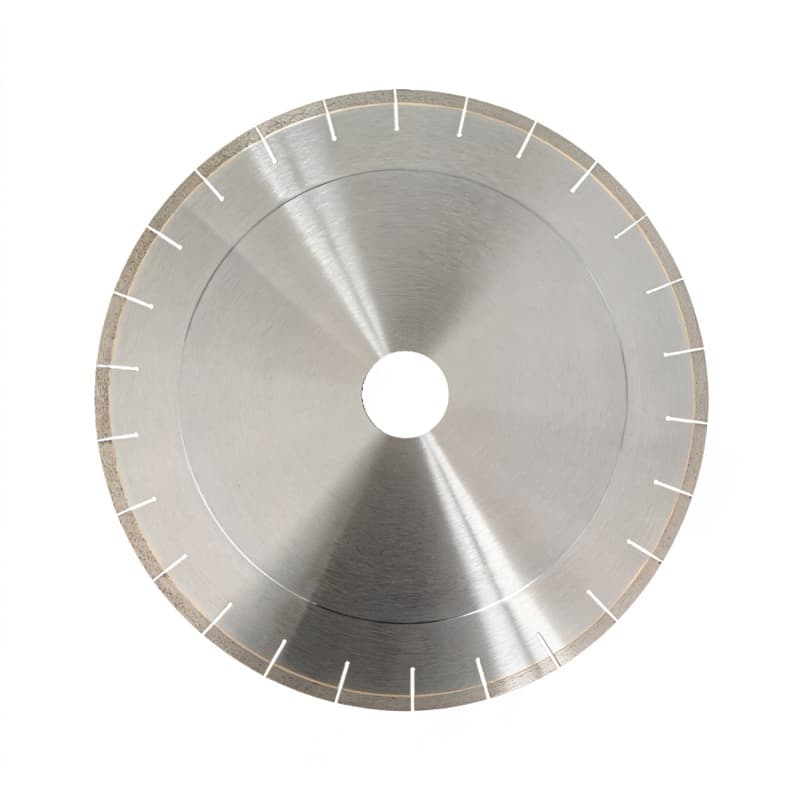
The Dekton Saw Blade (Normal Core) and the silent-core version are engineered for large-format sintered and porcelain slabs.
Cutting Setup
- Support the slab fully — rollers or sacrificial boards on both sides of the cut.
- Cut wet — water cools the edge and prevents micro-cracks.
- One continuous pass — stopping mid-cut creates a stress line and chips at the restart point.
- Correct RPM — follow the blade rating; too fast causes vibration, too slow causes chipping.
- Use a guide or rail — freehand cuts on large slabs wander and chip.
Frequently Asked Questions
Q: Can I cut porcelain slabs with an angle grinder?
Small trim cuts, yes, with a thin continuous-rim blade and a guide. Full 1200x2400 slab cuts need a bridge, rail or CNC saw for stability.
Q: Wet or dry cutting porcelain?
Wet always for large slabs. Dry cutting risks heat cracking and heavier chipping at the edges.
Q: Why does my porcelain slab chip at the end of the cut?
Almost always because the trailing edge is unsupported. Add sacrificial support under the exit side so the cut piece does not break off under its own weight.
Conclusion
Chip-free porcelain slab cutting comes from three things: a smooth-rim porcelain blade, full slab support, and one steady wet pass. Upgrade to a low-runout blade and support the exit edge, and 1200x2400 slabs cut cleanly every time.
Products used in this guide
Dekton Saw Blade (Normal Core) — JOY-DK-NC
View specs →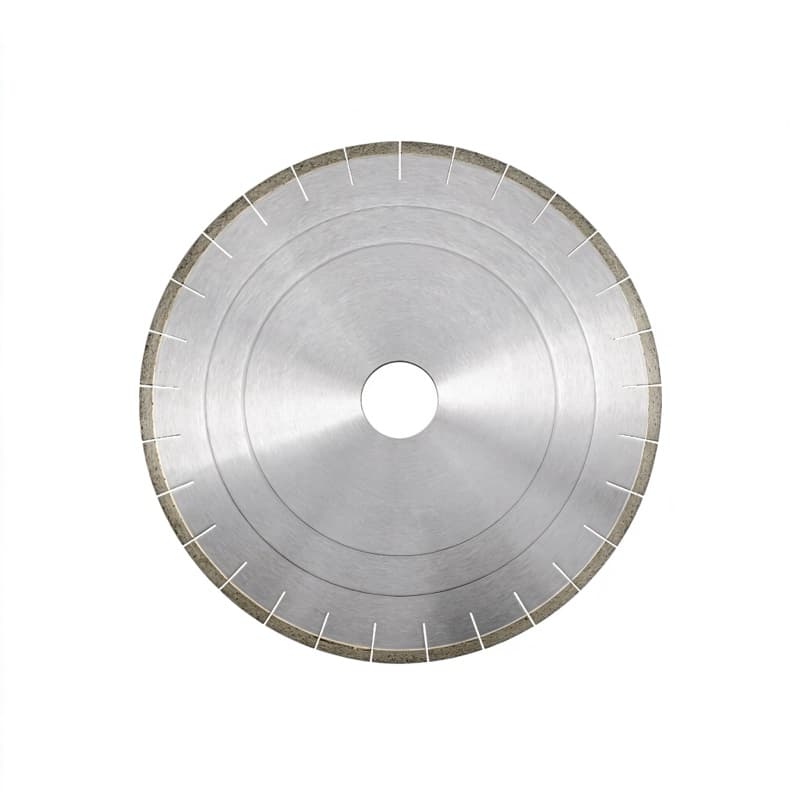
Dekton Saw Blade (Silent Core) — JOY-DK-SC
View specs →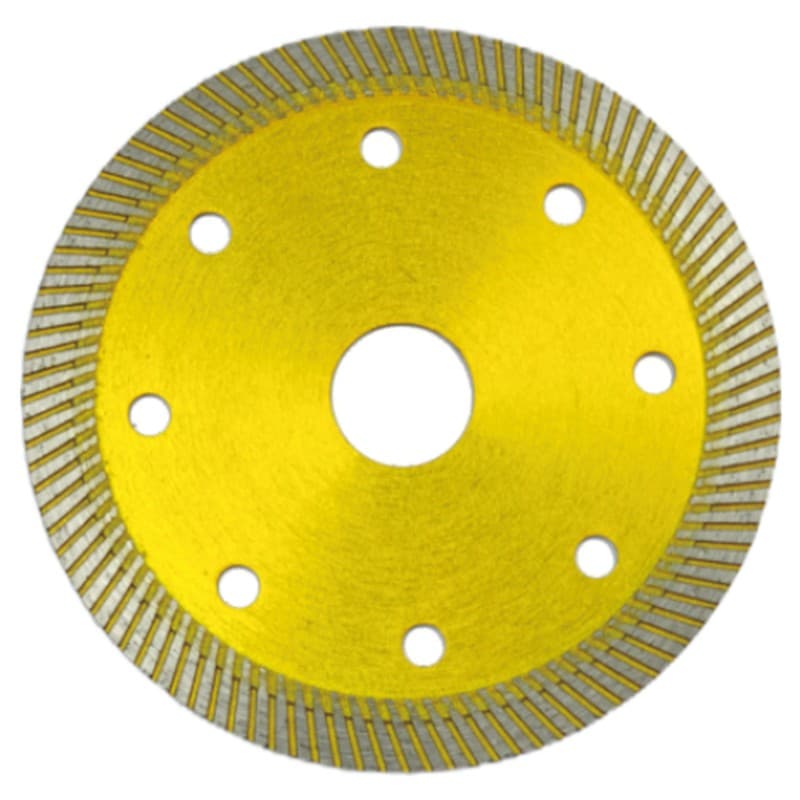
Super Thin Turbo Diamond Saw Blade (Hot Pressed) — JOY-ST-HT
View specs →Need this tool for your job?
MOQ 1 · 7–30 days by order quantity · FOB & CIF · free sample on request
Author & Manufacturer
Written and reviewed by JOY TECH — an SGS & BV audited, CE/RoHS certified diamond tools manufacturer founded in 2004, exporting to 50+ countries.
Quality & Compliance
Our factory and QMS are audited by SGS and Bureau Veritas. Products meet CE/RoHS requirements and every piece is 100% inspected before packing.
Verified Certificates
- SGS Audited Supplier — Report No. QIP-ASI227442 & QIP-ASR247051 (Audit Jan 29, 2024)
- Bureau Veritas Verified — Report No. MIC-ASR257059 (Audit Feb 20, 2025)
- CE & RoHS Certificate of Conformity — No. CS240925001HRZ (Issue Sep 25, 2024)