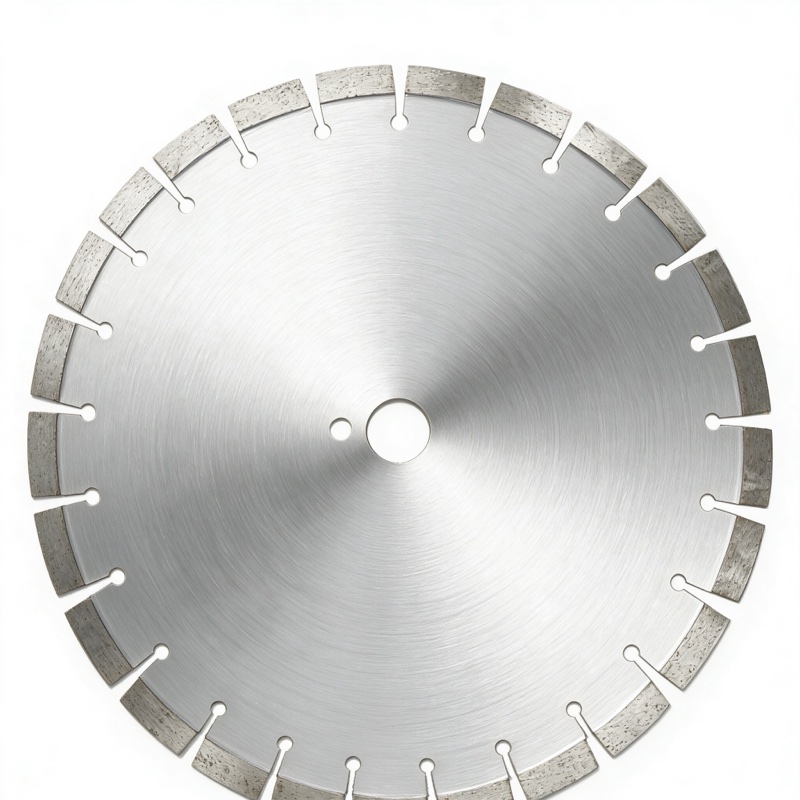
Match the blade bore exactly to your saw arbor — common sizes are 20 mm, 22.23 mm (7/8"), 25.4 mm (1") and 30 mm. If the blade bore is larger than the arbor, use the correct hardened-steel bushing (reducer ring) that ships with the blade or is sold separately. Never force a smaller bore onto a larger arbor, and never use a blade whose bore is larger than the arbor without a bushing — it will run off-center and vibrate dangerously.
| Bore | Typical Saw |
|---|---|
| 20 mm | European angle grinders, 115/125 mm blades |
| 22.23 mm (7/8") | US/CA 230 mm grinders, many cut-off saws |
| 25.4 mm (1") | Tile saws, bridge saws, some floor saws |
| 30 mm | European/Asian 350-450 mm saws |
| 25 mm / 27 mm | Specialist machines |
Many blades ship with multiple bushings (16-30 mm). Keep them with the blade. If you lose one, buy a hardened-steel reducer ring — never improvise with washers or tape. A loose blade on the arbor is a serious safety hazard and destroys the blade core.
Our high-frequency welded blade ships with the common bore adapters, and the laser-welded range covers most floor saw arbor sizes.
A>Yes, with the correct 25.4-to-20 mm bushing. Never run it without one.
A>Do not force it or file it — return the blade for the correct bore size.
A>Quality hardened bushings are machined to tolerance and don't affect balance. Cheap cast washers do.
A>Check the spindle with a ruler or the manual — most cut-off saws and grinders print it on the guard.
A correctly fitted blade bore and bushing keep your saw safe and wobble-free. Browse our blade range for the bore and adapter you need.
