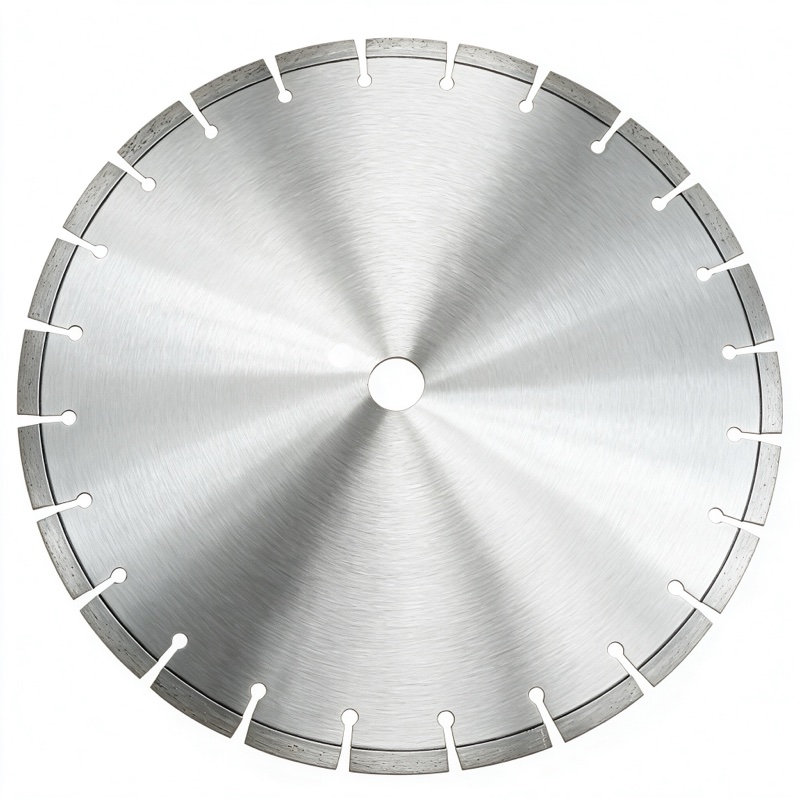
To cut concrete with a walk-behind saw: mount the correct laser-welded blade for your depth, fill the water tank, set the blade 3-5 mm deeper than required for the first pass, start the saw at full throttle, lower the blade slowly into the score line, and walk at a steady pace. Cut in 2-3 passes for deep joints rather than forcing full depth in one go. Always wet-cut and stand to the side of the blade plane.
| Mistake | Consequence | Fix |
|---|---|---|
| Forcing the feed | Overheating, blue core, segment loss | Let blade cut at its own pace |
| No water | Glazing, fast wear, silica dust | Keep both nozzles flowing |
| Full depth in one pass | Stalling, binding, kickback | 2-3 incremental passes |
| Wrong bond for material | Glazing or too-fast wear | Match bond to concrete hardness |
Pair the saw with a laser-welded concrete blade for everyday work, or step up to the high-horsepower blade for reinforced slabs.
A: Feed rate depends on the blade and concrete — typically 1-3 m/min. The blade should cut freely without the engine bogging.
A: Within 6-18 hours of finishing, before random cracking starts. The exact window depends on temperature and mix.
A: No. Green concrete is abrasive and needs a soft-bond green-cutting blade. Regular blades glaze over quickly.
A: Usually 1/4 of the slab thickness. For a 150 mm slab, cut 35-40 mm deep.
Walk-behind sawing is straightforward once you match the blade, set up water, and use incremental passes. Our concrete cutting blade range supports 350-600 mm floor saws for control joints, trenches and demolition.
