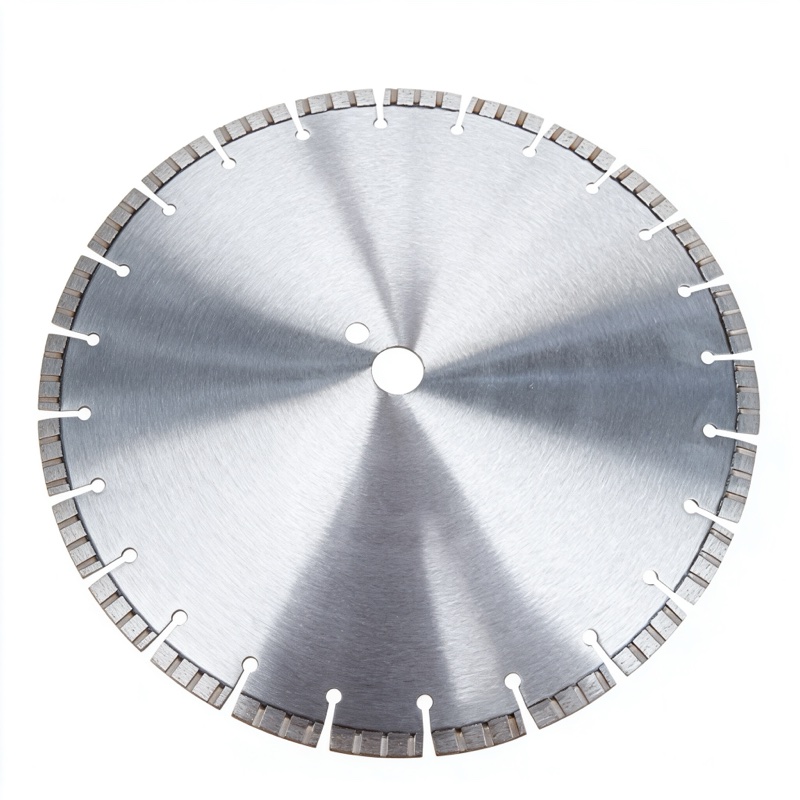
Use a ring saw when you need a deep horizontal or angled cut in concrete that a standard wall saw or hand-held saw can't reach — typically for door/window openings, pipe penetrations, and tunnel or shaft work. A ring saw drives a small continuous-rim blade around a ring guide, so the cutting edge extends 100-400 mm past the saw body. It's the tool for plunge cuts, tight corners, and deep horizontal penetrations in walls up to 500 mm thick.
| Feature | Ring Saw | Wall Saw (Track) |
|---|---|---|
| Cut depth | Deep — ring extends past body | Limited to blade radius |
| Footprint | Small — tight spaces, corners | Needs track and clearance |
| Horizontal cuts | Excellent — plunge and deep cuts | Good with track rotation |
| Setup time | Fast | Track mounting needed |
| Best for | Penetrations, chases, corners | Long straight openings |
Ring saws use small-diameter continuous-rim diamond blades (200-400 mm) that run at high RPM. Choose a wet-cutting blade with a hard bond for reinforced concrete. Our laser-welded concrete blade handles standard wall saw work, while heavy reinforced walls benefit from the high-horsepower blade.
A: Yes, with a hard-bond continuous rim blade. Feed slowly when hitting rebar.
A: Depends on the ring size — typically 150-400 mm deep in one pass.
A: For walls over 500 mm, wire saws are more efficient. Ring saws win on portability and setup speed.
A: Yes — use a continuous-rim blade rated for the ring saw's high RPM. Standard segmented blades can't handle it.
Ring saws are the specialist tool for deep horizontal concrete cuts in tight spaces. Browse our concrete cutting range for compatible continuous-rim blades.
